The F1 Effect: How Monaco's Record RevPAR Redefines Event Pricing
Analyzing whether the Formula 1 Grand Prix's record-breaking luxury metrics represent a sustainable growth model or a volatile market anomaly.
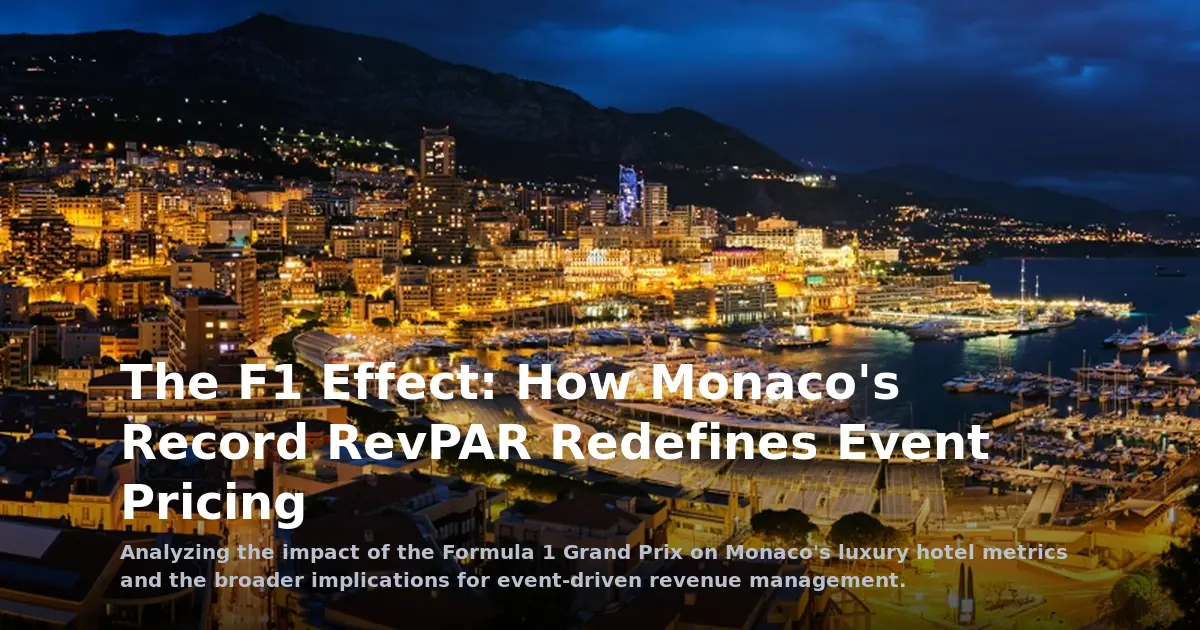
For the luxury hospitality sector, the Monaco Grand Prix is more than a sporting event; it is a stress test for the limits of pricing elasticity. Recent data indicates that the Principality's hotel industry has reached unprecedented heights in Average Daily Rate (ADR), occupancy, and Revenue Per Available Room (RevPAR) during the June window. While these figures are celebratory on a balance sheet, they raise a critical editorial question: is this hyper-growth a blueprint for luxury scalability, or a dangerous dependency on a single-event spike?
The Mechanics of event-driven RevPAR
Monaco's recent performance showcases the phenomenon of event-driven RevPAR pushed to its absolute zenith. During the Grand Prix, the convergence of extreme scarcity and inelastic demand allows hoteliers to move beyond traditional dynamic pricing into a realm of 'prestige pricing.' When demand is virtually guaranteed and the target demographic is largely indifferent to price, the ceiling for ADR effectively vanishes.
However, comparing these peaks to the baseline luxury demand in Monaco reveals a stark disparity. The 'F1 effect' creates a revenue cliff; the moment the checkered flag drops, the market must recalibrate. This volatility suggests that while event-driven RevPAR can inflate annual figures, it does not necessarily indicate a growth in the organic, year-round luxury traveler base. Instead, it reflects a captured market where the event, rather than the destination's intrinsic value, drives the transaction.
The Brand Paradox: Profit vs. Perception
There is a fine line between maximizing yield and alienating a loyal clientele. When luxury hotels implement 'hyper-peak' pricing, they risk shifting their brand perception from 'exclusive' to 'opportunistic.' For the ultra-high-net-worth individual (UHNWI), the cost of a room is rarely the deterrent, but the perceived value proposition is.
If the service quality degrades under the pressure of 100% occupancy—a common occurrence during global spectacles—the record-breaking RevPAR of the present may come at the cost of future loyalty. The operational strain of maintaining five-star standards during a city-wide surge is immense. When staffing levels cannot keep pace with the intensity of a global event, the guest experience often slips from 'bespoke' to 'transactional.'
Strategies for Global Luxury Destinations
Other luxury hubs looking to monetize high-impact events can learn from the Monaco model, provided they implement a more balanced approach to revenue management:
- Tiered Value Additions: Rather than simply hiking the room rate, hotels should bundle 'event-exclusive' experiences (private transfers, curated dining) to justify the premium.
- Demand Smoothing: Implementing minimum-stay requirements during peak windows to reduce turnover costs and stabilize operational flow.
- Diversification of Event Calendars: Reducing reliance on a single 'mega-event' by cultivating a series of smaller, high-yield cultural or corporate gatherings throughout the year.
The Sustainability of the Peak
Ultimately, the record-breaking performance in Monaco serves as a cautionary tale in market dependency. When a destination's financial health becomes overly tethered to a specific calendar event, it creates a fragile ecosystem. A change in the event's prestige, a shift in sporting regulations, or a global economic downturn could lead to a catastrophic drop in projected revenues if the baseline demand has been neglected in favor of the peak.
As the industry moves toward more sophisticated AI-driven pricing models, the goal should not be to find the absolute maximum a guest is willing to pay in a moment of desperation, but to optimize the lifetime value of the guest. The future of luxury hospitality lies in the ability to bridge the gap between the volatility of event-driven spikes and the stability of sustainable, brand-led growth.