The Boutique Paradox: Analyzing the JdV by Hyatt Expansion into Charleston
As The Lowline Hotel debuts on King Street, Hyatt tests whether a corporate soft-brand can disrupt Charleston's fiercely independent luxury market.
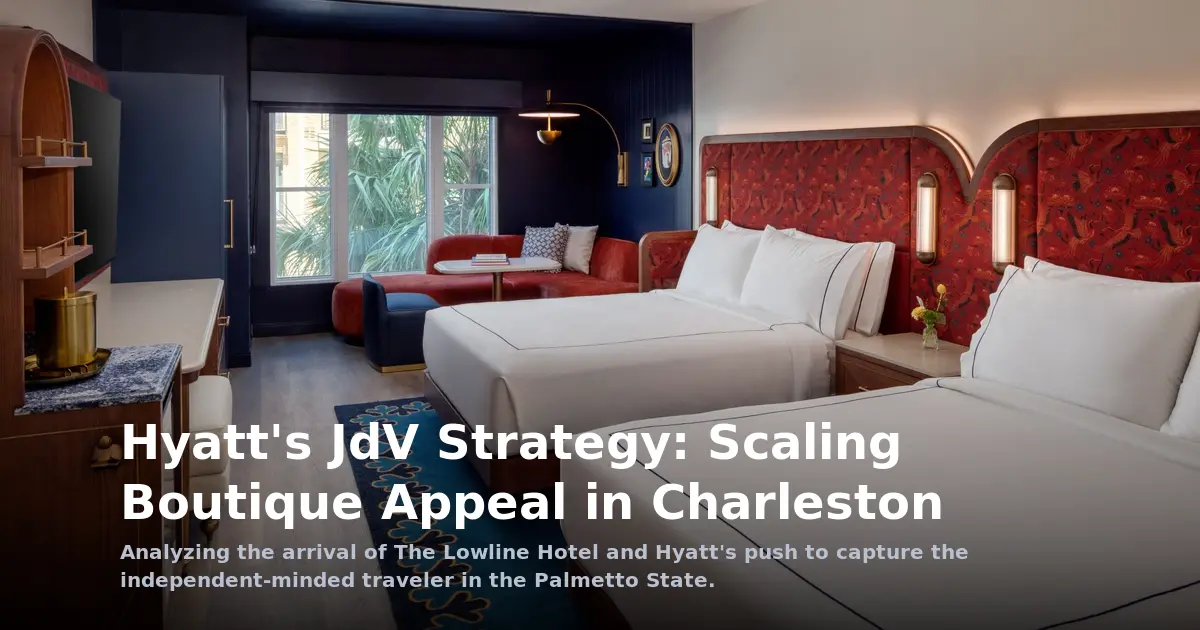
Charleston is a city defined by its commitment to the authentic. From the cobblestone alleys of the French Quarter to the high-end galleries of King Street, the luxury traveler's allure in the Palmetto State has always been rooted in the unique, the historic, and the independent. The arrival of The Lowline Hotel represents more than just a new addition to the city's skyline; it is a strategic litmus test for the JdV by Hyatt expansion and the broader industry trend of 'institutionalized boutique' hospitality.
By entering this competitive landscape, Hyatt is attempting to bridge a widening gap in the market: the desire for the idiosyncratic charm of a boutique hotel paired with the reliability and loyalty infrastructure of a global powerhouse. The Lowline, developed in partnership with Highline Hospitality Partners, serves as the vehicle for this ambition. However, the central tension remains whether a curated experience, designed within a corporate framework, can truly compete with the organic authenticity of Charleston's existing independent scene.
The Soft-Brand Strategy and the Highline Partnership
The partnership between Hyatt and Highline Hospitality Partners illustrates the current playbook for rapid growth in the lifestyle sector. For Hyatt, the JdV brand allows for a 'soft-brand' approach, where the property retains its individual identity and naming rights while leveraging Hyatt’s massive distribution engine and World of Hyatt loyalty program.
This model reduces the friction of development. Highline Hospitality Partners brings the localized operational expertise and asset management, while Hyatt provides the scalable technology and global reach. For the developer, it is a risk-mitigation strategy; for the guest, it is a promise of a standardized level of service wrapped in a localized aesthetic. But in a market like Charleston, where the 'luxury' label is often synonymous with 'exclusive' and 'unbranded,' the visibility of a corporate parent can be a double-edged sword.
Positioning Against the Independent Guard
The Lowline’s placement on King Street puts it in direct competition with some of the most successful independent boutiques in the Southeast. These competitors don't just sell rooms; they sell a sense of place that feels undiscovered.
To succeed, The Lowline must navigate the 'boutique paradox.' If the hotel feels too polished or too aligned with a corporate manual, it risks alienating the high-spend, independent-minded traveler who avoids brands by design. Conversely, if it leans too heavily into the 'curated' lifestyle trend—characterized by the ubiquitous velvet seating and artisanal cocktails—it may blend into a sea of generic luxury.
From a financial perspective, the JdV by Hyatt expansion into such hubs is a play for higher Average Daily Rates (ADR) and optimized occupancy. Lifestyle brands typically command a premium over traditional full-service hotels because they offer 'experiences' rather than just accommodations. In a high-demand tourism hub like Charleston, the ability to capture both the corporate traveler and the leisure seeker under one roof provides a significant hedge against seasonal volatility.
The Risk of Scaling Authenticity
There is an inherent contradiction in scaling a boutique experience. The very essence of a boutique hotel is its singularity. When a global entity like Hyatt seeks to replicate that feeling across multiple markets, the risk is the creation of a 'templated' individuality.
If the JdV model becomes too prescriptive, the 'curation' becomes a formula. The success of The Lowline will depend on whether it can maintain a genuine connection to Charleston’s specific cultural fabric or if it will function as a high-end outpost of a global strategy. The reward for Hyatt, however, is immense: if they can prove that the JdV framework can authentically integrate into a city as protective of its identity as Charleston, it validates the model for every other historic city in the North American portfolio.
As the industry continues to shift toward 'lifestyle' and 'collection' brands, the line between independent and corporate will continue to blur. The Lowline is a signal that the era of the pure independent boutique may be facing its most sophisticated challenger yet—one that offers the thrill of the unique with the safety net of a global brand. The outcome in Charleston will likely dictate how Hyatt and its peers approach the delicate art of scaling intimacy in the years to come.