The Yield Pivot: Hilton London Bankside and the Strategic Shift Toward Luxury Suites
An analysis of how Hilton is leveraging a targeted room expansion to capture the high-spending luxury traveler in London's competitive South Bank.
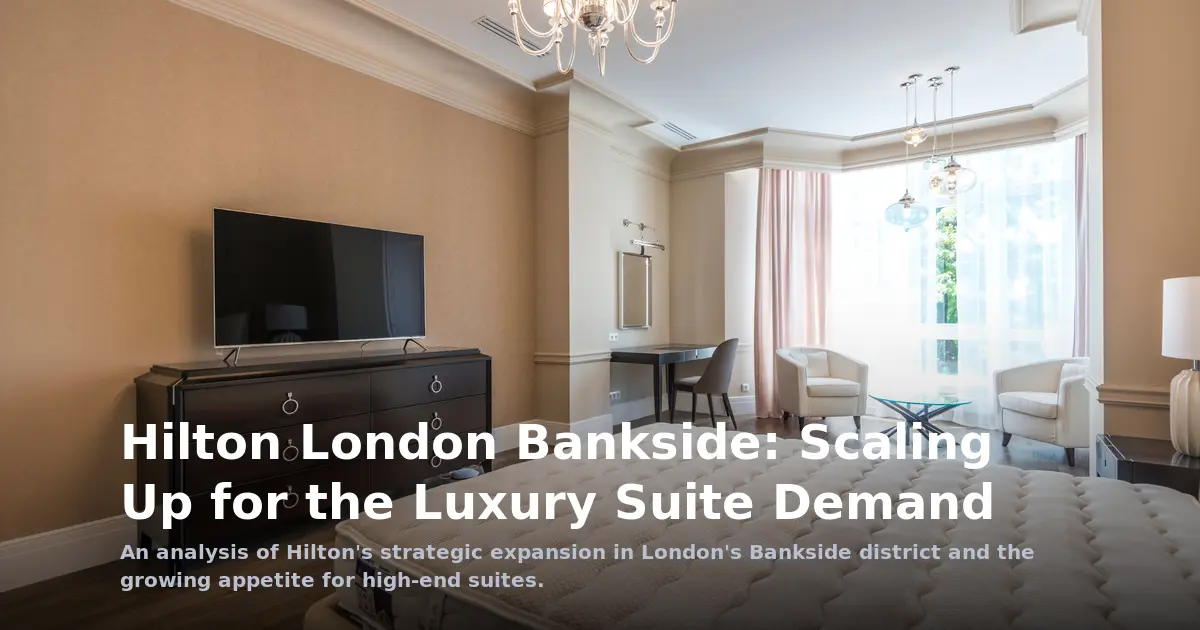
The announcement that Hilton London Bankside has completed a significant expansion, adding 76 new rooms to its inventory, is being framed by some as a simple capacity increase. However, a closer look at the numbers reveals a more calculated play. By increasing its total suite count to 23, Hilton is not merely chasing volume; it is pivoting its asset toward a higher-yield, luxury-centric guest profile.
In the current urban hospitality climate, adding rooms for the sake of occupancy is a race to the bottom. Instead, the strategic decision to tilt the inventory mix toward suites suggests a move to capture the 'bleisure' elite and high-net-worth international travelers who are increasingly prioritizing space and exclusivity over standard luxury.
Analyzing the Economics of Hotel Room Expansion
From a revenue management perspective, this hotel room expansion is a direct play for RevPAR (Revenue Per Available Room) growth. While adding 76 rooms increases operational overhead, the inclusion of more high-tier suites allows the property to push Average Daily Rates (ADR) significantly higher.
Suites operate on a different economic engine than standard rooms. They offer higher margins and attract a demographic less sensitive to price fluctuations, providing a buffer against the volatility of the mid-scale luxury market. By expanding the suite count to 23, Hilton London Bankside is positioning itself to capture a larger share of the luxury segment without needing to rebuild the entire property from the ground up.
Competitive Positioning in the Bankside District
The Bankside area has evolved into a dense hub of cultural and commercial activity, characterized by a mix of global brands and agile boutique rivals. For Hilton, the challenge has always been balancing the scale of a global powerhouse with the intimacy and exclusivity that luxury travelers crave.
This expansion serves as a defensive and offensive maneuver. Defensively, it prevents boutique competitors from poaching the high-end market by offering a product that rivals the space and luxury of independent hotels. Offensively, it leverages Hilton's massive loyalty ecosystem to funnel high-tier members into a more premium physical product. The goal is clear: maintain the scale of a corporate giant while delivering the experience of a luxury enclave.
The Logistical Gauntlet of Urban Upscaling
Executing a hotel room expansion within the confines of a dense London neighborhood is a logistical nightmare. The Bankside district, with its narrow streets and proximity to major cultural landmarks, leaves little room for error. Expanding an active hotel requires a delicate balance—maintaining the guest experience in existing rooms while managing construction noise, dust, and contractor traffic.
This 'live-site' expansion is a testament to the perceived value of the project. The willingness to endure the operational friction of construction suggests that the projected yield from these new luxury suites far outweighs the temporary dip in guest satisfaction scores. It is a high-stakes bet on the long-term appetite for luxury in South London.
The Broader Trend of Asset Upscaling
Hilton London Bankside is not an isolated case. Across global gateway cities, there is a visible trend of 'upscaling' existing urban assets. Rather than launching new luxury brands, operators are modifying existing properties to include more suites, wellness facilities, and curated experiences. This allows brands to pivot their market positioning without the risk and capital expenditure of a completely new build.
As the boundary between business and leisure travel continues to blur, the demand for 'home-away-from-home' luxury—characterized by larger footprints and premium amenities—is skyrocketing. Properties that fail to adapt their inventory mix risk becoming commoditized, serving a dwindling middle market while the high-spending luxury segment migrates toward more spacious alternatives.
This move signals a broader industry shift where success is no longer measured by total room count, but by the ability to optimize the inventory mix for maximum yield. As other urban assets follow suit, the competition for the luxury traveler will shift from who has the most rooms to who has the most desirable ones.