Culinary Pivot at W Algarve: Analyzing Ciuccio's Luxury Mandate
The appointment of Andrea Ciuccio signals a strategic shift in the gastronomic identity of W Algarve as it seeks to dominate the Mediterranean luxury market.
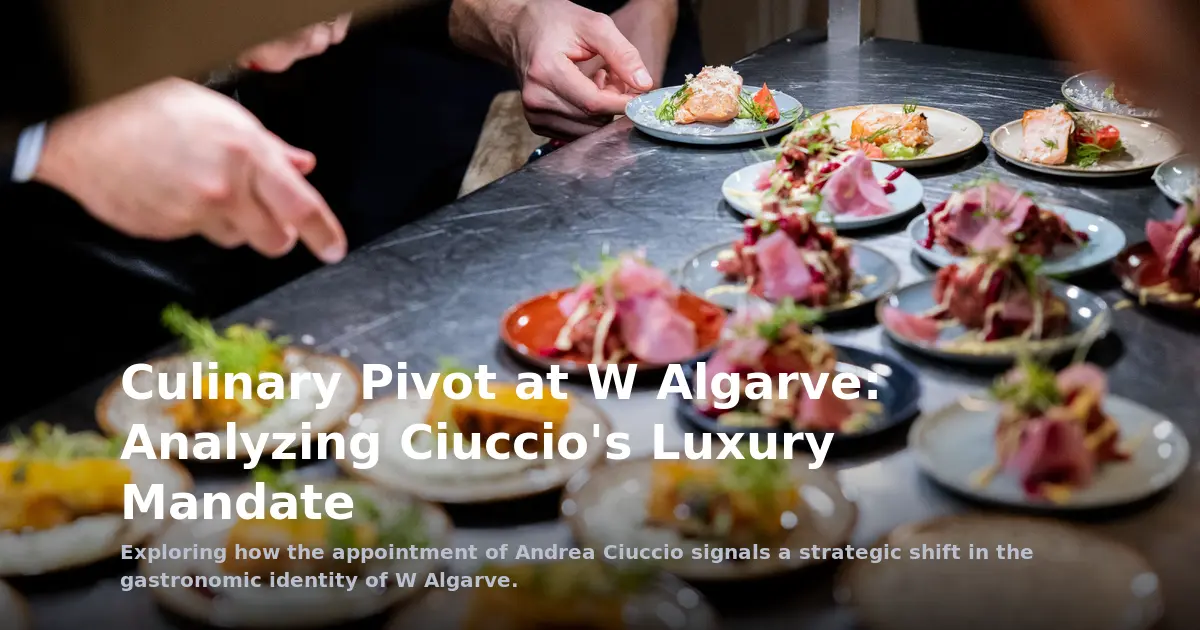
In the high-stakes landscape of luxury hospitality, a change in the kitchen is rarely just about a change in menu. When a property of W Algarve's stature replaces its culinary leadership, it is often a signal of a broader strategic pivot. The appointment of Andrea Ciuccio as the new W Algarve executive chef is not merely a personnel update; it is a calculated move to refine the hotel's luxury positioning in an increasingly competitive Algarve region.
For a brand like W, which balances high-energy 'Whatever/Whenever' service with a mandate for luxury, the Executive Chef serves as the primary architect of the guest's sensory experience. The transition from Julio Ferradas to Andrea Ciuccio suggests a shift in the property's gastronomic DNA. While Ferradas provided a steady hand, Ciuccio brings a pedigree and a stylistic approach that aligns more closely with the global 'luxury-lifestyle' trend—where precision meets theatricality.
Redefining the Gastronomic Identity
The appointment of a new W Algarve executive chef comes at a time when the Algarve is evolving from a seasonal sun-and-sand destination into a year-round gourmet hub. To maintain its edge, W Algarve cannot simply offer 'good' food; it must offer a culinary destination that attracts non-resident diners and elevates the property's prestige.
Ciuccio’s professional background suggests a focus on a more refined, perhaps more international, interpretation of luxury dining. Where previous iterations of the menu may have leaned on regional staples, the new mandate appears to be one of 'elevated sophistication.' This shift is designed to appeal to the modern luxury traveler—the 'jet-set' demographic that expects a seamless blend of local authenticity and world-class technique.
Aligning with the Global 'W' Strategy
Across Marriott’s luxury portfolio, the W brand has been aggressively pursuing a strategy of 'high-energy luxury.' This means F&B outlets are no longer just amenities; they are social hubs. The role of the W Algarve executive chef is therefore as much about curation and atmosphere as it is about plating.
By bringing in Ciuccio, the property is likely aiming for:
- Increased F&B Revenue: Transitioning the dining experience from a guest-only utility to a destination attraction.
- Higher Guest Satisfaction (GSS): Closing the gap between the hotel's stunning physical architecture and its culinary execution.
- Brand Consistency: Ensuring the Algarve property mirrors the avant-garde culinary standards seen in W hotels in Miami, Dubai, or London.
This leadership change is a direct response to the growing competitiveness of the Mediterranean market. With the rise of boutique luxury resorts and independent Michelin-starred ventures in the region, W Algarve must ensure its gastronomic offering is a primary driver of its value proposition, rather than a secondary consideration.
The Operational Impact of Culinary Leadership
Beyond the menu, the appointment of an executive chef of Ciuccio's caliber impacts the operational efficiency of the entire F&B department. The ability to manage high-volume luxury service without compromising on quality is a rare skill. Ciuccio is tasked with maintaining a rigorous standard of excellence while fostering a culture of innovation within the kitchen staff.
In the luxury sector, the Executive Chef is the guardian of the brand's promise. Any inconsistency in the dining experience can erode the perceived value of the entire stay. By installing a leader with a strong mandate for luxury, W Algarve is insulating itself against the volatility of guest expectations and positioning itself as a leader in the regional gourmet scene.
The broader implication for the hospitality industry is clear: the 'lifestyle' hotel segment is moving away from generic luxury toward highly curated, chef-driven experiences. As W Algarve pivots its culinary strategy, it sets a benchmark for other luxury properties in the region, signaling that the path to market dominance now runs directly through the kitchen.