Boutique Disruptor: Can The Shepherd Mayfair Challenge London's Grand Hotels?
An analysis of how the new 82-room opening in Shepherd Market pivots away from traditional Mayfair luxury.
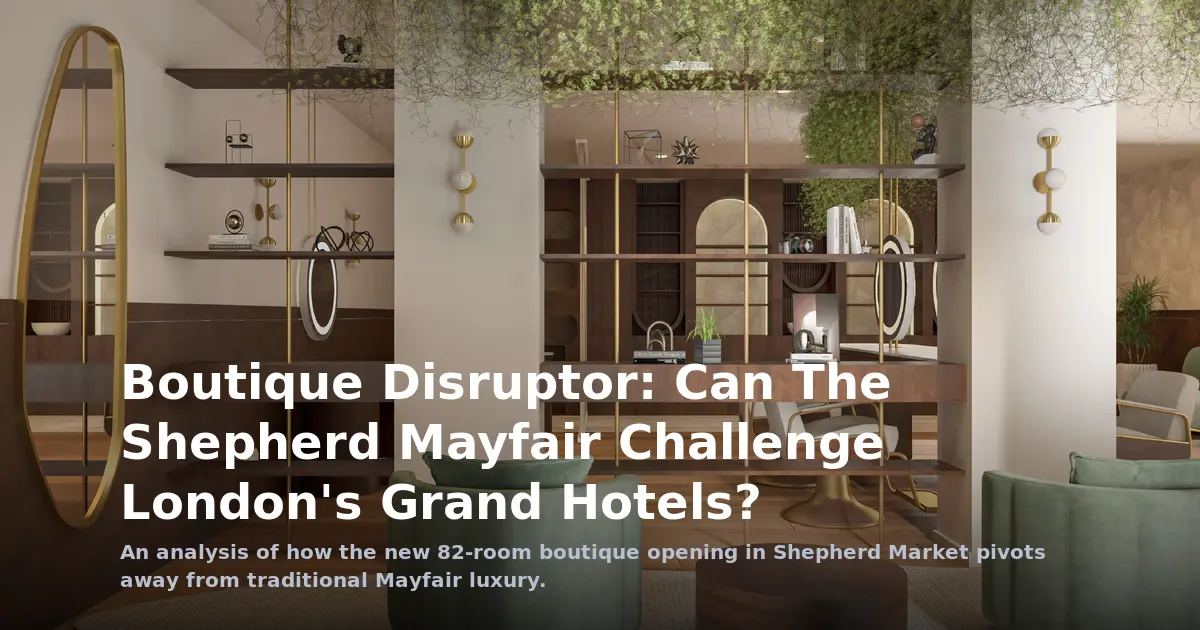
For decades, the luxury landscape of Mayfair has been defined by a specific, rigid architectural and behavioral language: the grand hotel. These institutions, characterized by sprawling lobbies, white-glove formality, and a legacy of aristocratic patronage, have long held a monopoly on the neighborhood's prestige. However, the upcoming September launch of The Shepherd Mayfair suggests a strategic pivot in how ultra-luxury is delivered in the capital.
With just 82 rooms, The Shepherd is not attempting to outscale the giants. Instead, it is betting on a model of 'intimate luxury'—a calculated hedge against the perceived stiffness of the heritage properties that dominate the district. This is not merely a difference in room count, but a fundamental shift in the value proposition of Mayfair boutique hotels.
The Agility of Scale: Boutique vs. Grand
In the ultra-luxury segment, the tension between scale and personalization is constant. Grand hotels often struggle with the 'institutional feel,' where the guest can become a number despite the high staff-to-guest ratio. The 82-room footprint of The Shepherd allows for a level of operational agility that legacy properties simply cannot replicate.
By operating at a smaller scale, the property can implement more fluid service models and a more curated guest experience. This agility allows the hotel to pivot quickly to guest preferences—a critical advantage when targeting the modern high-net-worth individual who values authenticity over artifice. The goal is to replace the 'ceremony' of the grand hotel with 'intuition,' creating an environment where the service feels organic rather than scripted.
The Shepherd Market Edge
Location is everything in Mayfair, but not all postcodes are created equal. The strategic decision to anchor the property in Shepherd Market is a masterstroke in micro-location targeting. While the grand hotels often sit on the main arteries of the district, Shepherd Market offers a village-like atmosphere—cobbled streets, independent boutiques, and a sense of seclusion within the urban core.
This positioning allows The Shepherd to attract a non-traditional luxury traveler. This demographic—often younger, tech-wealthy, or creative—is increasingly allergic to the formality of traditional luxury. They seek 'hidden' gems and residential-feeling escapes. By leaning into the intimacy of the Market, the hotel transforms its smaller size from a limitation into a primary luxury amenity. It isn't just a place to stay; it is a gateway to a specific, curated version of London life that feels exclusive precisely because it isn't monolithic.
Redefining the Guest Demographic
When comparing the projected guest profile of The Shepherd with the legacy clientele of nearby heritage properties, a clear divergence emerges. The traditional Mayfair guest often seeks status and visibility—the prestige of being seen in a famous lobby. The emerging boutique guest, however, seeks discretion and a sense of belonging.
This shift reflects a broader global trend where luxury is being redefined as 'access' and 'experience' rather than 'gold leaf' and 'crystal.' The Shepherd is positioning itself as the antidote to the grand hotel's rigidity. By focusing on a more residential aesthetic and a less formal service ethos, it targets the traveler who wants the amenities of a five-star establishment but the vibe of a private members' club.
The Future of Mayfair's Luxury Ecosystem
The entry of The Shepherd into the market signals a maturing of the Mayfair boutique hotels sector. It proves that there is a sustainable appetite for high-end properties that eschew the 'grand' label in favor of a more nuanced, intimate approach.
As the industry evolves, the success of this model will likely force the legacy giants to reconsider their own formalities. We may see the grand hotels attempting to 'boutique-ify' their wings or create more secluded, intimate sub-brands to compete. Ultimately, The Shepherd's arrival suggests that the future of luxury in London lies not in the size of the ballroom, but in the precision of the personal touch.