Accor's Indian Pivot: Can Movenpick and MGallery Break the Stagnation?
After two decades of sluggish growth, Accor is betting on luxury lifestyle brands to challenge the dominance of Marriott and IHG in India.
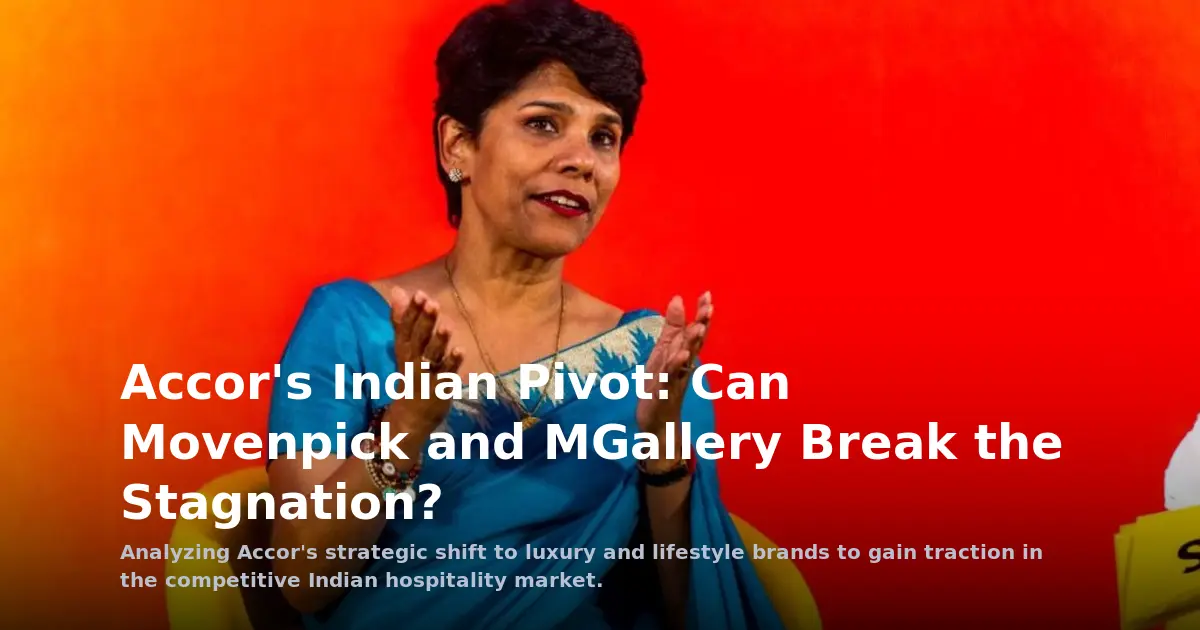
For twenty years, Accor has operated in India with a presence that belied its global stature. While its competitors were aggressively planting flags across the subcontinent's emerging Tier-1 and Tier-2 cities, the French hospitality giant remained curiously stagnant. Now, with the introduction of Movenpick and MGallery, the company is attempting a strategic pivot. But the question remains: is this a genuine evolution of their regional strategy, or a belated attempt to catch up to a market that has already been carved up by the incumbents?
The Cost of Hesitation in a High-Growth Market
To understand the urgency behind the current Accor India expansion, one must look at the missed opportunities of the last two decades. While Accor focused on a cautious, measured approach, Marriott and IHG leaned into aggressive asset-light strategies, forming deep partnerships with Indian developers and leveraging powerful loyalty programs to capture the domestic traveler.
India's hospitality landscape is not merely about room count; it is about ecosystem dominance. By the time Accor decided to accelerate, the prime real estate in urban hubs like Mumbai, Delhi, and Bangalore had largely been claimed. The resulting stagnation wasn't due to a lack of brand equity—Accor possesses some of the most recognized names in the world—but rather a failure to build the operational and developmental infrastructure necessary to scale at the pace of the Indian economy.
Positioning the 'Lifestyle Luxury' Bet
The decision to lead this new phase with Movenpick and MGallery is a calculated move. The Indian luxury traveler is evolving. There is a visible shift away from the monolithic, gilded luxury of the 2000s toward 'lifestyle luxury'—properties that offer a sense of place, boutique intimacy, and a strong culinary identity.
- MGallery fits the trend of 'curated luxury,' appealing to the affluent millennial and Gen Z traveler who views a hotel as an extension of their personal brand rather than just a place to sleep.
- Movenpick brings a strong focus on gastronomy and wellness, which aligns with the growing demand for experiential luxury in India's urban centers.
By diversifying the portfolio, Accor is attempting to carve out a niche that isn't just a direct head-to-head battle with the massive inventory of Marriott's luxury tier. Instead, they are targeting the gaps in the market: the high-end, design-led boutique experience that is currently underserved by the larger, more standardized global chains.
Structure for Growth: Evolution or Desperation?
Accor claims it is now building the 'structure for growth.' In industry terms, this usually implies a shift in how the company manages its pipeline. For years, Accor's footprint in India was limited by a rigid approach to management. The new focus suggests a transition toward a more flexible franchise and management model, allowing local developers more autonomy while leveraging Accor's global distribution systems.
However, the risk of late entry cannot be overstated. In the hospitality sector, loyalty is sticky. The Bonvoy and IHG One Rewards ecosystems have already created a formidable barrier to entry. For the Accor India expansion to succeed, the company cannot rely on brand prestige alone; it must offer developers a more lucrative value proposition and guests a reason to switch their loyalty—likely through the unique, non-standardized appeal of the MGallery and Movenpick concepts.
The Road Ahead for the Subcontinent
The success of this pivot will serve as a case study in whether a global giant can successfully 'late-start' in a maturing market. If Accor can successfully integrate these lifestyle brands into the Indian fabric, it may prove that quality and curation can trump raw scale. However, if these brands are treated as mere additions to a stagnant portfolio rather than the spearhead of a new operational philosophy, Accor risks remaining a peripheral player in one of the world's most exciting hotel markets. The next five years will determine if this is a strategic rebirth or simply a cosmetic update to a failing regional plan.