Elevating the High-Life: St. Regis Mumbai’s Strategic Pivot Toward Lifestyle Dining
The appointment of Bruno Fuentes signals a shift from traditional hotel dining to a destination-first luxury hub in India's financial capital.
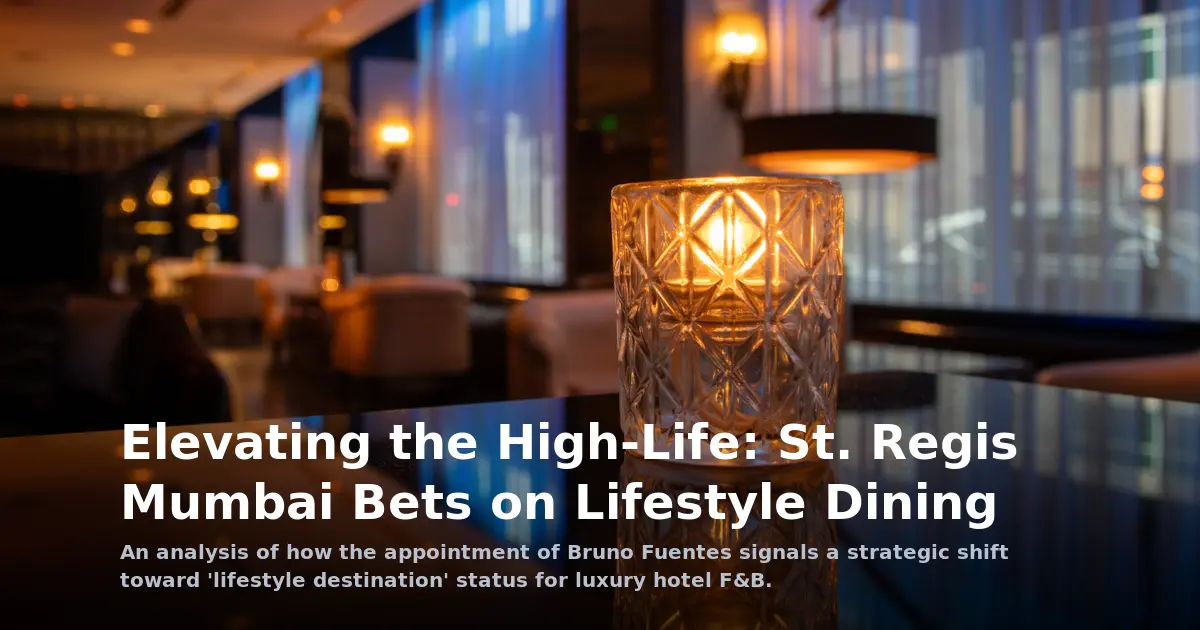
For decades, the luxury hotel dining room served as a predictable sanctuary for the elite—a place of quiet refinement and white-glove service designed primarily to cater to the guests staying in the rooms above. However, the paradigm of ultra-luxury hospitality is shifting. The modern high-net-worth traveler and the local urban elite are no longer looking for a hotel restaurant; they are seeking a 'lifestyle destination.'
The recent appointment of Bruno Fuentes as Director of Restaurants, Penthouse at The St. Regis Mumbai, is more than a routine personnel update. It is a calculated signal that the property is pivoting its strategy to capture the high-energy, high-spend social market of Mumbai. By bringing in a leader with a proven track record in the specialized world of rooftop bars and high-concept nightlife, St. Regis is attempting to decouple its F&B identity from its lodging identity, transforming the Penthouse into a standalone beacon of luxury.
The Evolution of Luxury Hotel F&B Leadership
In the current landscape, luxury hotel F&B leadership has evolved from operational management to creative curation. The role is no longer just about cost control and menu consistency; it is about brand engineering. The appointment of Fuentes suggests that St. Regis Mumbai recognizes that the 'Penthouse' is not merely an amenity for guests, but a competitive asset in the city's broader nightlife war.
Fuentes brings a pedigree of rooftop expertise that aligns with a global trend: the 'vertical destination.' In cities like Dubai, New York, and now Mumbai, the rooftop is the primary engine for brand visibility. When a hotel successfully pivots to a destination-first model, it attracts a demographic that may never book a room but will spend significantly on cocktails, tasting menus, and bottle service. This transition transforms the F&B department from a supporting cost center into a primary revenue driver and a powerful marketing tool.
The Battle for Mumbai's Social Hub
Mumbai’s luxury landscape is notoriously crowded. With a surge of independent high-end lounges and competing five-star properties, the battle for the 'social hub' title is fierce. To win, a property must balance the prestige of a legacy brand with the agility of a trendy boutique venue.
St. Regis faces a delicate tightrope walk. The brand is built on heritage, timelessness, and a sense of residential luxury. However, the 'lifestyle' segment demands high energy, cutting-edge music, and a sense of exclusivity that feels current, not classic. The risk of such a pivot is the potential alienation of the traditional luxury guest who seeks serenity. The opportunity, however, is the capture of the 'new luxury' crowd—younger entrepreneurs and global nomads who view the hotel as a stage for social currency.
Impact on Non-Guest Revenue Streams
From a financial perspective, the shift toward specialized F&B leadership is a move to maximize non-guest revenue. In ultra-luxury properties, the margins on high-end beverage programs and signature dining experiences often outperform the margins on room nights, especially when considering the lower overhead of a guest who does not require a housekeeping team or concierge services for a 24-hour stay.
By positioning the Penthouse as a destination in its own right, St. Regis Mumbai is effectively diversifying its income streams. A destination-first approach creates a 'halo effect'; as the Penthouse becomes the place to be seen, the prestige of the entire property rises, which in turn justifies higher Average Daily Rates (ADR) for the rooms.
The New Blueprint for Ultra-Luxury
This strategic move reflects a broader industry trend where luxury hotels are becoming curators of urban culture rather than just providers of shelter. We are seeing a move away from the 'all-day dining' genericism toward hyper-specialized concepts led by industry disruptors.
As other luxury players in Asia and the Middle East observe this shift, the expectation for F&B directors to act as 'experience architects' will only grow. The success of this gamble in Mumbai will likely dictate how other St. Regis properties globally balance their storied heritage with the aggressive demands of modern nightlife. The goal is no longer just to feed the guest, but to own the evening.