Beyond the Spa: The Monetization of Active Luxury
Analyzing how high-end hotels are pivoting from passive relaxation to integrated wellness ecosystems to capture affluent spend.
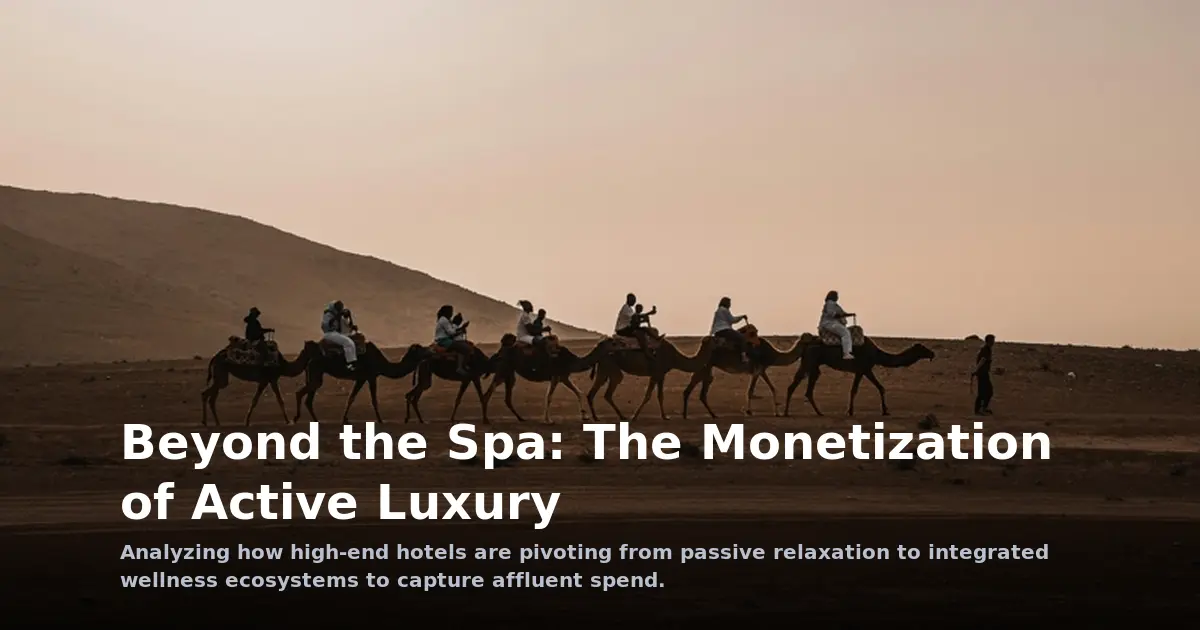
For decades, the luxury hotel wellness experience was defined by the 'passive retreat.' The gold standard was a plush robe, a dim room, and a high-priced massage—a sanctuary designed to help the guest disconnect from the world. However, a fundamental shift is occurring in the psychology of the affluent traveler. The modern high-net-worth guest is no longer seeking an escape from their high-performance life; they are seeking a venue to optimize it.
This evolution has given rise to active luxury hospitality, a strategic pivot where hotels move beyond the traditional spa model to create integrated wellness ecosystems. This is not merely a lifestyle trend or a response to the 'biohacking' craze; it is a sophisticated revenue play designed to increase Average Daily Rate (ADR) and extend the length of stay.
From Pampering to Performance
The transition from 'pampering' to 'performance' represents a critical change in guest expectations. While the traditional spa was a destination for relaxation, the active luxury hub is a destination for achievement. Guests are now requesting high-intensity interval training (HIIT), cold plunge therapy, infrared saunas, and hyperbaric chambers—services that require significant capital expenditure but command premium pricing.
Integrating high-end fitness technology into the guest experience allows properties to justify higher room rates by positioning the hotel as a comprehensive health center. When a property offers a curated 'performance suite'—complete with wearable tech integration and personalized nutrition plans—it ceases to be a place to sleep and becomes a critical component of the guest's personal health infrastructure. This shift transforms wellness from a discretionary amenity into a primary driver of the booking decision.
The ROI of Active Wellness vs. Traditional Spas
From an operational standpoint, the ROI of traditional spas has often been hampered by high labor costs and low turnover. A massage therapist can only see a limited number of clients per day, and the square footage of a spa is often underutilized during off-peak hours. In contrast, multi-functional active wellness centers offer more scalable revenue streams.
- Diversified Revenue: Active centers can monetize through membership models, specialized workshops, and high-margin retail (nutraceuticals, wearable tech).
- Increased Length of Stay: While a massage is a one-off event, a 'wellness journey' involving guided hikes, strength training, and recovery protocols encourages guests to stay for a week rather than a weekend.
- Ancillary Spend: The synergy between active luxury and F&B is potent. Guests engaging in high-intensity activity are more likely to spend on premium, functional dining and specialized recovery beverages.
The Danger of 'Wellness Washing'
As the industry rushes to capitalize on this trend, there is a growing risk of 'wellness washing'—the superficial addition of a few yoga mats and a juice bar to a property without a foundational commitment to health. Affluent guests are highly discerning; they can distinguish between a hotel that has a gym and a hotel that understands human performance.
To avoid this pitfall, leading properties are eschewing generic amenities in favor of authentic expert partnerships. This means moving away from the 'in-house trainer' model and toward collaborations with world-renowned longevity clinics, elite athletic coaches, and nutritionists. Authenticity in active luxury hospitality is measured by the quality of the outcome, not the aesthetic of the facility.
The New Blueprint for High-End Hospitality
Case studies of successful implementations show a blending of high-intensity activity with five-star service. Imagine a property where a guest’s biometric data from their sleep tracker is shared with the hotel's wellness concierge, who then adjusts the morning's workout intensity and the breakfast menu accordingly. This level of hyper-personalization is where the true value lies.
As the boundaries between healthcare, fitness, and hospitality continue to blur, the hotels that thrive will be those that stop viewing wellness as a side-department and start viewing it as a core operational pillar. The future of the luxury stay is not found in the absence of effort, but in the optimization of it. The properties that successfully monetize this drive for performance will secure a loyal base of guests who view their stay not as a vacation, but as an investment in their own longevity.