The Art of the Pivot: How The Clara Hotel Reimagined a Legacy Asset
Analyzing NewcrestImage's strategic transformation of the former NYLO Hotel into a residential-inspired Tapestry Collection property.
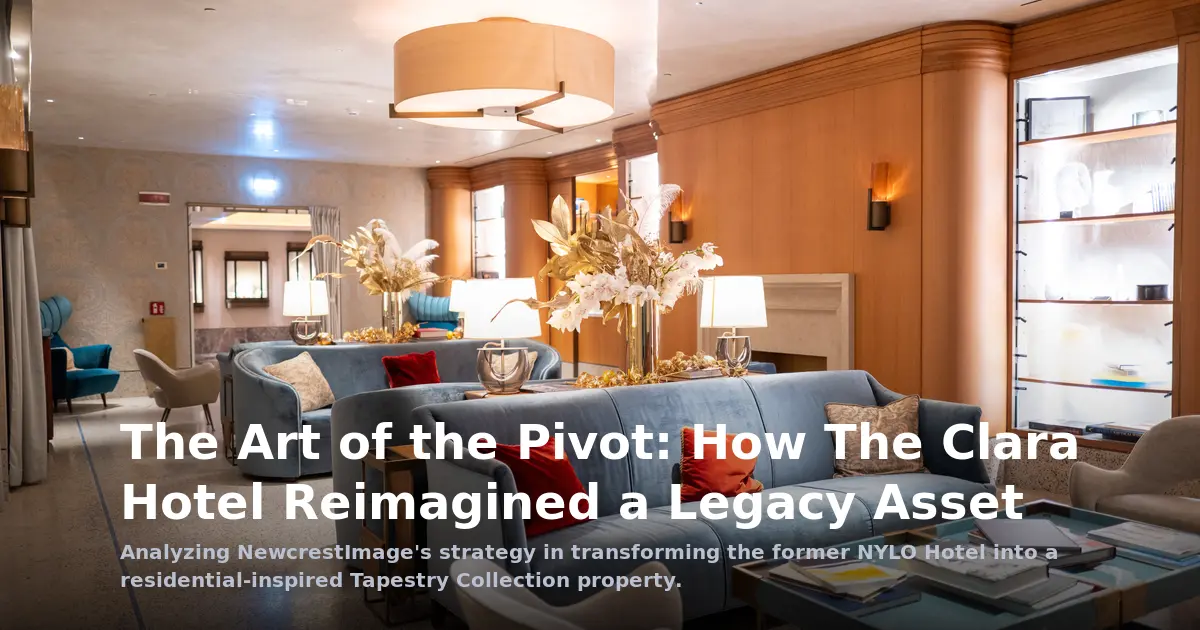
In the high-stakes world of hospitality real estate, there is a precarious line between a necessary refresh and a fundamental identity crisis. When NewcrestImage took over the former NYLO Hotel in Plano’s Legacy Corridor, they faced a classic industry dilemma: do you polish the existing brand's edges, or do you tear down the conceptual foundation to build something entirely new?
The result is The Clara Hotel, a 176-room property that represents a bold exercise in hotel asset repositioning. By stripping away the industrial grit of its predecessor and replacing it with a 'residential-inspired' ethos, NewcrestImage isn't just changing the wallpaper—they are betting on a shift in how the modern corporate traveler perceives luxury and comfort.
From Industrial Grit to Curated Comfort
To understand the scale of this pivot, one must recall the aesthetic of the original NYLO. The 'industrial' look—characterized by exposed pipes, raw concrete, and a loft-like atmosphere—was the gold standard for boutique hotels a decade ago. However, as the corporate landscape evolves, the appetite for 'industrial' has waned, replaced by a desire for 'curated.'
The Clara’s transition to a residential-inspired design reflects a broader trend in the hospitality sector. Today's travelers, particularly those in secondary corporate hubs like Plano, are seeking a 'home away from home' that feels sophisticated rather than stark. By blending high-end residential elements with hotel functionality, the property aims to lower the psychological barrier between work and leisure, effectively targeting the 'bleisure' traveler who demands a seamless transition from a boardroom meeting to a relaxing evening.
The Strategic Hedge: Brand Continuity vs. Physical Transformation
One of the most intriguing aspects of this repositioning is the decision to remain within Hilton’s Tapestry Collection. This move is a masterstroke of risk management. By keeping the Tapestry flag, NewcrestImage retains the massive distribution power and loyalty infrastructure of the Hilton ecosystem, ensuring a steady stream of global bookings.
However, by rebranding the physical asset and the guest experience as The Clara, they have successfully decoupled the property from the baggage of the former NYLO identity. This allows the owners to capture the 'boutique' allure—the feeling of a unique, independent discovery—without sacrificing the safety net of a global powerhouse. It is a blueprint for hotel asset repositioning that maximizes RevPAR (Revenue Per Available Room) while minimizing the vacancy risks associated with a completely independent launch.
Driving Non-Room Revenue Through Social Curation
Beyond the guestrooms, The Clara is utilizing its public spaces as strategic revenue drivers. In secondary markets, the challenge is often overcoming the 'commuter' nature of the area—where guests arrive and leave without spending outside their rooms.
The shift toward curated dining and social spaces is designed to turn the hotel into a destination for the local community, not just a waypoint for travelers. By creating spaces that feel like a curated living room or a sophisticated neighborhood bistro, the property is attempting to capture 'non-room revenue' from the surrounding Legacy Corridor corporate crowd. When a hotel becomes the preferred spot for a local business lunch or a post-work cocktail, it stabilizes cash flow and increases the asset's overall valuation.
The Future of the Corporate Boutique
The transformation of The Clara serves as a case study in the lifecycle of boutique assets. The industry is moving away from the 'shock and awe' of thematic design toward a more sustainable, timeless elegance. As corporate hubs continue to decentralize and the demand for high-quality, residential-feeling spaces grows, we can expect to see more owners engage in this level of aggressive repositioning.
The success of The Clara will ultimately be measured by whether its 'curated' approach can maintain its luster longer than the 'industrial' trend that preceded it. If the residential model proves resilient, it may well become the new gold standard for the corporate boutique, proving that the most valuable asset a hotel owner has is not the building itself, but the agility to reimagine it.