The Mid-Scale Refresh: Analyzing Windsor Aughtry's $2.6M Roanoke Bet
Evaluating whether aggressive renovation of branded limited-service assets is a safer hedge than new construction in today's capital market.
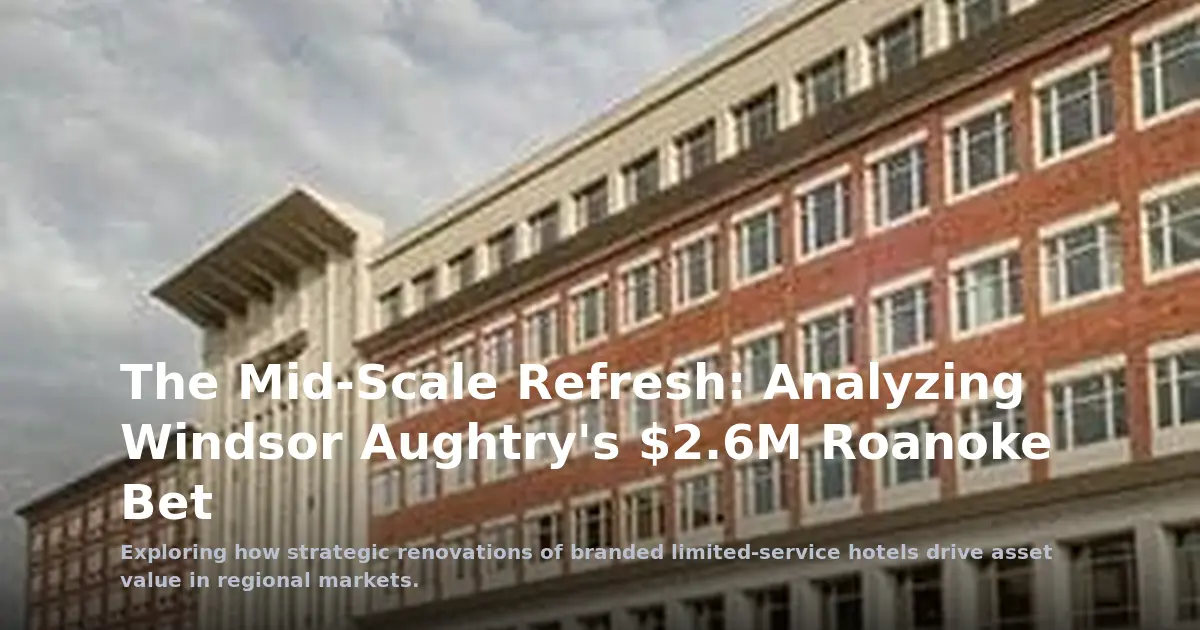
In the current high-interest-rate environment, the hospitality industry is witnessing a strategic pivot. While the era of cheap debt fueled a frenzy of ground-up developments, savvy investors are returning to a more disciplined play: the high-intensity refresh. The recent completion of a $2.6 million renovation at the Hampton by Hilton Roanoke Downtown by Windsor Aughtry serves as a prime case study in this shift toward asset optimization over expansion.
For an investment firm like Windsor Aughtry, the decision to inject millions into an existing mid-scale asset is not merely about fresh paint and new linens. It is a calculated move to protect the asset's valuation and ensure its longevity in a competitive regional market. By focusing on a targeted hotel asset renovation, the ownership group is effectively hedging against the volatility of new construction costs and the unpredictability of current lending terms.
The Calculus of Renovation Intensity
To understand the impact of a $2.6 million spend, one must look at the 'renovation intensity'—the capital expenditure relative to the size and class of the asset. In the mid-scale, limited-service segment, spending at this level typically indicates a move beyond simple cosmetic updates. This is a comprehensive effort to modernize the guest experience to meet the evolving expectations of the 'bleisure' traveler—those who blur the lines between business and leisure trips.
In secondary cities like Roanoke, the competition is no longer just about who has the best location, but who offers the most seamless digital and physical experience. By upgrading the interior and public spaces, the property moves from being a 'commodity' stay to a 'preferred' stay, allowing ownership to push Average Daily Rates (ADR) higher without the massive overhead of a new build.
Navigating the PIP Minefield
For any branded asset, the looming threat is the Property Improvement Plan (PIP). Hilton, and specifically the Hampton line, maintains rigorous brand standards to ensure consistency across its global portfolio. When a property falls behind these standards, the franchisor mandates a PIP, which can be a costly and disruptive process if not managed proactively.
Windsor Aughtry’s aggressive investment suggests a proactive approach to brand compliance. By staying ahead of the PIP curve, the ownership avoids the risk of brand penalties or the forced, rushed renovations that often lead to operational inefficiencies. This strategic foresight ensures the hotel remains in the good graces of the franchisor while simultaneously enhancing its market position.
The Role of Specialized Operation
Executing a multi-million dollar renovation while maintaining daily operations is a precarious balancing act. This is where the role of third-party operators, such as Hospitality America, becomes critical. The ability to manage high-cap-ex projects without cratering the hotel's RevPAR (Revenue Per Available Room) requires a level of operational expertise that goes beyond standard hotel management.
Third-party operators provide the necessary buffer, managing the logistics of construction while ensuring the guest experience does not degrade. In this instance, the partnership allows the investor to focus on the financial upside while the operator focuses on the tactical execution of the hotel asset renovation.
Shifting the Competitive Landscape
Roanoke's downtown market is characterized by a mix of legacy properties and newer entries. A modernized Hampton by Hilton disrupts this equilibrium. By refreshing the asset, the property can capture a larger share of the corporate traveler segment that might otherwise opt for newer, boutique alternatives.
Furthermore, as the demand for flexible work continues to permeate the travel industry, the updated common areas and guest rooms cater to a demographic that requires both a professional workspace and a high-end leisure environment. This positioning allows the hotel to maintain high occupancy rates across both weekday business peaks and weekend leisure surges.
The broader implication for the industry is clear: the 'safe bet' has shifted. As the cost of capital remains elevated, the ability to unlock hidden value in existing branded assets will define the winners of the next cycle. We are entering an era where the surgical application of capital to mid-scale properties will likely yield higher risk-adjusted returns than the pursuit of new footprints.