The End of the Family Era: Analyzing the Isle of Coll Sale
A look at the shift from multi-generational family ownership to institutional investment in remote UK hospitality.
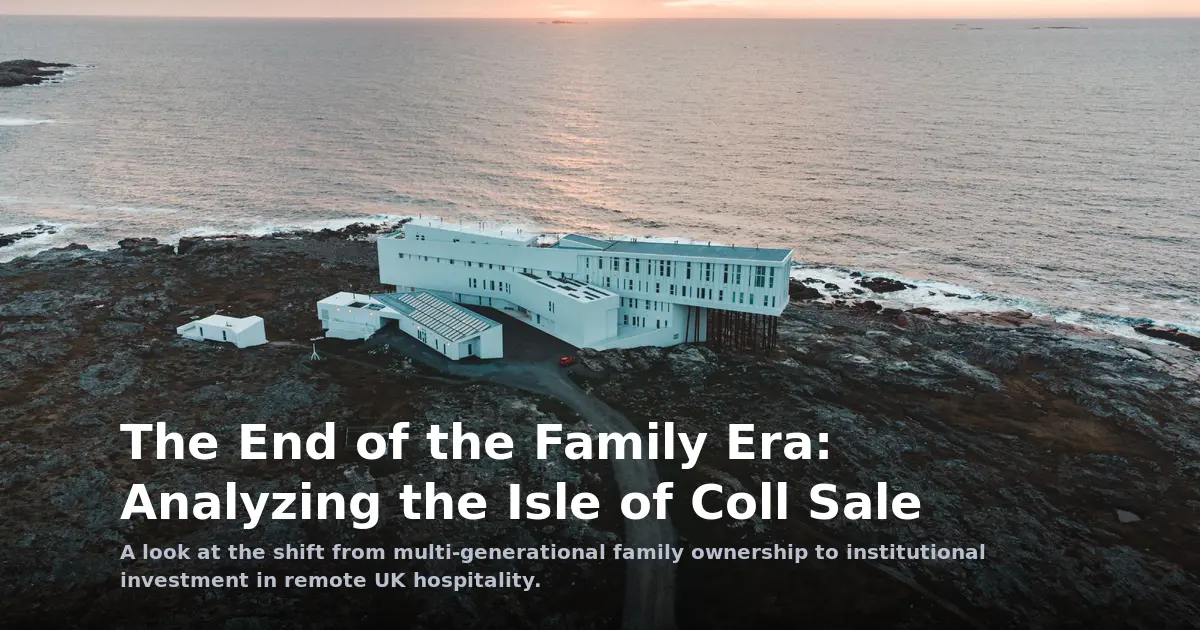
The listing of a waterfront hotel on the Isle of Coll for £1.75 million is more than a simple real estate transaction; it is a symptom of a tectonic shift in the British hospitality landscape. After more than 60 years of stewardship by a single family, the property's entry into the market signals the twilight of the 'legacy' operator and the ascent of the professional investment group.
For decades, the remote UK hospitality sector was defined by family-run establishments where the value was measured in community ties and generational continuity rather than EBITDA and yield. However, as the operational complexities of modern tourism increase—ranging from stringent regulatory compliance to the volatility of labor markets—the appetite for family-led management is waning. We are witnessing a transition where the emotional equity of a family business is being replaced by the calculated risk of hospitality asset investment.
The Valuation Gap in Remote Assets
At £1.75 million, the valuation of the Coll property invites a critical analysis of how remote assets are priced in the current climate. In an urban center, a waterfront boutique property would command a premium based on predictable footfall and high occupancy rates. In a geographically isolated location, however, the valuation is inextricably linked to 'destination appeal' and scarcity value.
The 'award-winning' status of the property serves as a crucial hedge against the risks of isolation. For a potential buyer, these accolades act as a proxy for quality assurance, suggesting that the business model is robust enough to overcome the logistical hurdles of its location. In the world of hospitality asset investment, prestige is a currency that can offset the lack of accessibility, transforming a remote liability into an exclusive luxury.
Risk-Reward: Waterfront Boutiques vs. Urban Assets
When comparing the risk-reward ratio of a property like the one on Coll against urban assets, the divergence is stark. Urban hotels offer liquidity and scalability but are subject to intense competition and market saturation. Conversely, a remote waterfront boutique offers a 'moat'—a natural monopoly on the guest experience in a specific locale.
However, the operational risks are significantly higher. The new owner will face challenges that the previous family owners likely managed through deep-rooted local networks:
- Supply Chain Fragility: Dependence on ferry schedules and limited local vendors.
- Labor Scarcity: The difficulty of attracting skilled hospitality professionals to a remote island.
- Seasonal Volatility: Extreme fluctuations in revenue between peak summer and the dormant winter months.
For an institutional investor, these challenges are not deterrents but variables to be optimized through professional management systems and digital marketing strategies that the previous generational owners may not have employed.
The Institutionalization of the Countryside
This sale reflects a broader trend where 'lifestyle' assets are being absorbed into professional portfolios. The transition from a 60-year family tenure to a new owner typically marks the end of an era of intuitive management and the beginning of data-driven operations. While this often leads to improved efficiency and higher capital expenditure for renovations, it risks erasing the idiosyncratic charm that makes remote hotels attractive in the first place.
As institutional capital flows into these niche markets, we can expect a standardization of the guest experience. The tension between maintaining the 'soul' of a family-run inn and the requirement for a professional return on investment will be the defining conflict for the next wave of owners in the Scottish Highlands and Islands.
Looking ahead, the sale of the Isle of Coll property suggests that few family-run hotels are immune to the pressures of professionalization. As the next generation of family heirs opts for diverse careers over the grueling demands of hoteliering, the UK's remote hospitality sector will likely see a surge in consolidation. The future of the rural boutique is no longer in the hands of the family, but in the portfolios of those who view hospitality as a strategic asset class.