The Longevity Pivot: Can Hotels Monetize the Quest for Eternal Youth?
Analyzing the shift from passive spa treatments to high-tech longevity protocols as wellness tourism targets a $2.4T market.
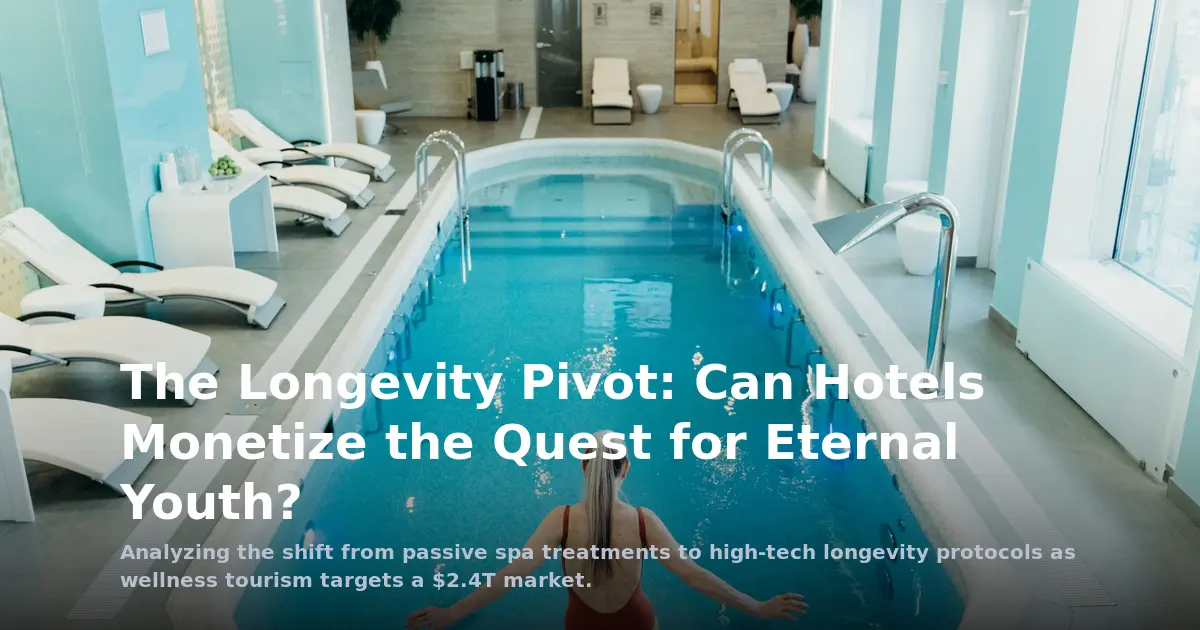
For decades, the hotel 'wellness' offering was a predictable suite of luxuries: a deep-tissue massage, a steam room, and perhaps a curated menu of organic juices. It was an industry of pampering—a temporary escape from the rigors of modern life. However, a fundamental shift is occurring. The industry is moving away from the ephemeral 'glow' of a spa day toward the clinical pursuit of biological optimization. This is the rise of longevity wellness tourism, a sector projected to help drive the global wellness market toward a staggering $2.4 trillion by 2035.
But as hotels pivot from relaxation to regeneration, a critical question emerges: Is this a sustainable operational evolution, or a transient luxury fad that risks alienating the core leisure guest?
From Pampering to Protocols
The traditional spa model focused on the feeling of wellness. The longevity model focuses on the data of wellness. We are seeing a transition from passive treatments to active biohacking. Guests are no longer satisfied with a facial; they are seeking hyperbaric oxygen chambers, cold plunge therapy, and NAD+ infusions. This shift transforms the hotel from a place of rest into a quasi-clinical environment where the guest is less a vacationer and more a patient in a high-end optimization program.
This 'clinicalization' of hospitality creates a significant operational hurdle. Traditional spa therapists are trained in aesthetics and relaxation; longevity protocols require specialized practitioners, from nutritionists to longevity doctors. The staffing challenge is immense. Hotels must now compete with medical clinics for talent, fundamentally altering their payroll structures and liability profiles. When a hotel moves from offering a massage to offering a biological age reversal protocol, the margin for error shrinks, and the regulatory scrutiny increases.
The CAPEX Gamble and the Risk of Mimicry
Implementing a true longevity infrastructure is not as simple as buying a few new machines. The capital expenditure (CAPEX) requirements for advanced sauna culture—integrating infrared, traditional Finnish, and specialized ventilation—and digital detox infrastructure are substantial. For ultra-luxury properties, this is a justifiable investment in a high-yield niche. However, a dangerous trend is emerging: mid-scale hotels attempting to mimic these high-end retreats.
When a mid-tier property installs a single cold plunge and markets it as a 'longevity center,' it risks a dilution of brand equity. Longevity wellness tourism relies on credibility and precision. Mimicry without the supporting medical infrastructure leads to a 'wellness veneer' that savvy travelers can see through instantly. The risk is an over-saturation of superficial offerings that alienate the traditional guest who just wanted a quiet place to sleep, without providing the actual clinical results the longevity seeker demands.
The Paradox of Radical Simplicity
Parallel to the high-tech surge is the trend of 'radical simplicity.' This is marketed as a return to nature—minimalist environments, silent retreats, and a stripping away of digital noise. On the surface, this seems to contradict the biohacking movement. In reality, it is the two sides of the same coin: the desire for total control over one's biological state.
Whether through a $10,000-a-week data-driven protocol or a silent retreat in a concrete bunker, the goal is the same: the optimization of the self. The industry must determine if 'radical simplicity' is a genuine philosophical shift in travel or merely a new luxury marketing veneer designed to justify higher ADRs (Average Daily Rates) for properties with fewer amenities.
The Road Ahead
The pivot toward longevity is a high-stakes gamble on the future of human health. For hotels that can successfully integrate clinical rigor with hospitality grace, the rewards are immense. However, the industry must avoid the trap of treating longevity as a mere amenity. If the transition is handled as a superficial trend rather than a deep operational shift, hotels may find themselves with expensive, underutilized equipment and a confused customer base. The winners will be those who understand that true longevity tourism is not about the equipment, but about the measurable outcome.