Hyatt's Greek Gambit: Scaling Luxury via The Destination Collection
Analyzing Hyatt's strategic expansion into the Cyclades through its curated independent brand portfolio.
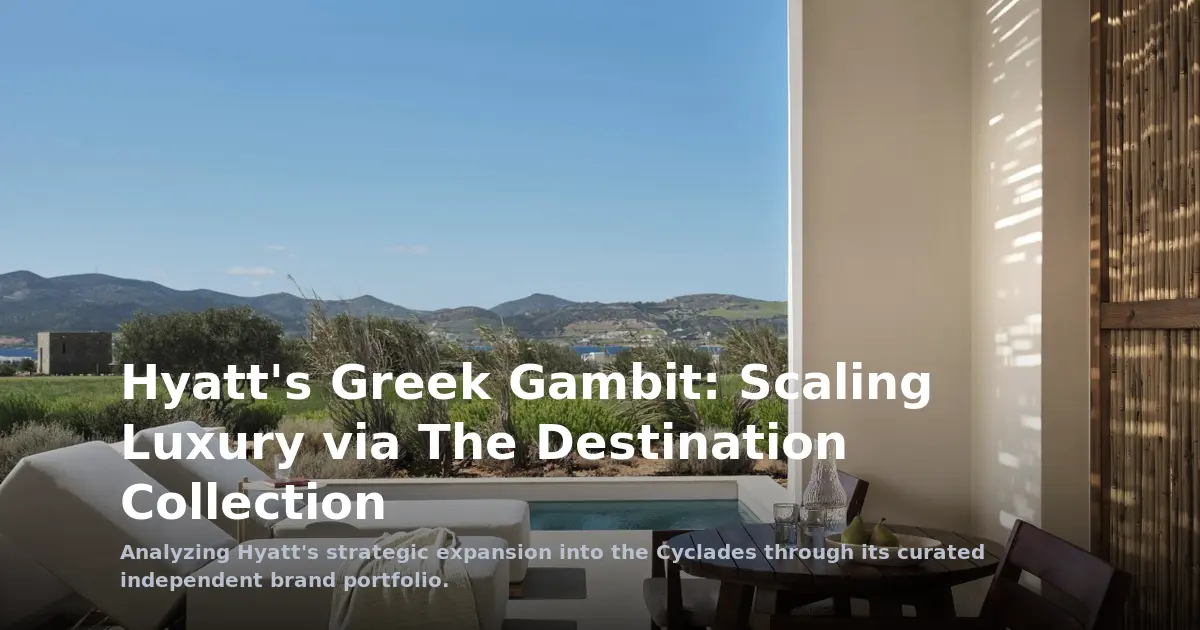
The opening of the Parian Chronicle Hotel Paros marks more than just another pin on a map for a global hospitality giant. It represents a calculated shift in how legacy hotel corporations are attempting to colonize the 'authentic' boutique market. By leveraging The Destination by Hyatt brand, the company is effectively attempting to bypass the rigid standardization of its primary flags to capture the high-yield, leisure-driven demand of the Greek islands.
For years, the luxury travel segment has seen a tension between the security of a global brand and the allure of independent discovery. The Hyatt Greece expansion strategy suggests that the company believes the future of luxury lies in 'curated independence'—a model where the guest receives the operational reliability and loyalty rewards of a multinational, but the aesthetic and cultural soul of a local boutique.
The Strategic Pivot to Paros
While Santorini and Mykonos have long been the crown jewels of Cycladic tourism, they have reached a point of saturation and 'over-tourism' that can dilute a luxury brand's prestige. The move into Paros is a sophisticated hedge. Paros offers a similar aesthetic appeal—whitewashed architecture and azure vistas—but with a growth trajectory that feels more sustainable and exclusive.
By planting a flag here with a 50-room property, Hyatt is positioning itself to capture the 'secondary destination' trend, where affluent travelers seek the prestige of the Cyclades without the claustrophobia of the most famous hotspots. This is not merely a real estate play; it is a demographic play, targeting a traveler who values discovery over fame.
Scaling the Unscalable: The Boutique Paradox
Integrating a 50-room retreat into a global corporate framework presents a significant operational paradox. The very essence of a boutique hotel is its intimacy and idiosyncratic service. When a corporate entity introduces standardized KPIs, global procurement chains, and rigid reporting structures, there is a risk of eroding the 'soul' of the property.
Comparing this to Marriott’s Autograph Collection, Hyatt's Destination brand appears to be leaning more heavily into the 'curated' aspect. While Autograph focuses on the 'story' of the hotel, The Destination collection seems focused on the 'sense of place.' However, the challenge remains: can a global corporate engine maintain the agility required to run a small-scale luxury retreat without turning it into a miniature version of a Grand Hyatt?
The Standardization of 'Authenticity'
There is an inherent irony in the 'contemporary Cycladic' design trend. What was once a vernacular architecture born of necessity and climate is now being codified into a luxury design language for global consumption. By scaling this look across the Hyatt Greece expansion, the company is participating in the standardization of authenticity.
This 'curated' approach allows Hyatt to:
- Lower the barrier to entry for independent owners who want global distribution without losing their identity.
- Rapidly scale their footprint in high-barrier markets where large-scale land parcels are unavailable.
- Hedge against the volatility of the luxury market by offering a diverse portfolio of 'unique' experiences.
The Industry Horizon
Hyatt's aggressive move into the independent space signals a broader industry trend: the death of the 'one-size-fits-all' luxury flag. As the modern traveler increasingly prioritizes emotional connection and local immersion over gold-plated lobbies, the winners will be those who can scale intimacy. The success of the Parian Chronicle will be a bellwether for whether the corporate hotel model can truly coexist with the boutique spirit, or if the gravity of standardization will eventually pull these independent gems into the corporate orbit.