Hyatt's Alila Expansion: Betting on Japan's Wellness Tourism Boom
An analysis of how Alila Sengokuhara Hakone fits into Hyatt's strategy to capture the high-end mindful travel market in Japan.
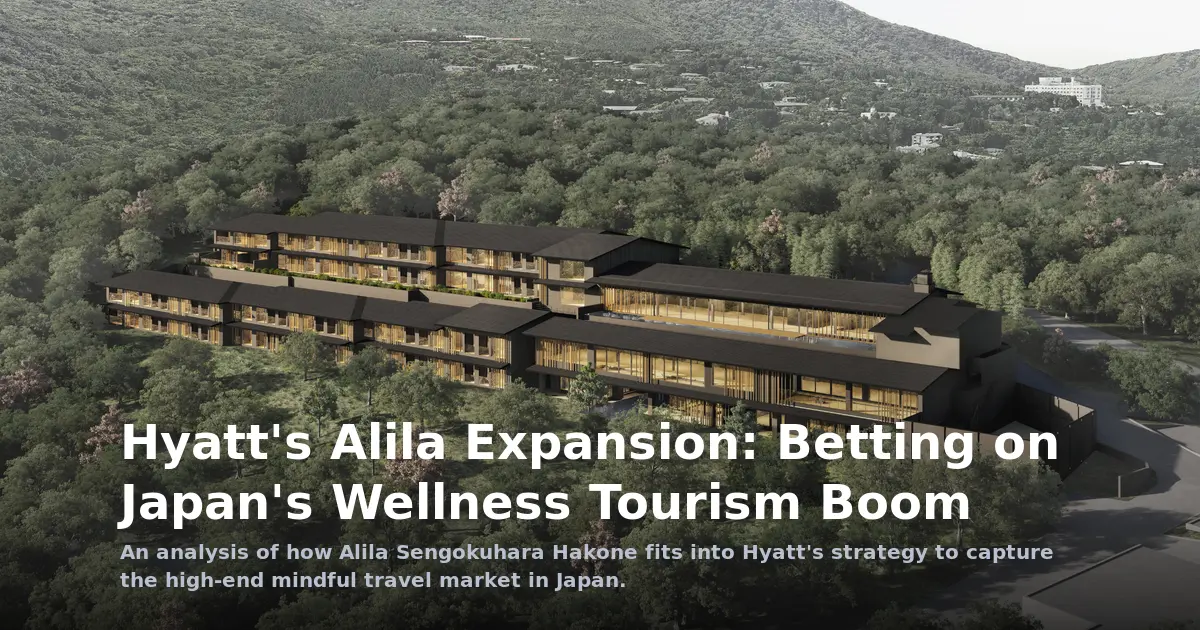
The announcement of Alila Sengokuhara Hakone is more than just another addition to a global portfolio; it is a calculated move into the heart of Japan's most competitive luxury leisure corridor. By planting the Alila flag in the Hakone region, Hyatt is not merely expanding its footprint but is attempting to codify a specific type of 'mindful' luxury that bridges the gap between traditional Japanese hospitality and the evolving demands of the global wellness traveler.
For years, the Hakone region has been dominated by traditional ryokans and a handful of established international luxury players. However, the post-pandemic traveler is seeking something more structured than a simple soak in a hot spring. There is a growing appetite for integrated wellness—where architecture, nutrition, and mental health are woven into the stay. Hyatt is positioning Alila as the answer to this shift, moving beyond the 'hotel with a spa' model toward a holistic retreat concept.
The Strategic Pivot Toward Luxury Wellness Hotels in Japan
The decision to bring the Alila brand to Sengokuhara suggests a strategic shift in how Hyatt views the Japanese market. While the Park Hyatt and Andaz brands capture the urban, high-energy luxury segment in Tokyo and Osaka, Alila is designed to capture the 'slow travel' movement. This is a direct play for the high-net-worth individual who views travel as a tool for restoration rather than just exploration.
When analyzing the landscape of luxury wellness hotels Japan, the competition is fierce. Local luxury ryokans offer an authenticity that is difficult for international brands to replicate. To succeed, Alila must avoid the trap of 'corporate wellness'—the generic gym and sauna package. Instead, the Sengokuhara property aims to synchronize Alila’s global identity of sustainable luxury with the specific aesthetic of the Hakone mountains. The success of this venture will depend on whether the 'mindful retreat' concept feels organically integrated into the local culture or like a pre-packaged wellness product imported from the West.
Synergy of Architecture and Mindfulness
A critical component of this expansion is the intersection of design and wellbeing. In the luxury segment, the physical environment is the primary driver of the guest's emotional state. By emphasizing nature-rooted design, Hyatt is leveraging the psychological concept of biophilia—the innate human tendency to seek connections with nature.
- Architectural Integration: The use of local materials and a layout that respects the topography of Hakone allows the property to feel like a sanctuary rather than a structure.
- The Onsen Evolution: By elevating the traditional onsen experience into a curated wellness journey, Hyatt is attempting to standardize luxury wellness while maintaining regional soul.
- Market Positioning: Alila is carving out a niche that sits between the ultra-formal luxury of a traditional ryokan and the predictable comfort of a five-star international hotel.
This strategic positioning allows Hyatt to capture a broader demographic: the domestic Japanese traveler seeking a modern take on tradition, and the international luxury traveler who wants Japanese authenticity backed by the reliability of a global loyalty program.
Economic Implications and ADR Pressure
From a commercial perspective, the entry of a brand like Alila into the Hakone region is likely to put upward pressure on Average Daily Rates (ADRs) across the luxury sector. When a global powerhouse introduces a high-concept wellness retreat, it resets the market's perception of value. We can expect nearby luxury operators to respond by enhancing their own wellness offerings or increasing prices to match the 'mindful' premium that Alila is introducing.
Furthermore, this move signals Hyatt's broader growth trajectory in Japan. The company is no longer content with just owning the city skyline; it is aggressively pursuing the leisure and wellness segments. This diversification hedges the company against volatility in business travel and aligns with the global trend of 'wellness as a status symbol.'
The long-term success of Alila Sengokuhara Hakone will serve as a bellwether for the rest of the industry. If Hyatt can successfully blend the rigid expectations of luxury wellness with the nuanced traditions of Japanese hospitality, it will create a blueprint for future developments across Asia. The industry is moving toward a future where the hotel is no longer just a place to sleep, but a destination for personal transformation. Whether Alila can deliver that transformation at scale remains the defining question for Hyatt's Japanese strategy.