Hyatt's High-Stakes Bet on the Victoria Falls Luxury Market
Analyzing whether the Grand Hyatt Victoria Falls The Kingdom is a genuine expansion or a strategic land-grab in Southern Africa.
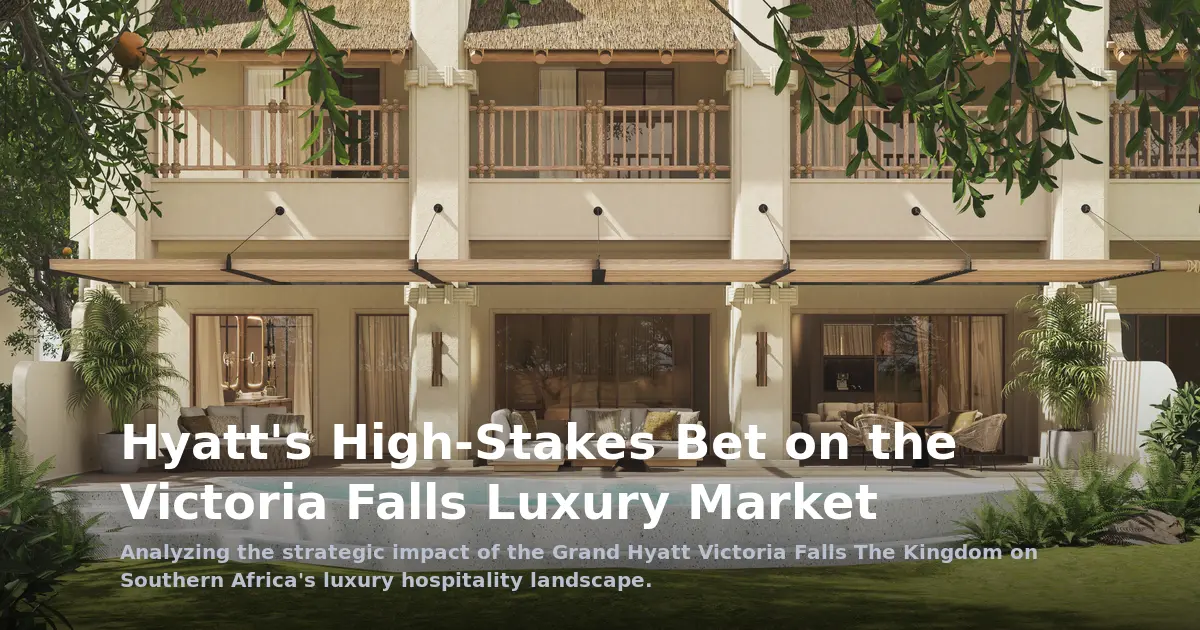
The announcement of the Grand Hyatt Victoria Falls The Kingdom marks more than just the addition of a luxury property to a global portfolio; it is a calculated move into one of the world's most coveted natural corridors. Scheduled to open in late 2027, the project signals Hyatt's intention to pivot aggressively toward the high-net-worth traveler in Southern Africa, a region where luxury hospitality has historically been dominated by boutique operators and legacy colonial-style estates.
For years, the Victoria Falls region has operated on a delicate balance of exclusivity and accessibility. By introducing the Grand Hyatt brand—a flag typically associated with large-scale, high-service urban hubs—Hyatt is attempting to redefine the scale of luxury in the region. The question for industry observers is whether this is a move to capture unmet demand or a defensive strategic play to prevent rivals from securing a monopoly over the area's premier vistas.
Redefining Luxury Hotel Development in Africa
The entry of a global giant like Hyatt shifts the local power dynamic. Most luxury offerings in the Falls area rely on intimate, low-density footprints. The Grand Hyatt model, however, typically emphasizes comprehensive amenities, expansive wellness centers, and high-capacity event spaces. This suggests that Hyatt is not just targeting the leisure traveler, but is positioning 'The Kingdom' as a hub for high-end MICE (Meetings, Incentives, Conferences, and Exhibitions) tourism.
This shift in luxury hotel development Africa reflects a broader trend: the "institutionalization" of the safari and nature experience. By bringing standardized global luxury benchmarks to a wild setting, Hyatt is betting that the modern ultra-wealthy traveler wants the unpredictability of the African wilderness paired with the unwavering reliability of a global luxury brand.
The 2027 Timeline and Post-Pandemic Recovery
The timing of a 2027 opening is telling. The Southern African travel market has seen a robust, albeit uneven, recovery following the pandemic, with a notable surge in "revenge travel" and a preference for secluded, high-security luxury environments. By targeting 2027, Hyatt is aligning itself with the projected stabilization of global aviation routes and the continued growth of the emerging middle and upper class in neighboring markets.
However, the project is not without significant risks. Building luxury infrastructure in a sensitive ecological zone requires a precarious balance. The environmental scrutiny on developments near UNESCO World Heritage sites is at an all-time high. To succeed, 'The Kingdom' must move beyond simple sustainability checkboxes and implement a regenerative architectural philosophy that justifies its footprint in such a fragile ecosystem.
Strategic Implications for the Region
The arrival of a Grand Hyatt will likely trigger a ripple effect across the local hospitality ecosystem. Smaller boutique hotels may find themselves squeezed on pricing or forced to double down on hyper-personalized, "anti-corporate" experiences to maintain their allure. Conversely, the presence of a global brand often increases the visibility of a destination, potentially drawing in a tier of international corporate travelers who previously viewed Victoria Falls as too remote for business.
There is also the matter of the talent war. A project of this scale will require a massive influx of skilled hospitality professionals. In a region where specialized luxury training can be scarce, Hyatt will either have to invest heavily in local human capital or rely on an expensive expatriate model, both of which carry operational risks.
As the industry watches the progress of 'The Kingdom,' the project serves as a litmus test for the scalability of global luxury brands in wilderness settings. If Hyatt succeeds, it will likely trigger a wave of similar developments across the continent, further accelerating the professionalization of the African luxury sector and permanently altering the landscape of high-end tourism in the region.