Hyatt Regency London Olympia: A Strategic Bet on a £1.3BN Urban Gamble
Analyzing whether Hyatt's West London entry is a masterstroke of synergy or a risky dependency on a single regeneration project.
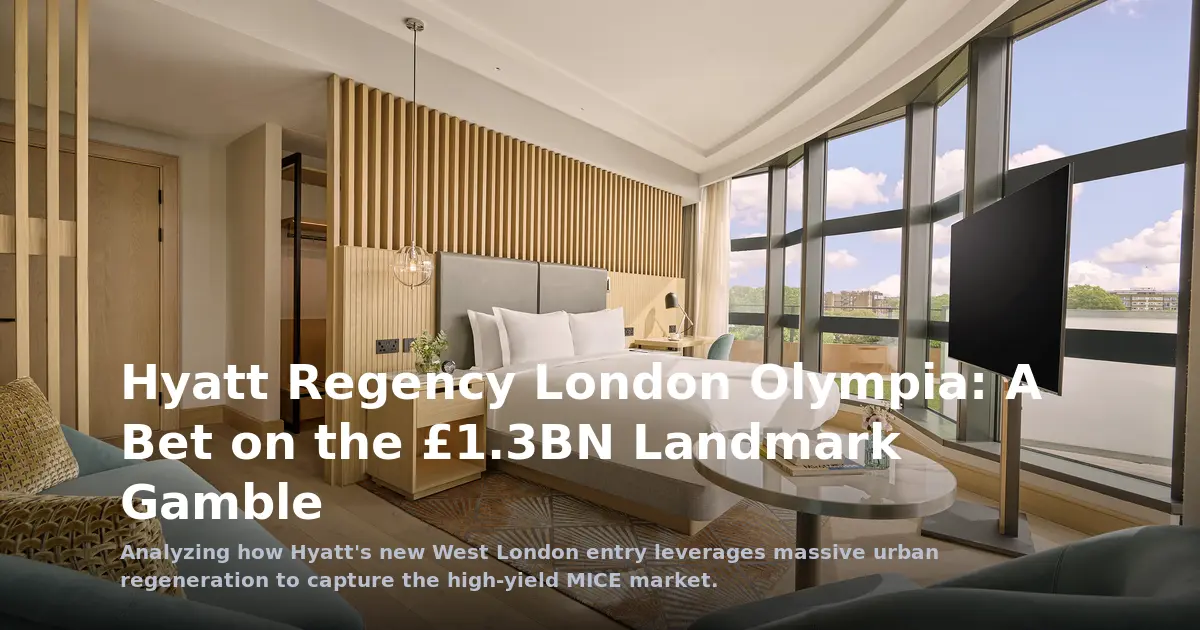
The arrival of the Hyatt Regency London Olympia is more than just another addition to the city's crowded hospitality map; it is a calculated wager on the transformative power of urban regeneration. By anchoring its presence within a £1.3 billion redevelopment project, Hyatt is not merely opening a hotel—it is tethering its operational success to the viability of a new West London destination.
For years, the Olympia district has existed as a fragmented collection of event spaces and residential pockets. The current regeneration seeks to pivot this into a world-class hub for commerce and culture. For Hyatt, the attraction is clear: the opportunity to capture a captive audience of high-yield MICE (Meetings, Incentives, Conferences, and Exhibitions) travelers who currently migrate toward the saturated corridors of Mayfair or the City.
The Synergy of MICE and Modern London Hotel Development
In the current climate of London hotel development, the most successful projects are those that move beyond the 'bed and breakfast' model to become integrated components of a larger ecosystem. The Hyatt Regency brand is specifically engineered for this intersection. By positioning itself at the heart of the Olympia project, the hotel creates a seamless loop between the exhibition hall and the guest room.
This synergy allows Hyatt to command a premium on Average Daily Rate (ADR) during peak event windows. When a global trade show descends on West London, the proximity of a luxury corporate hotel eliminates the friction of transit, making the Hyatt the default choice for executives and organizers. However, the risk lies in the 'echo effect'—if the Olympia destination fails to attract a diverse, year-round calendar of events, the hotel faces the peril of extreme volatility in occupancy rates.
Risk, Reward, and the Luxury Hub Comparison
Comparing this development to the established luxury hubs of Central London reveals a distinct shift in strategy. While the hotels of Knightsbridge and Mayfair rely on a steady stream of prestige tourism and diplomatic visits, the Hyatt Regency London Olympia is betting on destination-driven demand.
There are three primary risks associated with this anchoring strategy:
- Dependency: The hotel's RevPAR (Revenue Per Available Room) is heavily indexed to the success of the Olympia regeneration. Any delays or failures in the broader district's commercial appeal directly impact the hotel's bottom line.
- Seasonality: MICE-driven hotels often struggle with 'dark periods' between major events, requiring a robust leisure strategy to fill the gaps.
- Market Saturation: As other developers eye the West London corridor, the competitive landscape may shift from a monopoly on the local event space to a price war among luxury offerings.
Despite these risks, the reward is the potential to define a new neighborhood. If the regeneration succeeds, Hyatt will have secured a first-mover advantage in a district that could eventually rival the South Bank or Canary Wharf in terms of corporate density.
Implications for Local Independent Hospitality
The ripple effects of this development will be felt far beyond the walls of the Hyatt. For neighboring independent hotels and boutique guesthouses, the entry of a global powerhouse is a double-edged sword. On one hand, the influx of thousands of event attendees will likely drive up overall demand and allow smaller operators to increase their rates.
On the other hand, the sophisticated infrastructure of the Hyatt Regency—with its integrated meeting spaces and corporate loyalty programs—could siphon off the highest-spending corporate clients, leaving independents to fight for the more price-sensitive leisure segment. We are likely to see a bifurcation of the local market: the Hyatt capturing the 'power' traveler, while boutiques pivot toward 'authentic' West London experiences to maintain their edge.
As the dust settles on the Olympia regeneration, this project will serve as a litmus test for the future of large-scale urban hospitality. The industry is moving away from standalone luxury and toward 'district-integrated' assets. If the Hyatt Regency London Olympia thrives, it will provide a blueprint for how global brands can leverage massive infrastructure spends to create instant demand in previously overlooked urban pockets.