The New 'Third Space': Analyzing Courtyard's Lobby Evolution
A look at how the Courtyard Carolina Beach renovation signals a shift toward hybrid work-and-play spaces in select-service hotels.
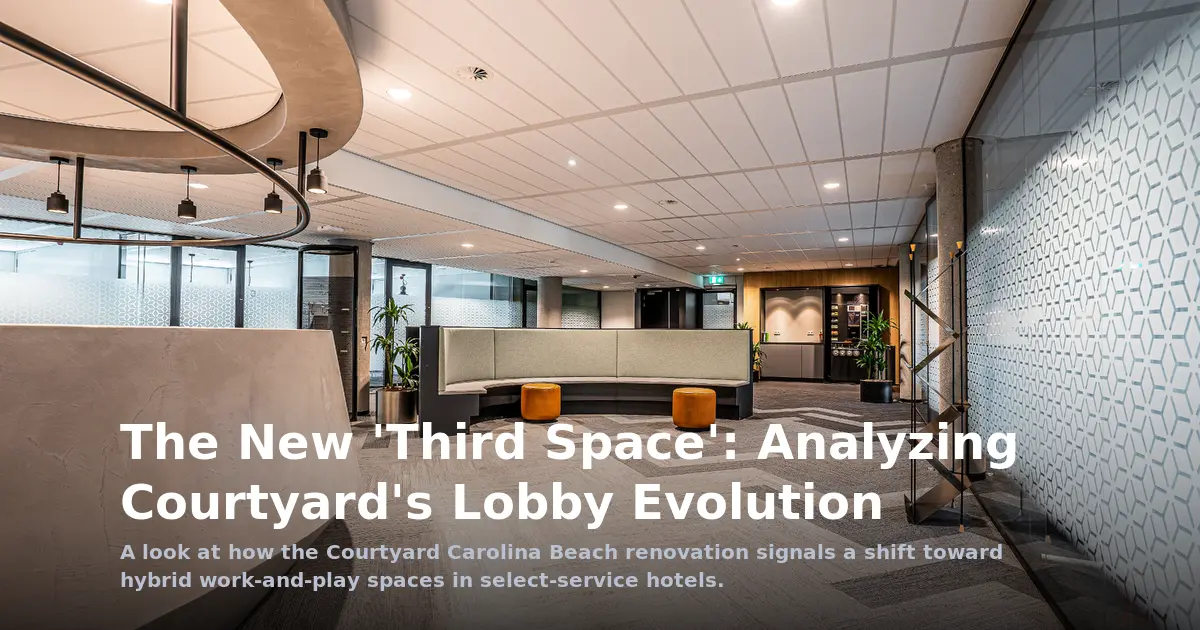
For decades, the select-service hotel lobby was a transactional zone: a place to check in, check out, and perhaps wait for a taxi. But as the boundaries between professional obligations and personal leisure continue to blur, the lobby is being reimagined not as a corridor, but as a destination. The recent completion of extensive renovations at the Courtyard by Marriott Carolina Beach Oceanfront provides a timely case study in this evolution, highlighting a strategic pivot toward the 'third space'—an environment that is neither the bedroom nor the office, but a productive hybrid of both.
Redefining the Utility of Hotel Lobby Design
The renovation at the Carolina Beach property moves beyond mere cosmetic updates. By replacing traditional, rigid lobby layouts with 'conversational seating' and dedicated booth workspaces, the property is acknowledging a fundamental shift in guest behavior. The modern traveler no longer views the hotel room as the only place to conduct business; instead, there is a growing demand for social productivity.
Of particular interest is the integration of 32-inch TVs within the booth seating. In the context of contemporary hotel lobby design, this is more than a luxury add-on; it is a functional necessity for the 'bleisure' traveler. These screens transform a simple booth into a makeshift presentation suite or a collaborative hub, allowing guests to mirror laptops and conduct virtual meetings without retreating to the isolation of their guestrooms. This shift reflects a broader industry realization: the corporate traveler of 2024 values flexibility over formality.
Bridging the Gap Between Corporate and Coastal
Maintaining a corporate identity in an oceanfront setting is a delicate balancing act. The addition of a dedicated Print Station and a redesigned front desk experience aims to bridge this gap. While the oceanfront location attracts leisure seekers, the infrastructure supports the high-stakes needs of the business traveler. This dual-purpose approach ensures that the property remains viable year-round, mitigating the seasonal volatility often associated with beach destinations.
From an operational perspective, these design tweaks are essential for maintaining and growing the Average Daily Rate (ADR). In a competitive coastal market, a property cannot rely solely on its view. By enhancing the communal utility of the lobby, the hotel increases the perceived value of the stay. When a guest can efficiently manage a workday from a comfortable, tech-enabled lobby, the property ceases to be just a place to sleep and becomes a tool for productivity.
Select-Service vs. Luxury: The Battle for the Living Room
It is worth noting the contrast between this select-service evolution and the 'lobby-as-living-room' trend seen in luxury tier hotels. While luxury brands focus on opulence and curated atmospheres to encourage lingering, the Courtyard approach is rooted in efficiency and versatility. The goal here is not necessarily to create a sanctuary of leisure, but to create a high-functioning environment where work can happen organically.
This pragmatic approach to hotel lobby design suggests that the 'third space' is not a one-size-fits-all concept. For the select-service segment, innovation is found in the intersection of ergonomics and technology. The move toward booth seating and integrated tech is a response to the 'digital nomad' reality, where the ability to plug in and pivot from a Zoom call to a cocktail is the primary metric of success.
As the industry moves forward, the success of these renovations will be measured by how well they adapt to the fluctuating needs of the hybrid worker. The transition from a transactional lobby to a multifunctional hub is no longer a competitive advantage—it is the new baseline. We can expect to see an increasing number of select-service properties stripping away the formality of the front desk in favor of agile, tech-integrated zones that treat the guest as both a professional and a vacationer simultaneously.