The AI Paradox: Why Digital Tools Can't Replace Physical Labor
Analyzing the dangerous gap between corporate AI investment and the worsening frontline staffing crisis in hotels.
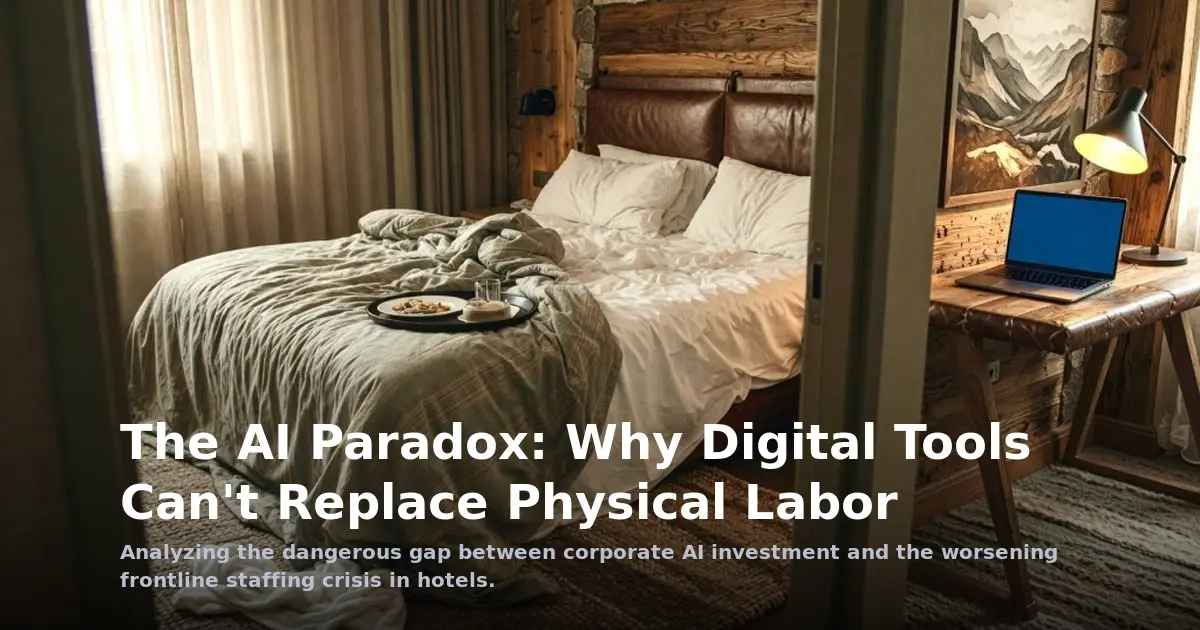
The hospitality industry is currently engaged in a high-stakes gamble, betting that Large Language Models (LLMs) and generative AI can bridge a widening operational gap. From automated concierge services to AI-driven revenue management, the C-suite is pouring capital into digital efficiency. However, there is a glaring disconnect: the industry is solving for cognitive labor while the actual foundation of the guest experience—physical labor—is crumbling.
This misalignment has created a paradox where hotels may have the most efficient back-office systems in history, yet struggle to keep rooms clean and hallways maintained. The industry is treating a systemic human resource failure as a technical glitch, mistakenly believing that software can offset the absence of a physical workforce.
The Demographic Cliff and the Hotel Labor Crisis
At the heart of the current hotel labor crisis is a brutal demographic reality. The workforce responsible for the most grueling, essential tasks—housekeeping, laundry, and maintenance—is aging out of the industry. This 'demographic cliff' is not a problem that can be solved with a more intuitive chatbot or an automated check-in kiosk.
Physical labor remains stubbornly resistant to the current wave of AI. While a generative AI can draft a marketing email in seconds or optimize a room rate in real-time, it cannot strip a bed, scrub a bathtub, or repair a leaking HVAC unit. These roles require tactile dexterity, spatial awareness, and physical stamina—capabilities that remain prohibitively expensive or technologically immature in the realm of robotics.
By focusing investment on the 'white-collar' side of hotel operations, ownership groups are effectively ignoring the bottleneck. A hotel with a flawless AI-driven booking engine is still a failure if the guest arrives to find a room that hasn't been cleaned because there are no available housekeepers.
The Danger of Tech-Bloat
There is a growing risk of 'tech-bloat' within the hospitality sector. This occurs when hotels layer expensive software solutions over broken operational processes, hoping the technology will mask the underlying dysfunction. When AI is positioned as a 'silver bullet' for the hotel labor crisis, it often serves as a convenient distraction from the failure of workforce retention and the inadequacy of current wage models.
Investing in a digital concierge to reduce the load on the front desk is a logical move, but it does nothing to address the systemic collapse of the hourly labor pool. When capital is diverted toward software licenses rather than competitive wages, improved benefits, or physical ergonomics for staff, the industry isn't innovating—it is merely rearranging the deck chairs on a sinking ship. The efficiency gains realized in the back office are negligible if they are eclipsed by the operational losses caused by understaffed floors.
Beyond the Bot: Real Solutions for Physical Labor
If the industry wants to survive the current staffing drought, it must pivot its investment strategy from the virtual to the visceral. This requires a two-pronged approach:
- True Robotics Integration: Rather than focusing on LLMs, investment should shift toward specialized robotics designed for heavy-duty tasks. While still in early stages, autonomous vacuuming and linen-transport robots offer more tangible relief to the frontline than another AI dashboard.
- Restructured Labor Models: The industry must move beyond the 'gig economy' mindset for housekeeping. This means implementing restructured wage models that reflect the essential nature of physical labor, potentially moving toward profit-sharing or higher base guarantees to attract a younger, more skeptical workforce.
The Future of Hospitality Operations
The trajectory of the industry depends on whether leadership recognizes that hospitality is, at its core, a physical business. The allure of AI is powerful because it promises a world of frictionless management and reduced overhead. But the guest experience is not a digital transaction; it is a physical encounter.
If the sector continues to prioritize digital efficiency over human capacity, it risks a future where hotels are technologically advanced but operationally hollow. The true winners of the next decade will not be the hotels with the best AI, but those who managed to solve the human puzzle of the hotel labor crisis while using technology to support—not replace—the people who actually keep the lights on.