Hilton Unveils New Lobby Design Focused on Remote Work
By replacing ornamental seating with modular workstations and soundproof pods, Hilton is converting underutilized real estate into a high-yield productivity hub.
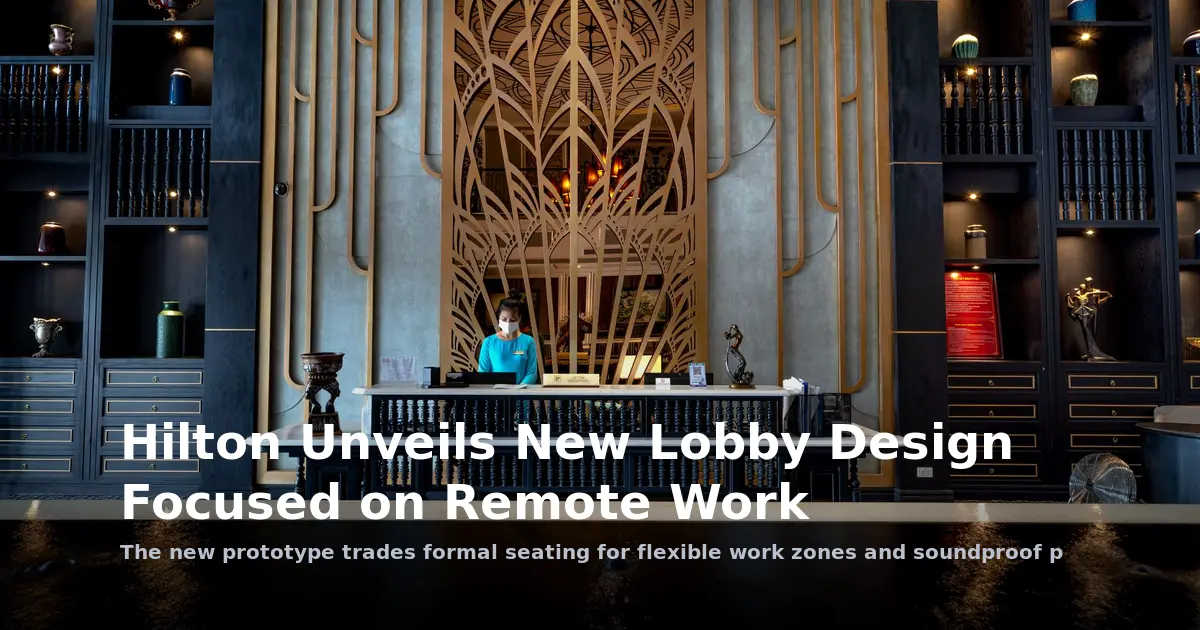
The traditional hotel lobby has long been a graveyard of expensive, uncomfortable furniture designed for a five-minute transition between the curb and the elevator. Hilton is officially ending that era. The hospitality giant has unveiled a new lobby prototype that systematically strips away the ornamental 'waiting room' aesthetic in favor of a high-performance workspace. This is not a mere addition of a few power strips; it is a fundamental reallocation of square footage designed to capture the shifting demographics of the modern traveler who views their hotel stay as a hybrid of residence and office.
Quantifying the Pivot: From Aesthetics to Utility
Internal data from Hilton’s pilot programs reveals a stark shift in guest behavior. The company reports a 15-point surge in guest satisfaction scores at properties implementing the new design. This metric is particularly telling when analyzed alongside the decline of the traditional business center—those dim, carpeted rooms with a single malfunctioning printer that guests have ignored for a decade.
By replacing static lounge seating with modular workstations and private phone pods, Hilton is addressing a critical gap in the mid-to-upscale market. The prototype focuses on acoustic zoning, ensuring that a guest taking a high-stakes Zoom call in a soundproof pod does not disrupt a traveler enjoying a cocktail nearby. This strategic zoning allows the lobby to function as a multi-revenue stream environment: a co-working space by day and a social lounge by night, maximizing the revenue per square foot (RevPAS) of the ground floor.
The Infrastructure of Productivity
The new design departs from the 'open concept' trend that dominated the 2010s, which often resulted in noisy, chaotic spaces unsuitable for deep work. Instead, Hilton is implementing a tiered system of productivity:
- The High-Focus Zone: Integrated phone pods provide total acoustic isolation, catering to the 40% of business travelers who report 'noise pollution' as their primary grievance in public spaces.
- The Collaborative Hub: Modular tables with embedded wireless charging and high-density Wi-Fi 6 connectivity, designed for small team breakouts.
- The Sustenance Station: Enhanced food-and-beverage (F&B) options that move beyond the basic coffee carafe. The prototype integrates 'grab-and-go' gourmet kiosks that cater to the professional who cannot leave their workstation for a full meal.
This shift mirrors a broader industry trend seen in the rise of 'coliving' brands like Selina or citizenM, but Hilton is scaling this logic for a global portfolio. By integrating these elements, Hilton is effectively competing not just with Marriott or Hyatt, but with WeWork and Regus, capturing the 'bleisure' traveler who extends their stay by 2.5 days on average when high-quality workspace is available.
Market Implications and the Competitive Moat
This redesign is a calculated response to the permanent shift in corporate travel policies. With the rise of remote-first cultures, the distinction between 'business' and 'leisure' travel has blurred into a single, continuous category. Hotels that maintain rigid, outdated lobby structures are leaking revenue to boutique operators who prioritize utility over tradition.
Industry analysts suggest that this move allows Hilton to increase its Average Daily Rate (ADR) by positioning its properties as productivity hubs. When a hotel provides a seamless professional environment, it reduces the guest's need to seek external co-working spaces, keeping the guest on-property and increasing the capture rate for F&B services. The financial logic is simple: a guest who spends six hours working in the lobby spends 30% more on ancillary services than a guest who checks in and immediately retreats to their room.
Furthermore, this prototype serves as a hedge against the volatility of corporate travel. By attracting the digital nomad and the remote freelancer, Hilton diversifies its guest base, reducing reliance on the traditional corporate travel manager and their restrictive per-diem budgets.
The New Standard for Hospitality Real Estate
Hilton's gamble on the 'work-from-anywhere' lobby signals a permanent change in how hospitality real estate is valued. The lobby is no longer a transition point; it is a destination. This evolution forces a reconsideration of the entire hotel footprint, suggesting that the luxury of the future is not defined by gold-leaf trim or oversized chandeliers, but by the availability of a quiet, high-speed, and ergonomically sound place to work.
As this prototype rolls out across the global portfolio, the industry will see a ripple effect. Competitors will be forced to strip out their dormant lounge chairs and install pods to keep pace. Hilton has effectively redefined the lobby from a cost center into a value driver, ensuring that the physical space evolves as quickly as the way we work.