The 'Value Pivot': How Budget Constraints are Redefining Hotel Amenities
As inflationary pressures reshape guest behavior, the competitive advantage is shifting from dynamic pricing to tangible perceived value.
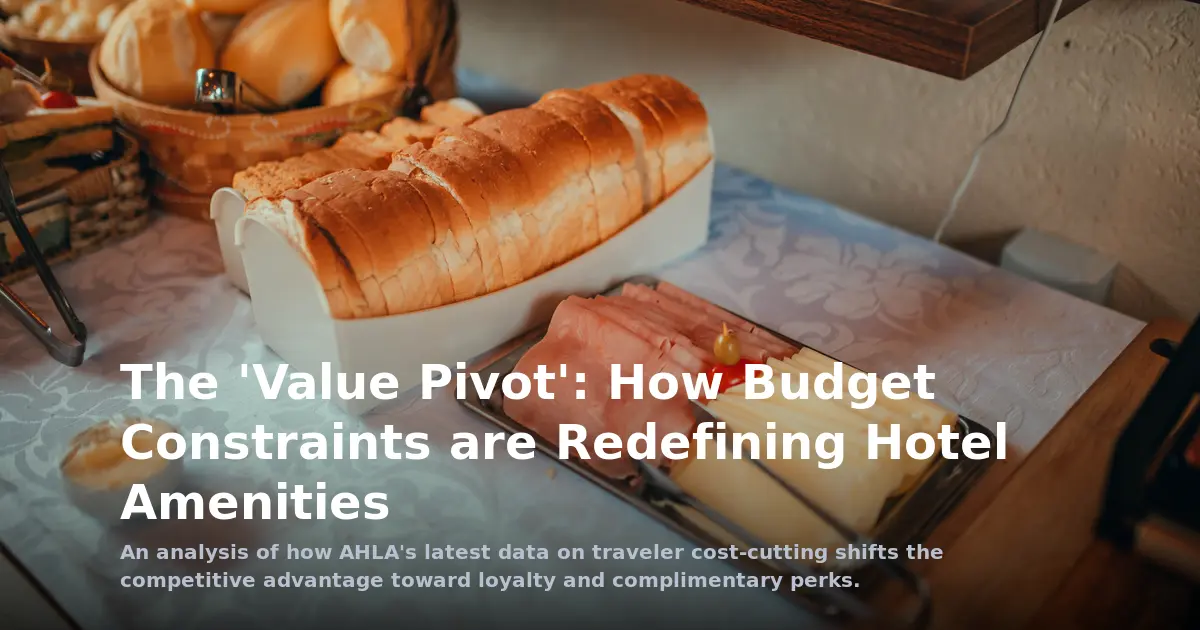
The hospitality industry has long relied on the alchemy of dynamic pricing to maximize Average Daily Rate (ADR). However, a growing tension is emerging between algorithmic pricing and the psychological breaking point of the consumer. Recent data from the American Hotel & Lodging Association (AHLA) reveals a critical shift: while the desire to travel remains resilient, the methodology of the trip is undergoing a fundamental transformation. Guests are no longer just looking for a room; they are auditing the total cost of their stay.
This shift signals the arrival of the 'Value Pivot.' For years, hotels viewed complimentary breakfast and loyalty points as optional sweeteners or low-cost loss leaders. In the current economic climate, these are transitioning from 'perks' to 'conversion tools.' When 57 percent of Americans report that travel is more expensive than it was a year ago, the perceived value of a $15 breakfast voucher or a free parking spot can outweigh a $20 difference in base room rate.
Decoding Current Traveler Budget Trends
Analyzing current traveler budget trends reveals a strategic retreat toward regionalism. The rise of the 'staycation' and the preference for destinations closer to home are not merely trends of convenience; they are hedges against inflation. By reducing transportation costs—the most volatile variable in a travel budget—guests are freeing up capital to maintain their lodging standards.
However, this regional shift creates a paradox for hotel operators. While occupancy may remain steady, the guest profile is shifting toward a more price-sensitive demographic. There is a significant risk that 'value-seeking' guests will exert downward pressure on ADR across mid-scale segments. If a hotel relies solely on a high-tech revenue management system to push rates without offering a corresponding increase in tangible value, they risk alienating the very guests who provide their baseline occupancy.
The Loyalty Trap and the Value Gap
Loyalty programs have traditionally been designed to reward frequency. Today, they are being repurposed by guests as a survival mechanism to offset rising costs. When a traveler chooses a property specifically because their loyalty status grants them a room upgrade or late checkout, they are effectively performing a cost-benefit analysis of the entire trip.
Hotels that fail to bridge the 'value gap'—the space between what a guest pays and what they feel they received—will find their loyalty metrics plummeting. The danger lies in the 'commodity trap': if the only differentiator between two properties is a $10 price difference, the guest has no reason to remain loyal. To combat this, operators must pivot their marketing from 'lowest rate' to 'total trip value.'
Strategizing for the Value-Driven Guest
To survive this economic squeeze, hotels must move beyond the room rate. The goal is to reduce the 'friction of spend' for the guest. This can be achieved through several strategic pivots:
- Bundled Value Propositions: Instead of unbundling services to lower the base rate, hotels should experiment with 'all-in' packages that include breakfast, parking, or local activity credits. This obscures the individual cost of amenities and enhances the feeling of a 'deal.'
- Hyper-Local Partnerships: By partnering with local businesses for discounted dining or entertainment, hotels can extend their value proposition beyond the lobby, positioning themselves as the gateway to a budget-friendly experience.
- Tiered Value Communication: Marketing materials should explicitly quantify the savings associated with loyalty rewards and complimentary perks, making the financial advantage of choosing one brand over another mathematically clear.
The Macroeconomic Outlook
These shifts in traveler budget trends mirror broader macroeconomic declines in discretionary spending. As consumers tighten their belts, they do not necessarily stop spending—they optimize. In the hospitality sector, this means a move away from luxury fluff and toward functional utility. The guests of tomorrow are not looking for the most opulent experience; they are looking for the most efficient one.
As the industry moves forward, the winners will be those who recognize that ADR is not the only metric of success. The long-term health of a property will depend on its ability to maintain guest trust during an inflationary period. Hotels that prioritize the guest's financial psychology over short-term yield maximization will build a foundation of loyalty that lasts well beyond the current economic cycle.