The Invisible Risk: Why Hotel Bed Bug Prevention is Failing
Analyzing the gap between standard housekeeping protocols and the technical realities of bed bug eradication in high-turnover properties.
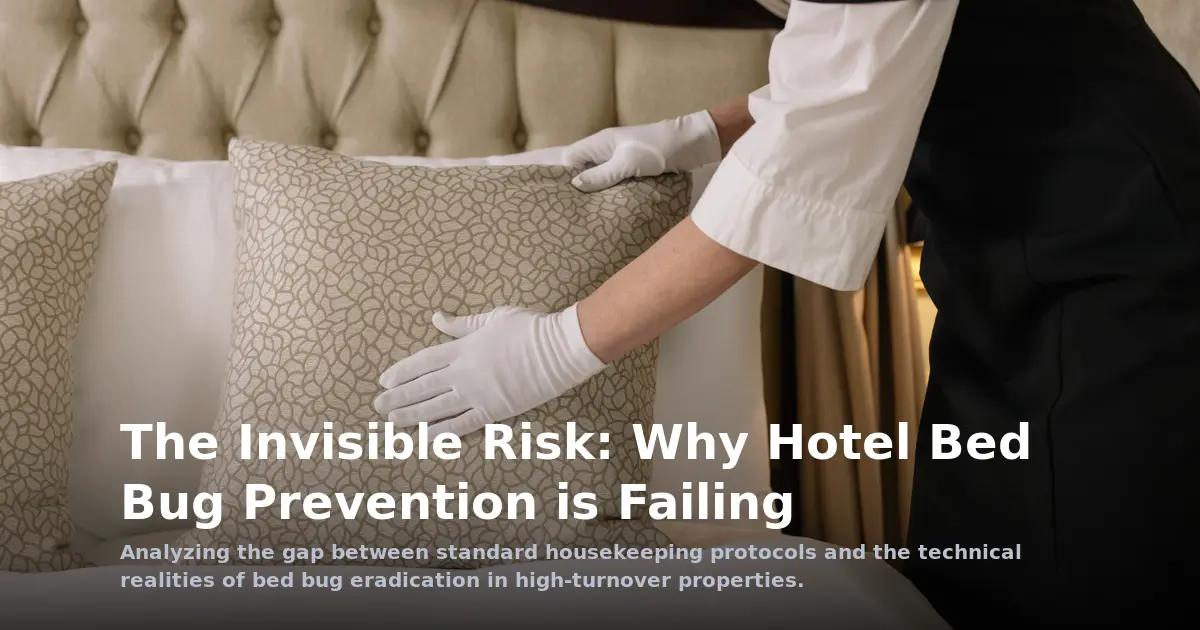
For most hotel operators, bed bugs are viewed as an inevitable tax on the business—a random, unlucky occurrence that can be managed with a call to a pest control vendor and a few rooms taken out of inventory. This perspective is not only flawed; it is a systemic failure of operational leadership. When a property treats infestations as an act of God rather than a failure of process, it concedes control over one of the most volatile variables in the guest experience.
The psychological toll of a bed bug sighting extends far beyond a single refunded night. In the age of instant social media amplification, 'bed bug anxiety' has become a brand contagion. A single photograph of a Cimex lectularius on a white linen sheet can trigger a cascade of negative reviews that erode years of trust. The damage is rarely contained to the room in question; it creates a perception of systemic neglect that affects the entire property's reputation.
The Failure of Reactive Detection
Most hotel pest prevention strategies rely on a reactive model: wait for a guest complaint, inspect the room, and treat the area. This approach is fundamentally broken because it relies on the guest as the primary detection mechanism. By the time a guest reports a bite, the infestation is often well-established, and the pest may have already migrated to adjacent rooms through electrical conduits and wall voids.
Common failure points in current training often stem from a lack of technical specificity. Housekeeping staff are frequently told to 'look for bugs,' but they are rarely trained in the forensic reality of detection. Bed bugs are nocturnal and masters of evasion; they are not typically sitting on the duvet during a 15-minute room turnover. Effective detection requires a disciplined search of the 'dark zones'—the seams of the mattress, the interior of the box spring, and the crevices of headboards—areas that are often skipped during high-pressure cleaning cycles.
The Urban Turnover Trap
High-turnover properties in urban hubs face a compounded risk. The constant influx of international travelers creates a revolving door of potential introductions. When this high volume is paired with a workforce characterized by high turnover and minimal training, the gap in hotel pest prevention widens.
In these environments, speed is prioritized over scrutiny. When a housekeeper is tasked with flipping a room in under 30 minutes, the meticulous inspection required to spot early-stage infestations is the first thing to be sacrificed. This creates a dangerous operational blind spot where the property is effectively blind to its own risk until a crisis occurs.
Shifting the Economic Calculus
There is a pervasive myth that proactive prevention is too expensive. However, a comparative analysis of costs reveals the opposite. The expense of a comprehensive, ongoing training program and a rigorous inspection schedule is a fraction of the cost associated with emergency remediation.
Emergency treatments often require the displacement of multiple guests, the loss of room revenue for several days, and the potential for legal liabilities. When you add the 'reputation tax'—the cost of discounting rooms to lure back skeptical guests—the financial burden of a reactive strategy is staggering. Moving to a proactive framework means empowering staff to stop the line. When a housekeeper is trained to identify an early sign and is empowered to flag a room for immediate inspection without fear of slowing down their quota, the property shifts from defense to offense.
The Path Toward Operational Resilience
True resilience in hotel pest prevention requires moving beyond the checklist. It demands a culture of vigilance where technical knowledge is treated as a core competency of the housekeeping department. This involves implementing a 'detect and destroy' mindset, where regular, non-complaint-based inspections become a standard part of the operational rhythm.
As the industry moves toward more integrated property management systems, the next evolution will likely involve digitizing pest logs to identify patterns and hotspots within a building. By treating pest management as a data-driven operational metric rather than a maintenance chore, hotels can finally close the gap between the perceived risk and the technical reality of eradication.