Meininger’s Scottish Debut: The Hybrid Hotel Bet on Edinburgh
As Meininger enters the Scottish market, the industry must ask if the hybrid model is a scalable solution to the UK's urban tourism crisis or a niche play for Gen Z.
Edinburgh is a city defined by seasonal extremes. From the atmospheric surge of the Fringe Festival to the steady stream of heritage tourists, the capital's hospitality infrastructure is perpetually under pressure. The announcement that Meininger Hotels is debuting in Scotland with a 157-room property marks more than just a brand expansion; it is a calculated bet on the viability of hybrid hotel development in the UK's primary city hubs.
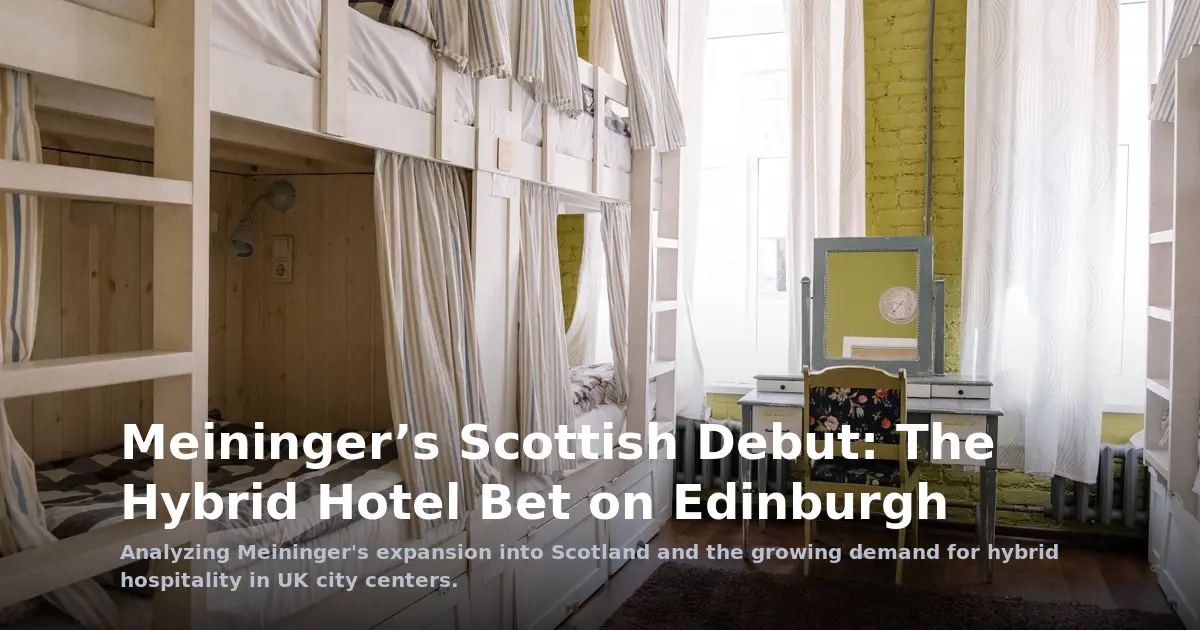
Meininger’s model—a strategic blend of hotel privacy and hostel sociability—is designed to capture a fragmented market. By offering both private rooms and dormitory-style beds, the operator effectively hedges its bets across multiple consumer segments. In a city like Edinburgh, where the gap between luxury boutiques and basic B&Bs is widening, this middle-ground approach targets the 'flashpacker' and the budget-conscious millennial who refuses to sacrifice aesthetic or cleanliness for price.
The Strategic Calculus of Hybrid Hotel Development
The arrival of this property, the 38th in Meininger's European portfolio, signals a broader trend of European operators aggressively targeting UK urban centers post-pandemic. For Meininger, Edinburgh represents a high-yield environment where the demand for flexible lodging often outstrips supply.
Hybrid hotel development is not merely about adding bunk beds to a lobby; it is an operational pivot toward maximizing revenue per square meter. By diversifying the room mix, operators can maintain higher occupancy rates throughout the year. During peak festival seasons, the hostel component ensures maximum capacity and high-volume turnover, while the hotel component provides a stable baseline of higher-ADR (Average Daily Rate) guests during the quieter winter months.
However, the success of this model depends on its ability to scale without diluting the brand. The challenge for hybrid operators is managing the friction between two very different guest profiles: the digital nomad seeking a communal workspace and the couple seeking a quiet getaway. Meininger’s ability to harmonize these demographics will determine if this 157-room venture is a blueprint for further UK expansion or a localized experiment.
Disrupting the Mid-Scale Landscape
With 157 rooms entering the market, Meininger is positioning itself to disrupt the traditional mid-scale and budget lodging sectors. For years, the UK's budget sector has been dominated by standardized, predictable brands. Meininger introduces a more curated, communal atmosphere that aligns with the shift toward 'experience-led' travel.
This shift is particularly evident in the design of communal living spaces. Modern travelers, specifically Gen Z and Millennials, are increasingly prioritizing shared environments—kitchens, lounges, and game zones—over the isolation of a standard hotel room. This reflects a broader societal trend toward flexible living and social connectivity, turning the hotel from a place to sleep into a social hub.
From a competitive standpoint, this puts pressure on traditional budget hotels to evolve. If Meininger can successfully deliver a high-design, low-cost experience that feels authentic rather than corporate, the 'standard' budget room may begin to feel obsolete to the next generation of travelers.
Scalability vs. Niche Appeal
The central question remaining is whether the hybrid model can solve the UK's systemic housing and tourism shortage. While a 157-room property provides immediate relief, the scalability of hybrid hotel development relies on the availability of larger, versatile urban plots that can support communal infrastructure.
Furthermore, there is the risk that the hybrid model remains a niche play. While the 'social' aspect is a draw for younger cohorts, the aging Boomer demographic—who still hold significant travel spend—may find the communal nature of hybrid properties off-putting. The success of the Edinburgh debut will hinge on whether Meininger can attract a cross-generational clientele or if it will remain a stronghold for the youth market.
As the UK hospitality sector continues to recover and evolve, the move toward flexible, hybrid formats suggests a future where the lines between lodging categories are permanently blurred. The Edinburgh property is a bellwether for this transition, indicating that the future of urban hospitality lies in adaptability, community, and the courage to challenge the traditional hotel room's primacy.