The Paradox of Progress: Balancing AI with Physical Hotel Upkeep
Analyzing the J.D. Power 2026 NAGSI findings on why traditional property maintenance still outweighs the AI hype in driving guest loyalty.
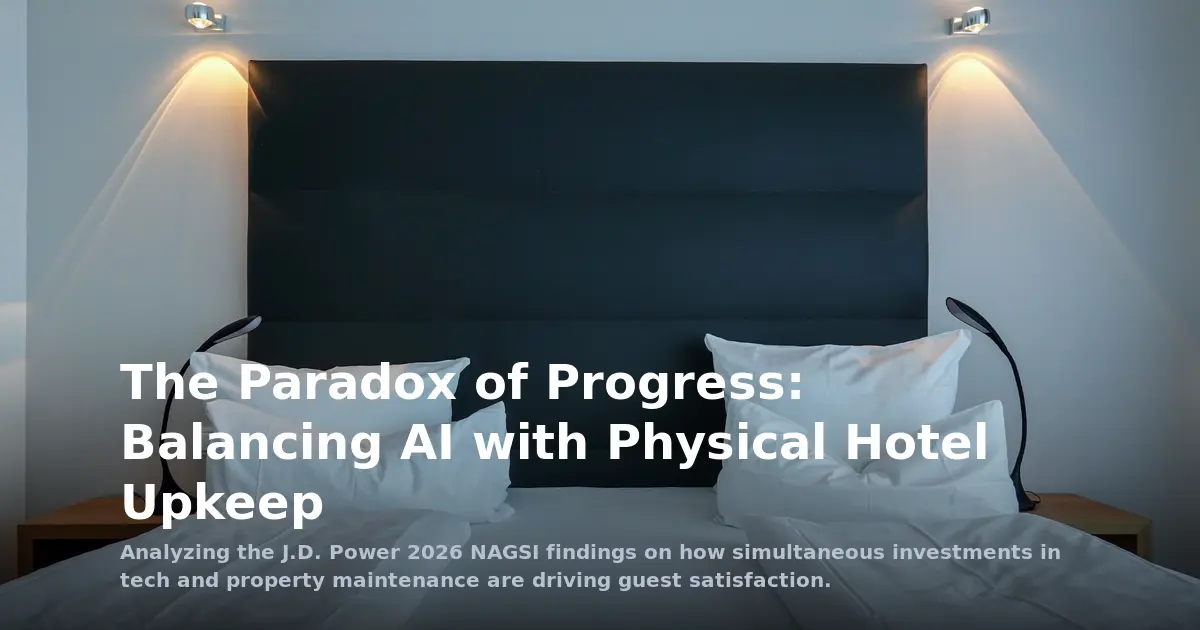
The hospitality industry is currently caught in a tug-of-war between the tangible and the virtual. As boardrooms buzz with the promise of generative AI, automated check-ins, and predictive guest profiling, a critical reality check has arrived via the J.D. Power 2026 North America Hotel Guest Satisfaction Index (NAGSI). The data suggests a fundamental truth that many tech-optimists have overlooked: a seamless AI interface cannot compensate for a peeling wallpaper or a malfunctioning HVAC system.
While the 2026 study reports a climb in satisfaction across every hotel segment, the catalyst for this growth isn't found in the cloud. Instead, the rise in scores is closely correlated with sustained investments in guest rooms, general property upkeep, and the basics of physical service. This creates a paradox of progress where the most advanced digital tools are being deployed in an industry that is fundamentally judged by its 'bricks and mortar' execution.
The Hierarchy of Hotel Guest Satisfaction Trends
To understand current hotel guest satisfaction trends, one must look at the 30-year evolution of the NAGSI study. In 1996, guest expectations were rooted in reliability and basic amenities. By 2026, the priority list has expanded to include hyper-personalization and frictionless technology. However, the hierarchy of needs remains unchanged. Physical comfort is the foundation; technology is the garnish.
There is a strong correlation between physical room renovations and the recent spike in satisfaction scores. When a property invests in new bedding, modernized bathrooms, and soundproofing, the guest perceives a direct increase in value. AI, by contrast, is often perceived as a convenience rather than a luxury. A guest will forgive a slow check-in process if the room is immaculate and modern, but they will rarely forgive a dated, poorly maintained room simply because the hotel has a sophisticated AI chatbot.
AI: Augmentation vs. Replacement
One of the most contentious shifts in the current landscape is whether AI is augmenting human service or attempting to replace it. The data suggests that guests respond most positively to AI when it removes 'friction'—such as automating a late check-out request—allowing human staff to focus on high-touch hospitality. When AI is used to replace human interaction entirely, the risk of satisfaction erosion increases.
However, a cynical question must be asked: is the rise in satisfaction a result of genuine quality improvement, or is it a symptom of lowered expectations? The post-pandemic era saw a significant dip in service standards and a rise in pricing. It is possible that guests, having grown accustomed to a diminished level of service during the recovery years, are now viewing a return to basic maintenance standards as a 'premium' experience. If satisfaction is rising simply because the bar was lowered, the industry is in a precarious position.
Strategic CapEx: The Visible vs. The Invisible
For hotel owners and asset managers, the challenge lies in the allocation of Capital Expenditure (CapEx). AI implementations are often 'invisible' investments—backend software and API integrations that do not change the guest's physical environment. Room upgrades are 'visible' investments.
To maximize ROI on guest satisfaction, owners should adopt a balanced approach:
- Prioritize the Sensory: Focus CapEx on high-touch areas (bedding, lighting, shower pressure) where guests physically interact with the brand.
- Deploy AI for Efficiency, Not Aesthetics: Use technology to solve operational bottlenecks (staffing shortages, communication lags) rather than as a centerpiece of the guest experience.
- Maintain the Baseline: Ensure that property upkeep is a non-negotiable line item. A high-tech hotel with a leaking ceiling is a failure of leadership, not a lack of innovation.
The Long-Term Outlook
As we move further into the decade, the divide between 'tech-forward' and 'guest-centric' hotels will widen. The winners will not be those who implement the most AI, but those who use AI to free up their human capital to focus on the physical environment and emotional connection. The 2026 NAGSI findings serve as a reminder that hospitality is, at its core, a physical business. The future of the industry depends on the ability to integrate the digital frontier without abandoning the foundational commitment to a well-maintained, welcoming physical space.