The Symbiosis of Scale: Why Airbnb Needs Ennismore's DNA
Analyzing how a partnership between platform demand and institutional hotel standards could redefine the hybrid hospitality model.
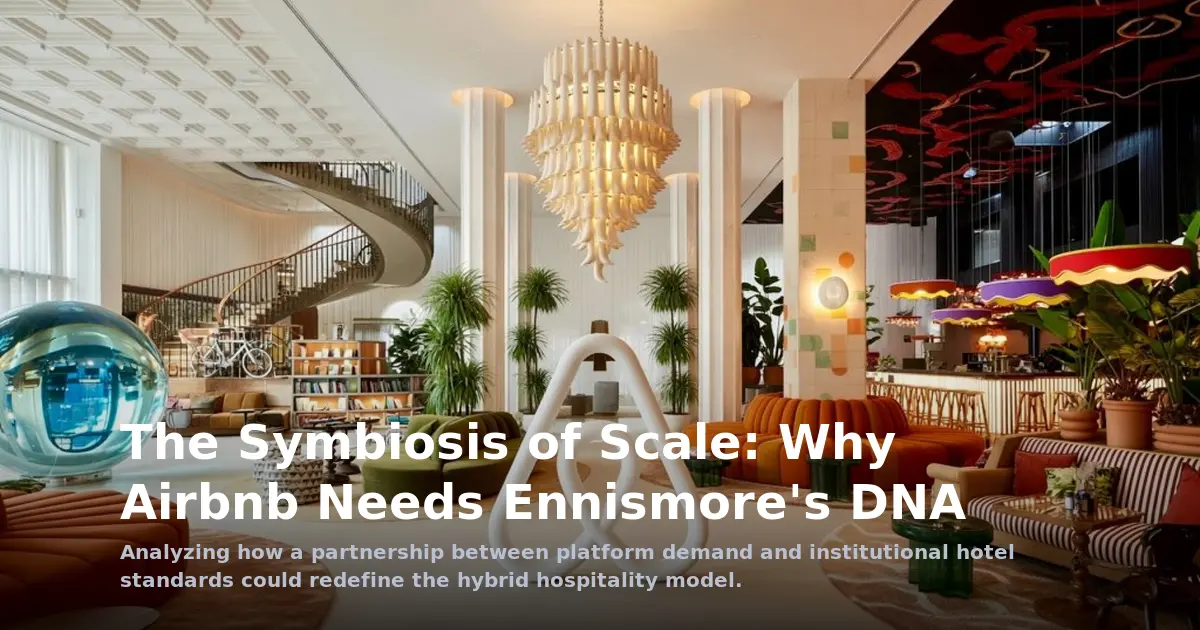
For years, Airbnb has operated under the assumption that software could disrupt the physical reality of hospitality. By commoditizing the spare bedroom and the vacation rental, the platform successfully decoupled the 'stay' from the 'service.' However, as the company attempts to move upmarket and integrate traditional hotel inventory, it has hit a ceiling that code cannot solve: the lack of institutional operational DNA.
To capture the high-end traveler, Airbnb needs more than a seamless booking interface; it needs a rigorous commitment to brand standards, food and beverage (F&B) depth, and a level of consistency that only professional operators can provide. This is where a strategic alignment with a player like Ennismore becomes more than just a growth tactic—it becomes a necessity for a viable hybrid hospitality strategy.
The Gap Between Platform Demand and Operational Excellence
Airbnb possesses the world's most powerful demand engine for short-term stays. Its data on traveler preferences is unparalleled, and its reach into the leisure market is absolute. Yet, there is a fundamental disconnect when this demand is channeled into high-end hotel offerings. The 'platform-first' approach assumes that the guest cares primarily about the aesthetic and the price point. In reality, the luxury traveler cares about the invisible infrastructure: the precision of the housekeeping, the quality of the concierge, and the sophistication of the on-site dining experience.
Currently, Airbnb’s hotel offerings often feel like an add-on—a collection of properties that fit a visual vibe but lack a cohesive service philosophy. Ennismore, by contrast, has built its reputation on 'lifestyle hospitality.' They don't just manage rooms; they curate ecosystems. Their expertise in F&B and atmospheric branding provides the institutional credibility that Airbnb currently lacks. While Airbnb can find the guest, Ennismore knows how to keep the guest engaged once they step through the door.
Redefining the Hybrid Hospitality Strategy
Integrating these two forces creates a potent new asset class. In the traditional 'operator-first' model, hotels build a brand and then spend millions in marketing to attract a specific demographic. In a hybrid model, the demand is pre-baked. By leveraging Airbnb's massive user base to fuel Ennismore's boutique portfolios, the risk of new property launches is drastically reduced.
This synergy allows for a shift in how hospitality is scaled. Instead of the rigid, cookie-cutter expansion of legacy hotel chains, a hybrid approach allows for a 'distributed luxury' model. Here, the flexibility of a home-sharing platform meets the rigor of professional hotel management. The result is a stay that feels local and authentic—satisfying the Airbnb ethos—but operates with the reliability and luxury of a five-star institution.
The F&B Imperative
One of the most overlooked aspects of this symbiosis is the role of food and beverage. For a hotel, F&B is not just a revenue stream; it is a brand signal. It transforms a place to sleep into a destination. Airbnb's current ecosystem is largely devoid of this. By absorbing the DNA of an operator like Ennismore, Airbnb can move beyond the 'bed' and into the 'experience,' capturing a larger share of the traveler's total spend during a trip.
The Shift Toward Institutionalized Flexibility
As the industry evolves, the distinction between a 'hotel' and a 'rental' will continue to blur. The winners will not be those who simply have the best app, nor those who have the most opulent linens, but those who can bridge the gap between the two.
For Airbnb, the path to true luxury isn't through more filters or better photography; it is through the adoption of operational excellence. By partnering with or acquiring the expertise of lifestyle operators, the platform can transition from a middleman to a curator of high-end experiences. This evolution would signal a move away from pure disruption and toward a sophisticated integration of technology and touch.
Looking forward, this shift suggests a future where the hospitality industry is split between ultra-commoditized budget stays and highly curated, hybrid experiences. The ability to scale boutique quality through a global platform will likely define the next decade of travel, creating a new standard where institutional reliability and residential charm are no longer mutually exclusive.