The Invisible ROI: Why CHP is the Next Great Hotel Infrastructure Play
Moving beyond aesthetic renovations to prioritize energy efficiency and long-term cost reduction in the mechanical room.
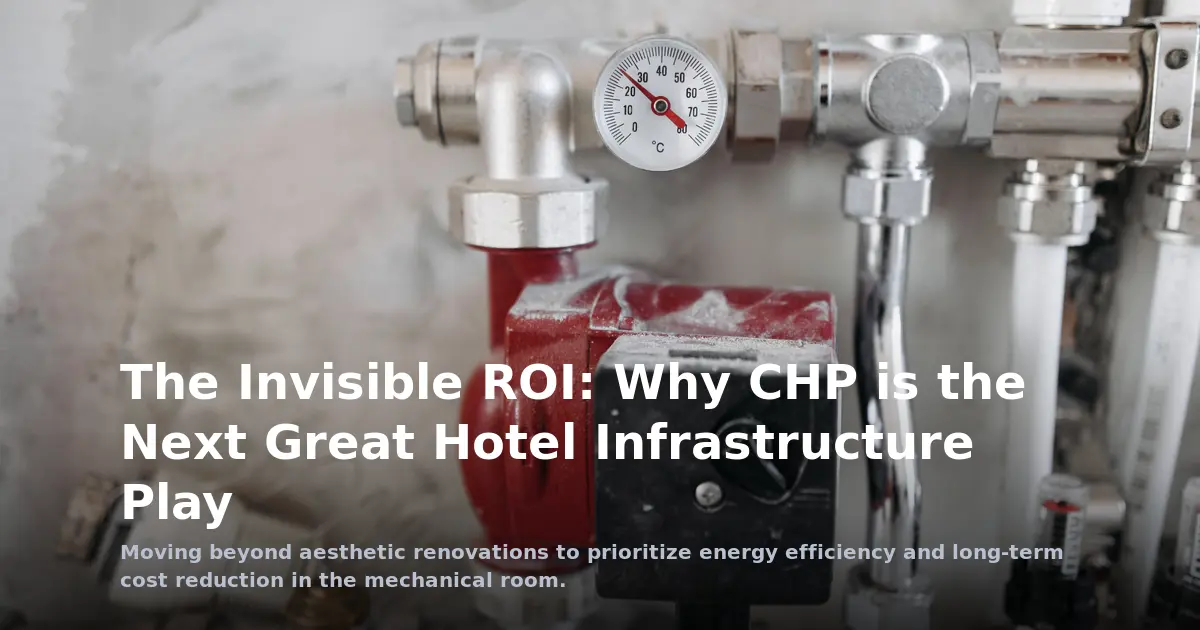
Hotel operators possess a finely tuned instinct for the visible. When a brand mandate descends or a capital expenditure budget opens up, the instinct is almost always to prioritize the guest-facing experience. New lobby furniture, high-thread-count linens, and digitized check-in kiosks are the primary drivers of Guest Satisfaction Scores (GSS) and Average Daily Rate (ADR). These upgrades provide an immediate, measurable return on investment through positive reviews and increased revenue.
However, this obsession with the aesthetic creates a dangerous strategic blind spot. While the lobby is being refreshed, the mechanical room—the actual heart of the property—is often neglected. Boilers, chillers, and electrical panels are treated as 'invisible' assets: they are ignored until they fail. When the failure is catastrophic, the cost is no longer just a line item in a budget; it is a total operational shutdown. This systemic neglect makes the modernization of hotel energy infrastructure not just a maintenance task, but a critical risk-mitigation strategy.
The High Cost of Invisible Neglect
For too long, the industry has operated on a 'run-to-fail' mentality regarding mechanical systems. The logic is simple: if the hot water is running and the HVAC is maintaining temperature, the system is functioning. But this ignores the escalating volatility of energy markets and the decaying efficiency of aging equipment.
When a hotel relies on outdated, standalone heating and cooling systems, it is essentially paying a premium for waste. Traditional energy setups are linear; they create heat or cold, and the byproduct is discarded. In an era of soaring utility costs and tightening margins, continuing to operate inefficient infrastructure is a leak in the P&L that no amount of lobby redesign can plug. The risk is compounded by the tension between brand-mandated aesthetic updates and the owner's need for sustainable utility infrastructure. Brand standards often force owners to spend on 'surface' upgrades while the underlying systems are screaming for intervention.
Transforming Waste into Asset: The Power of CHP
This is where Combined Heat and Power (CHP) systems change the financial equation. Unlike traditional power generation, which wastes a significant portion of energy as heat, CHP captures that heat and repurposes it for the building's hot water and space heating.
By generating electricity and thermal energy simultaneously on-site, a hotel can drastically reduce its reliance on the grid. This isn't merely an 'eco-friendly' gesture; it is a fundamental shift in operational economics. CHP transforms the mechanical room from a cost center into a strategic asset. By stabilizing energy costs and reducing the carbon footprint, operators can insulate themselves from the erratic pricing of the energy market.
Integrating CHP into a hotel's energy infrastructure provides three distinct advantages:
- Operational Resilience: On-site power generation reduces the impact of grid failures and brownouts, ensuring guest comfort is never compromised.
- Cost Predictability: By producing their own energy, hotels can better forecast utility expenditures, removing the volatility that often disrupts annual budgeting.
- Long-term Asset Value: Properties with modernized, efficient mechanical systems command higher valuations and are more attractive to institutional investors who prioritize ESG (Environmental, Social, and Governance) metrics.
Pitching the 'Unsexy' Upgrade
The challenge for operators is pitching these 'unsexy' upgrades to investors or ownership groups who are focused on the immediate ROI of a room renovation. To win this argument, the conversation must shift from 'maintenance' to 'risk management.'
Operators should present a framework that highlights the cost of inaction. Contrast the projected savings of a CHP system against the rising trajectory of local energy tariffs. Map the probability of a catastrophic failure of existing legacy systems against the cost of emergency repairs and lost room revenue. When the narrative shifts from 'replacing a boiler' to 'hedging against energy volatility,' the mechanical room suddenly becomes as attractive as the lobby.
As the hospitality industry moves toward a more sustainable future, the definition of a 'luxury' property will evolve. True luxury will no longer be defined solely by the velvet in the lounge, but by the invisible efficiency of the systems that power the building. The hotels that thrive in the next decade will be those that recognized the value of the mechanical room before the lights went out.