Modernizing the Myth: The High-Stakes Balance of Heritage and Efficiency at Burgh Island
An analysis of Sally Russell's operational overhaul of one of the UK's most iconic Art Deco retreats.
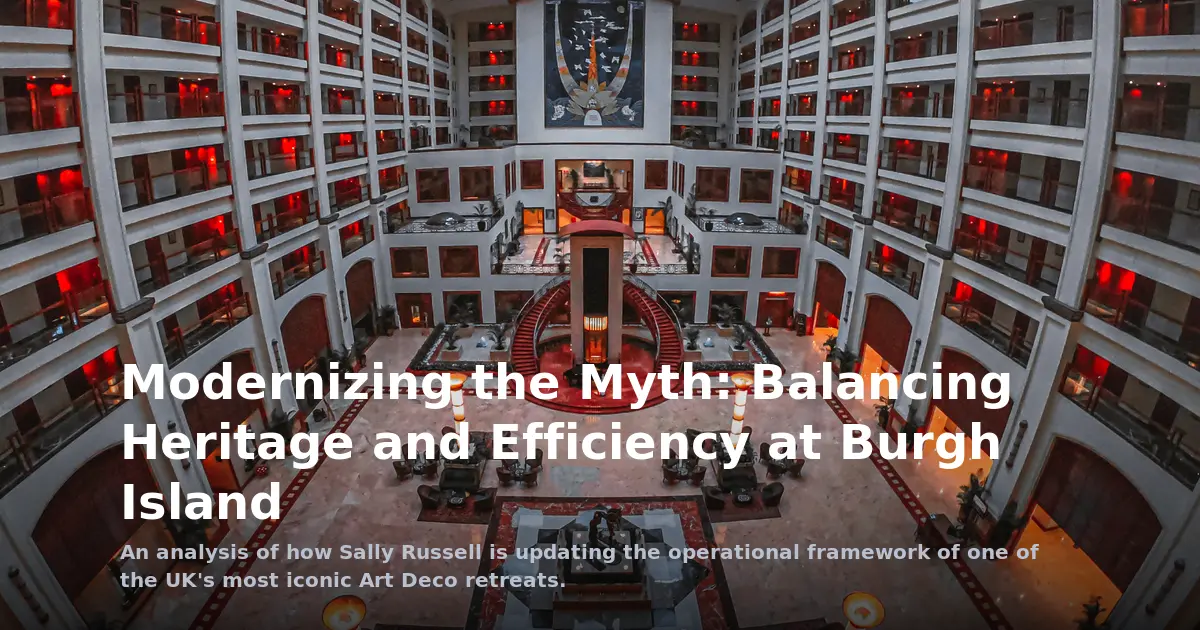
The allure of the legacy hotel lies in its perceived immunity to time. For guests visiting the Burgh Island Hotel, the draw is not merely the Art Deco architecture or the South Devon coastline, but the feeling of stepping into a curated past—a world of tidal crossings and timeless luxury. However, for a General Manager, this 'untouchable' charm is often a mask for operational fragility.
Under the leadership of Sally Russell, Burgh Island has spent its first transformative year attempting to solve the fundamental paradox of luxury hotel operations: how to implement 21st-century efficiency without eroding the romantic inefficiency that defines a heritage destination.
The Tension Between Heritage and High-Performance
In the realm of luxury hotel operations, modernization is frequently viewed as a series of digital upgrades—faster Wi-Fi, streamlined check-ins, and automated inventory. But at a property like Burgh Island, the challenge is structural and philosophical. When a hotel's primary value proposition is its 'legendary' status, any visible shift toward corporate standardization can feel like a betrayal of the brand.
Russell’s program of operational modernization must navigate this thin line. The objective is to remove the 'friction' of the guest experience—those moments where legacy infrastructure fails—without removing the 'magic.' For instance, updating the back-of-house logistics to ensure seamless service delivery is an invisible win. However, the push for 'expanded guest experiences' introduces a new variable: volume. As the hotel seeks to diversify its offerings to attract a contemporary luxury demographic, it risks straining the very intimacy that makes the island a retreat.
Logistics of the Tidal Constraint
Operating a luxury hotel on a tidal island introduces logistical complexities that would baffle a city-center GM. Every piece of linen, every gourmet ingredient, and every staff member is subject to the whims of the Atlantic.
Modernizing these workflows requires more than just a new software suite; it requires a complete reimagining of the supply chain. The expansion of guest experiences—ranging from wellness initiatives to enhanced dining—increases the operational load on an already constrained transit system. The risk here is a tipping point where the logistical effort to maintain a 'modern' luxury standard begins to overshadow the serene atmosphere of the destination. The success of Russell's tenure will be measured by whether these new experiences feel organic to the island or like forced impositions of a mainland luxury playbook.
Human Capital in Remote Luxury
Perhaps the most critical component of this transformation is the impact on staff. Remote luxury locations often suffer from a 'silo' effect, where staff retention is high but innovation is low due to isolation. By introducing a program of operational modernization, there is a risk of alienating a legacy workforce accustomed to 'the way things have always been done.'
Conversely, a modernized operational framework can be a powerful tool for recruitment. Today’s top hospitality talent seeks environments that offer professional growth and efficient systems. By elevating service standards and streamlining workflows, Russell is not just improving the guest experience; she is professionalizing the internal culture. This shift is essential for transforming a legacy asset from a 'historic curiosity' into a sustainable, contemporary luxury destination.
The Accelerated Turnaround
Typically, the turnaround of a legacy luxury asset is a multi-year endeavor, often involving heavy capital expenditure and a slow cultural shift. The 'transformative first year' reported at Burgh Island suggests an aggressive acceleration of this timeline. While rapid results are appealing to stakeholders, the industry question remains: can a heritage brand modernize its operations without losing its soul?
The broader implication for the global hotel industry is clear. As the 'New Luxury' traveler demands both authenticity and flawless execution, the role of the General Manager is evolving from a custodian of history to an architect of efficiency. The Burgh Island experiment serves as a litmus test for whether the myth of the past can coexist with the metrics of the future. If Russell can successfully bridge this gap, it will provide a blueprint for heritage properties worldwide struggling to remain relevant in a digital age.