Radisson's SE Asia Blitz: Scaling for the Next Tourism Wave
An analysis of whether Radisson Hotel Group's aggressive growth in the Asia Pacific is a strategic masterstroke or a high-stakes gamble.
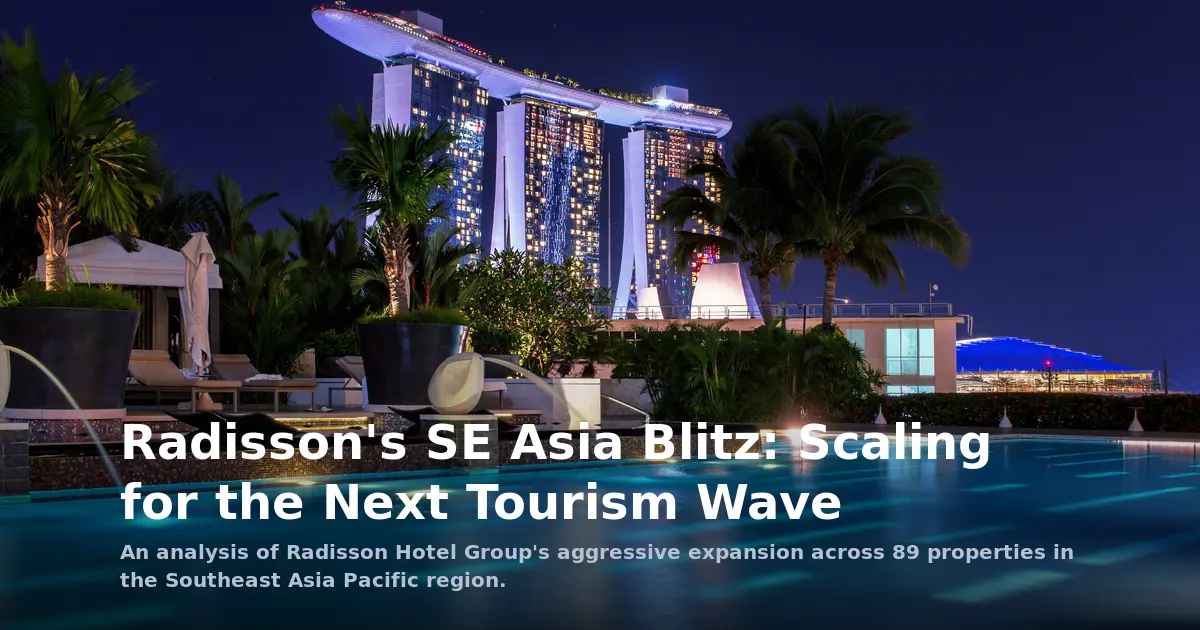
The hospitality landscape in Southeast Asia is currently defined by a frantic land grab. As travel patterns stabilize following the volatility of the early 2020s, the race to secure prime real estate in emerging hubs has intensified. At the center of this surge is the Radisson Hotel Group, which has signaled a bold commitment to the region with a portfolio now spanning 89 properties and over 17,000 rooms across Vietnam, the Philippines, Indonesia, Thailand, and Australasia.
For industry observers, this is more than a simple growth spurt. The scale of the Radisson APAC expansion suggests a calculated attempt to pivot the brand's gravity toward the East, capitalizing on the burgeoning middle class of Southeast Asia and the return of high-yield international corporate travel.
Balancing Aggression with Market Volatility
Rapid scaling in the Asia Pacific is rarely without risk. The region is a patchwork of disparate regulatory environments, varying labor costs, and fluctuating tourism dependencies. By planting flags across such a wide geographic spread, Radisson is effectively diversifying its risk, but it is also exposing itself to the systemic instabilities of emerging markets.
In Vietnam and Indonesia, the growth is particularly telling. These markets are currently experiencing a shift from budget-centric lodging to a demand for "attainable luxury" and standardized upscale experiences. Radisson's move to inject 17,000+ rooms into these corridors suggests they are betting on the long-term institutionalization of tourism in these hubs, rather than short-term spikes. However, the challenge lies in the pace. When a brand scales this quickly, the primary tension is always between the speed of development and the maintenance of global brand standards.
Localized Identity vs. Global Standardization
One of the most critical hurdles in the Radisson APAC expansion is the cultural nuance of the guest experience. In markets like Thailand and Australasia, the expectations of a "premium" stay differ wildly. Thailand’s hospitality market is hyper-competitive and deeply rooted in a specific culture of service excellence, while the Australasian market demands efficiency, sustainability, and a more understated luxury.
To succeed, Radisson cannot simply export a European or American blueprint. The success of this expansion will depend on "localized branding"—the ability to integrate regional aesthetics and service customs without diluting the core brand promise. If Radisson treats these 89 properties as a monolith, they risk being sidelined by nimble local operators who understand the regional psyche better than a global corporate office in Minneapolis or Brussels.
Shifting the Competitive Landscape
This aggressive footprint shift fundamentally alters the competitive dynamics for mid-to-upscale lodging. For years, the APAC region was dominated by a few legacy giants. Radisson's rapid entry forces competitors to either accelerate their own development pipelines or risk losing the most lucrative secondary cities to a first-mover advantage.
- Market Share Capture: By securing a large volume of rooms quickly, Radisson creates a barrier to entry for other mid-scale luxury brands.
- Corporate Synergy: A wider footprint makes the brand more attractive to global corporate accounts that require consistency across multiple Asian capitals.
- Operational Pressure: The sheer volume of new openings puts immense pressure on the talent pipeline, potentially leading to a war for skilled hospitality management in the region.
The Long-Term Outlook
Ultimately, the success of this strategy will not be measured by the number of rooms opened, but by the RevPAR (Revenue Per Available Room) stability over the next five years. The gamble here is that the post-pandemic recovery is not a temporary bounce, but a structural shift in how the world travels.
As the industry moves toward a more fragmented, experiential model of travel, Radisson is positioning itself as the reliable, scalable infrastructure for the modern traveler. If they can marry their global operational efficiency with a genuine local soul, they may well define the next decade of hospitality in the Asia Pacific. The risk remains high, but in the current climate, the cost of hesitation is often higher than the cost of an ambitious bet.