The Human Hedge: Fighting OTA Dominance with Pre-Arrival Storytelling
Analyzing how high-touch reservation strategies and early guest engagement can shift bookings from third-party platforms to direct channels.
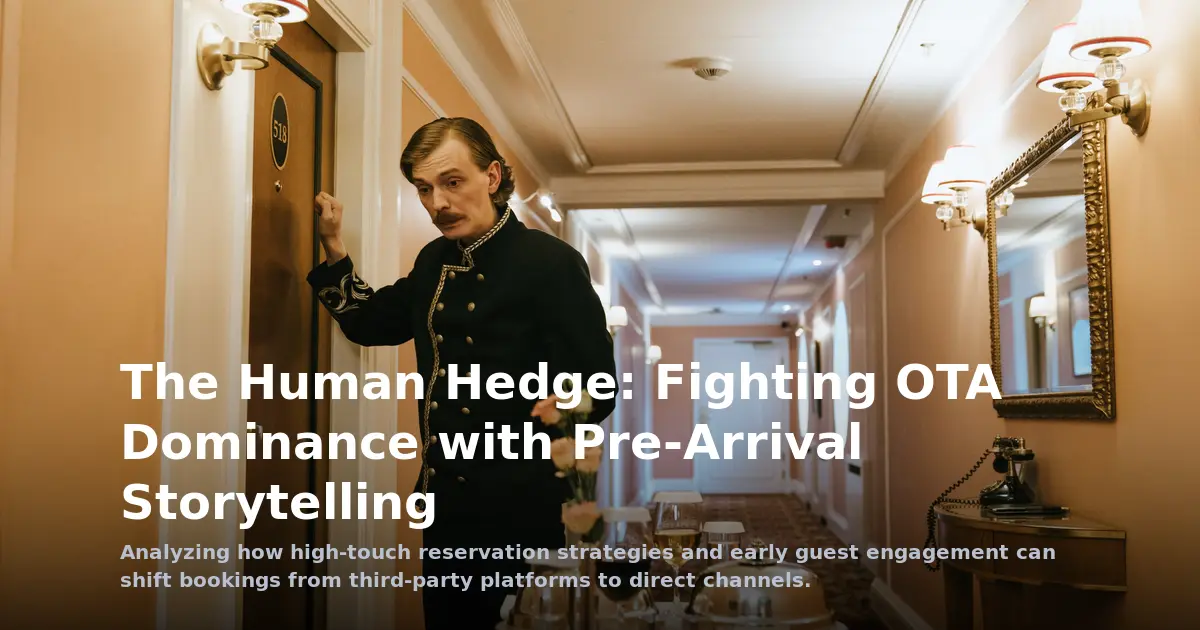
For decades, the hotel industry has played a defensive game of cat-and-mouse with Online Travel Agencies (OTAs). The strategy has largely been technical: price parity wars, loyalty program incentives, and the desperate hope that a 'Best Rate Guaranteed' banner on a homepage will outweigh the convenience of a global distribution system. However, as AI-driven automation makes the transactional side of booking a commodity, the most effective weapon against commission bleed is not a better algorithm, but a return to radical hospitality.
The current friction in the guest journey begins at the point of sale. Most OTAs are designed for efficiency, not experience. They are transactional funnels that strip away the soul of a property, reducing a unique destination to a set of star ratings and a thumbnail gallery. When a guest books through these channels, the relationship is with the platform, not the hotel. To break this cycle, operators must shift the booking process from a transaction to a relationship.
Redefining Direct Booking Strategies Through Human Connection
Effective direct booking strategies are often misdiagnosed as technical SEO problems. While visibility matters, the true conversion happens when a property introduces a human element before the guest even sets foot on the property. By implementing high-touch reservation models—where staff engage in storytelling and personalized consultation—hotels can create a psychological bond that an automated checkout page cannot replicate.
When a reservationist moves beyond confirming dates to understanding the intent of the trip, the value proposition shifts. A guest isn't just buying a room; they are buying into a curated experience. This approach transforms the reservationist from a data-entry clerk into a brand ambassador. The ROI of this human-led model is not found in the speed of the transaction, but in the lifetime value of the guest and the immediate elimination of the 15-25% commission fee paid to third parties.
The Psychology of Pre-Arrival Engagement
Guest anxiety is at its highest between the moment of booking and the moment of arrival. This 'liminal space' is where most hotels remain silent, leaving the guest to wonder if their special requests were noted or if the property lives up to the photos. By filling this void with proactive, storytelling-driven outreach, hotels can significantly increase ancillary spend and guest satisfaction.
Pre-arrival communication should not be a series of automated templates. Instead, it should be a narrative bridge. When a property shares a local secret, a curated dining suggestion, or a personal welcome, they are signaling that the guest is seen and valued. This level of engagement does two things: it reduces the likelihood of cancellations and it primes the guest to spend more on-site because a foundation of trust has already been established.
Scalability: Boutique Intimacy vs. Luxury Volume
One of the primary critiques of high-touch models is scalability. For a 500-room luxury resort, providing a personalized, human-led booking experience for every guest seems impossible. However, the solution lies in 'selective intimacy.' By identifying high-value segments—such as multi-generational families or long-term stay guests—properties can apply these radical hospitality tactics where they yield the highest return.
For boutique properties, this model is a survival imperative. Small hotels cannot compete with the marketing budgets of Expedia or Booking.com. Their only competitive advantage is their ability to be more human than a corporation. By leveraging storytelling to build multi-generational loyalty, boutique hotels create a moat around their business that no amount of OTA discounting can penetrate.
The Future of the Guest Relationship
As the industry leans further into generative AI for guest queries, the premium on genuine human interaction will only increase. The future of hospitality will likely see a bifurcation: a low-cost, fully automated tier for transient travelers, and a high-touch, relational tier for those seeking true connection. Properties that master the art of the pre-arrival relationship will find themselves less dependent on the whims of third-party algorithms and more anchored in a loyal, direct-paying community. The hedge against digital dominance is, and always will be, the human touch.