The Santorini Paradox: Balancing Hyper-Luxury with Volcanic Restraint
An analysis of how the Canaves Collection navigates the tension between high-demand spectacle and sustainable Cycladic architecture.
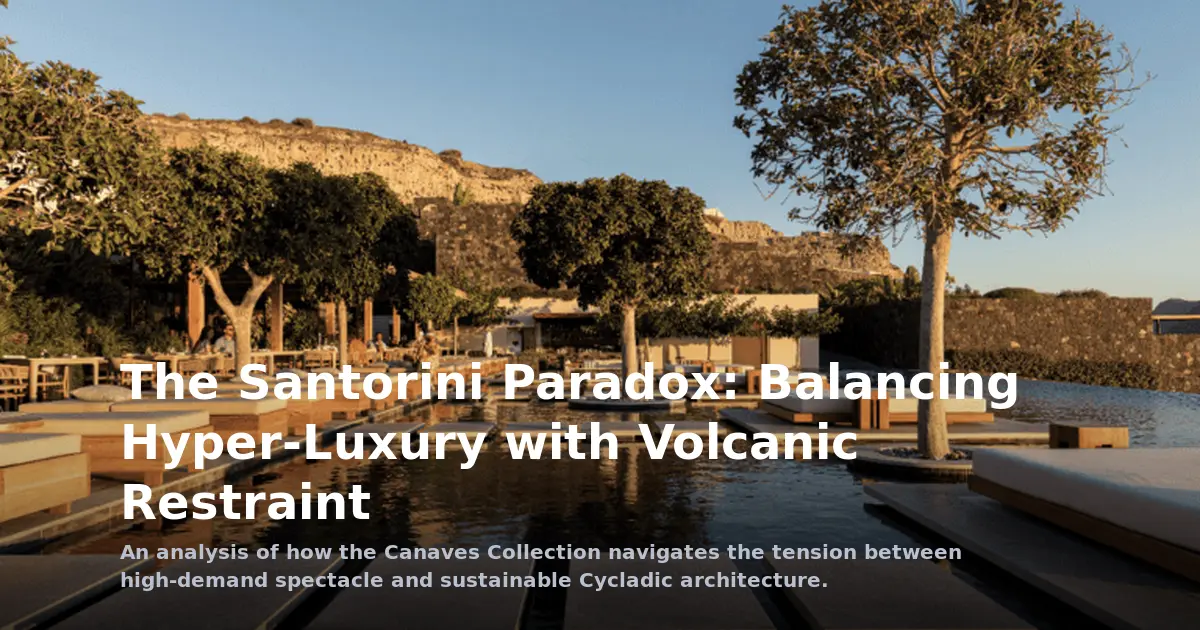
Santorini is a landscape of contradictions. It is a place where the raw, violent history of a volcanic eruption has created one of the most coveted vistas in the global travel market. For the modern developer, the caldera represents a high-stakes gamble: the desire to create a 'spectacle' for the ultra-high-net-worth traveler often clashes with the fragile geological and cultural reality of the island.
In the realm of luxury hospitality design, the temptation is to lean into the theatrical. The 'Instagrammability' of the infinity pool overlooking Oia has become a baseline requirement, yet there is a growing risk that this pursuit of visual dominance leads to an 'over-tourism' aesthetic—a sanitized, repetitive version of luxury that erodes the very authenticity guests are paying to experience.
The Tension Between Spectacle and Restraint
The challenge for operators like the Canaves Collection is managing the paradox of visibility. True luxury in the Aegean is no longer about adding more; it is about what is subtracted. The philosophy of 'volcanic restraint' argues that the architecture should not compete with the caldera, but rather serve as a frame for it.
When design prioritizes geological harmony over flashy extravagance, the result is an 'invisible' luxury. This approach respects the traditional Cycladic vernacular—white-washed walls, organic curves, and subterranean structures—while integrating state-of-the-art amenities. The goal is to avoid the 'resortification' of the cliffs, where hotels begin to look like generic luxury clusters rather than indigenous extensions of the rock.
Operational Hurdles of Volcanic Geography
Building on a caldera is not merely an aesthetic choice; it is an engineering feat. The operational challenges are immense. The porous nature of volcanic soil, combined with steep inclines and strict zoning laws, means that every square meter of development is a battle against gravity and regulation.
- Structural Integrity: Integrating modern luxury suites into ancient cliffside cave dwellings requires a delicate balance of reinforcement and preservation.
- Resource Management: Water scarcity and waste management on a volcanic island necessitate an invisible infrastructure that must operate flawlessly without disrupting the guest experience.
- Environmental Impact: The risk of erosion and land instability means that over-development is not just a regulatory risk, but a physical one.
By embracing restraint, developers reduce the physical load on the landscape, which in turn preserves the long-term asset value of the property. A hotel that feels like a natural part of the cliff is far more resilient to shifting trends than one that relies on a specific, trendy architectural gimmick.
Redefining the Aegean Luxury Standard
Comparing the approach of the Canaves Collection with other luxury clusters in the Aegean reveals a divergence in strategy. While some developments opt for sprawling, standalone structures that dominate the skyline, the trend toward integrated, low-profile design is gaining traction. This shift represents a move away from 'conspicuous consumption' toward 'conscious luxury.'
This evolution in luxury hospitality design suggests that the future of the Mediterranean market lies in the ability to provide hyper-luxury services within a footprint that feels humble. The value proposition is shifting: guests are increasingly seeking a sense of place over a sense of prestige. When the architecture recedes, the destination speaks louder.
As the industry moves toward a more sustainable model of tourism, the 'Santorini Paradox' serves as a blueprint for other fragile ecosystems. The ability to balance the demands of the global elite with the limitations of a volcanic landscape is the ultimate test of a developer's sophistication. Those who prioritize geological harmony over immediate spectacle will likely find their assets appreciating in value as the world moves toward a more authentic, restrained definition of luxury.