Radisson's Thailand Expansion: A Calculated Bet on the Multi-Generational Traveler
Analyzing whether Radisson's new 300-room Thai resort is a simple capacity play or a strategic pivot toward the luxury family segment.
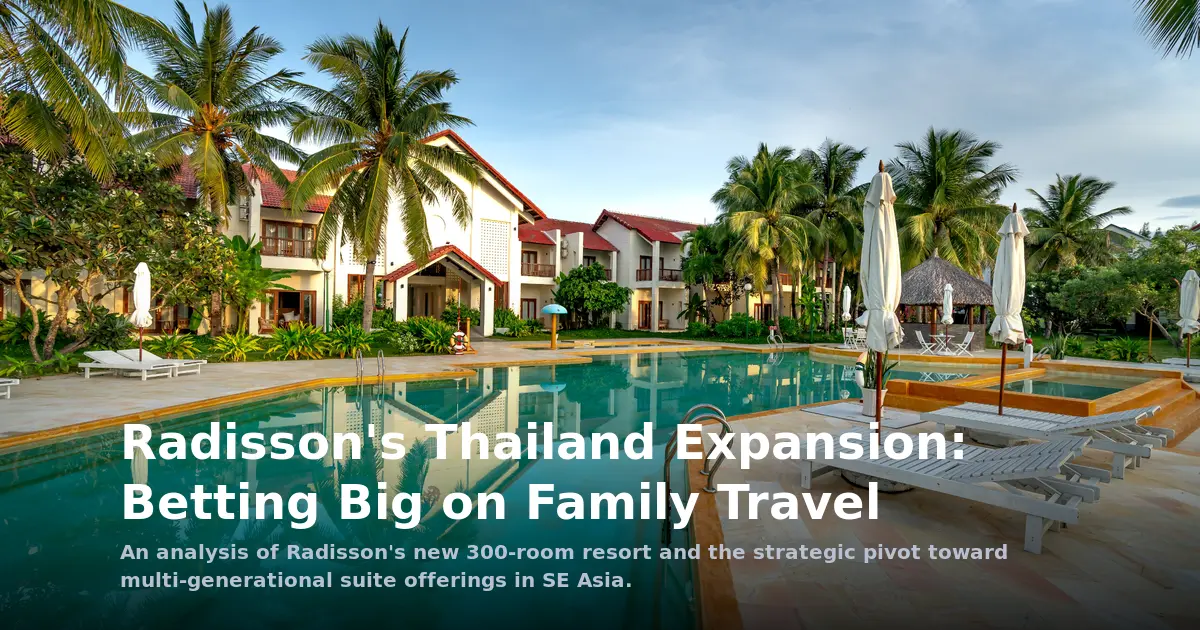
The addition of a 300-room resort to Radisson's portfolio in Thailand is more than a mere expansion of inventory. In a market often characterized by either ultra-luxury boutique villas or massive, impersonal convention hotels, Radisson is attempting to carve out a middle ground: the high-capacity, family-centric luxury hub. This move signals a broader strategic shift in how global operators are approaching the post-pandemic recovery in Southeast Asia.
Decoding the Room Mix: More Than Just Bed Count
While the headline figure of 300 rooms suggests a push for scale, the true story lies in the configuration. The inclusion of a significant number of family suites and two-bedroom suites indicates that this Thailand resort development is specifically engineered to capture the multi-generational travel trend.
For years, the luxury sector in Thailand leaned heavily toward couples and honeymooners. However, the pandemic fundamentally altered the travel psyche. We are seeing a surge in 'bubble travel'—where extended families travel together for longer durations. By prioritizing larger suite configurations over a high volume of standard king rooms, Radisson is acknowledging that the modern luxury traveler is no longer just a duo, but a collective. This shift in the room-to-suite ratio is a clear signal: the goal is to increase the Average Daily Rate (ADR) by capturing higher-spending family units who require more space but prefer the amenities of a single managed property.
The Operational Friction of Scale
Scaling a resort to 300 rooms while maintaining a 'family-first' ethos presents a distinct set of operational challenges. There is a natural tension between the efficiency of a large-scale operation and the personalized service expected in the luxury family segment.
Managing high-capacity family resorts requires a different labor model than boutique offerings. The demand for specialized childcare, diverse F&B options that cater to all ages, and the logistical nightmare of coordinating multi-generational activities can easily erode margins if not managed with precision. Radisson's challenge will be to avoid the 'theme park hotel' trap—where the property becomes a functional dormitory for families—and instead maintain a sophisticated atmosphere that appeals to the parents' desire for luxury and the children's need for engagement.
The 'Bleisure' Catalyst and Regional Competition
This development also taps into the burgeoning 'bleisure' trend. As remote work becomes institutionalized, the boundary between professional obligations and family vacations has blurred. Southeast Asia has become a primary destination for digital nomads and high-net-worth executives who bring their families along for extended stays.
When compared to other global operators in the region, Radisson's approach is more aggressive in its pursuit of the mid-to-upper luxury family tier. While competitors like Marriott and Accor have a wider variety of brands to segment their audience, Radisson is leveraging its brand identity to provide a consistent, scalable luxury experience. The 300-room capacity allows them to achieve economies of scale that smaller boutique resorts cannot, potentially allowing them to undercut the ultra-luxury villas while offering a superior experience to the standard hotel guest.
Market Implications for Thailand's Hospitality Landscape
This Thailand resort development enters a market that is currently recalibrating its supply. The influx of high-capacity, suite-heavy properties suggests a move away from the 'exclusive seclusion' model toward 'inclusive luxury.'
As other operators witness the success of this model, expect a ripple effect across the region. We will likely see a wave of renovations in existing Thai properties to convert standard rooms into interconnected suites. The focus is shifting from the number of guests to the composition of the guest group. The operator that can successfully balance the chaos of family travel with the serenity of a luxury retreat will own the next decade of growth in Southeast Asia.
Looking ahead, the success of this venture will depend on whether Radisson can maintain high occupancy during the off-peak seasons. If they can successfully pivot these family suites into 'work-from-hotel' hubs for the corporate elite during the shoulder months, they will have created a sustainable, year-round revenue engine that redefines the traditional resort model.