The Destination Wedding Boom: Capturing the £36k Guest Spend
Analyzing the surge in UK couples seeking international venues and the operational opportunities for luxury resorts.
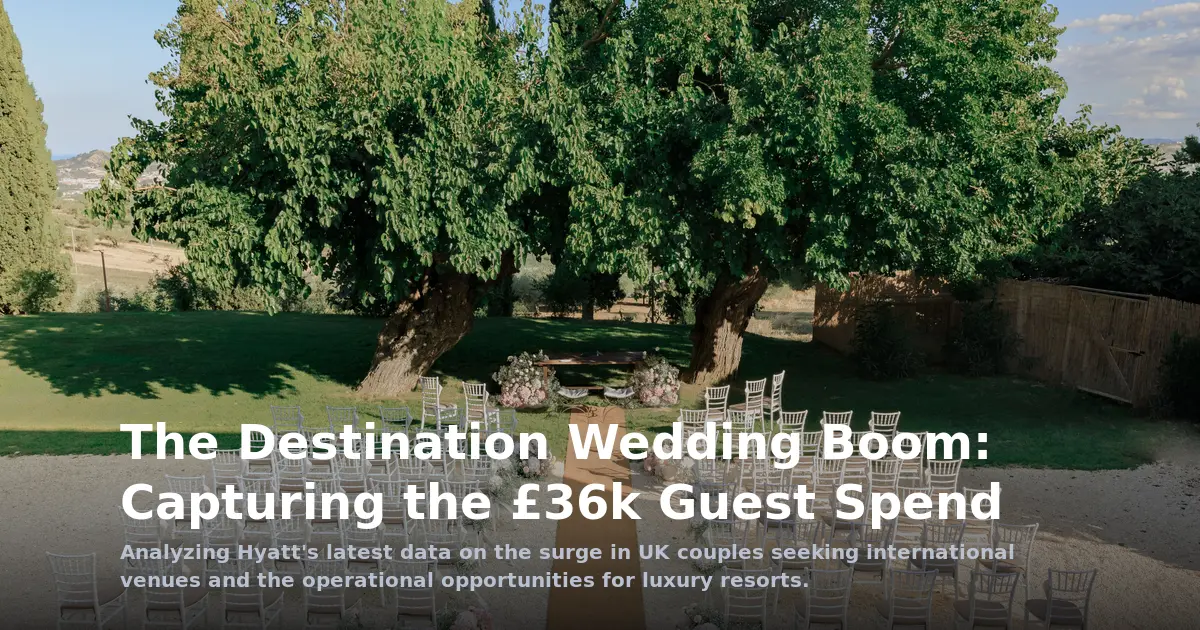
The traditional domestic wedding is undergoing a fundamental transformation. For the modern luxury traveler, the ceremony is no longer just a localized event, but the catalyst for a high-spend, multi-day residential experience. Recent data indicates a staggering 83% of UK adults now express a desire to marry abroad, signaling a structural shift in how high-net-worth couples view the 'wedding' as a travel product.
With an average budget of £36,579, this demographic represents a lucrative opportunity for luxury resorts. However, for hotel operators, the challenge lies in moving beyond the basic room-block mentality. To truly capture this value, revenue management must pivot from selling inventory to selling integrated, high-margin experiences.
Monetizing the Experience-Led Celebration
The shift toward international venues is driven by a move away from traditional formality toward 'experience-led' celebrations. This transition allows hotels to move the needle on Average Daily Rate (ADR) by bundling ancillary services that go far beyond the banquet hall. When a couple budgets over £36,000, the spend is rarely concentrated solely on the venue hire; it is distributed across a curated itinerary.
To optimize this, luxury resorts should implement tiered 'experience packages' that integrate high-margin services:
- Pre-wedding wellness retreats: Leveraging spa facilities for multi-day bridal and groom preparations.
- Curated local excursions: Partnering with regional vendors for private vineyard tours or yacht charters, where the hotel takes a concierge fee.
- Extended residency stays: Incentivizing guests to extend their trip by 48-72 hours post-event through tiered room rates.
By framing the wedding as a 'destination event' rather than a 'date,' hotels can significantly increase the Total Revenue Per Available Room (TRevPAR).
Mapping Destination Wedding Demand: Italy and Beyond
While Italy continues to dominate as the primary choice for UK couples, the sheer volume of destination wedding demand is creating a spillover effect. As prime Italian villas and luxury hotels reach capacity, there is a growing window for emerging markets in Southern Europe and North Africa to position themselves as viable, high-luxury alternatives.
For operators in these emerging zones, the strategy should be one of 'competitive positioning.' If Italy is the gold standard for romance, emerging markets must compete on exclusivity, ease of access, and superior service ratios. The data suggests that UK couples are not just looking for a scenic backdrop, but for a seamless operational execution that minimizes the stress of international logistics.
Optimizing the Group Booking Window
One of the most critical operational hurdles in managing destination weddings is the volatility of the booking window. Unlike corporate group travel, which often follows a predictable quarterly cycle, high-spend destination weddings are subject to seasonal peaks and longer lead times.
To mitigate risk and maximize yield, revenue managers should adopt a dynamic pricing model for group blocks. Instead of flat-rate group discounts, hotels should implement:
- Flexible attrition clauses: Protecting the hotel against late cancellations while providing couples with a sense of security.
- Tiered deposit structures: Linking deposits to specific milestones (e.g., venue lock-in, menu selection, guest list finalization) to ensure consistent cash flow.
- Off-peak incentives: Offering value-adds—rather than price cuts—to encourage bookings during shoulder seasons, thereby smoothing out occupancy curves.
The Long-Term Shift in Luxury Group Travel
The 83% demand rate is not a temporary post-pandemic anomaly; it is a reflection of a broader demographic shift. Millennials and Gen Z are prioritizing 'social currency' and shared experiences over material assets. This means the wedding is now a vehicle for luxury group travel, where the guest list acts as a pre-qualified pool of high-spending individuals who are likely to return to the property as independent leisure guests.
As the industry evolves, the hotels that thrive will be those that stop viewing weddings as a one-off event and start viewing them as the ultimate customer acquisition tool. The ability to convert a wedding guest into a lifelong brand loyalist is where the true long-term ROI resides. The future of the luxury resort lies in its ability to orchestrate these complex, high-emotion events with clinical operational precision.