Dining as a Destination: The Rise of the 'Restaurant-First' Hotel Stay
Analyzing how a shift in guest discovery and AI-driven booking is turning hotel dining from a secondary amenity into a primary acquisition tool.
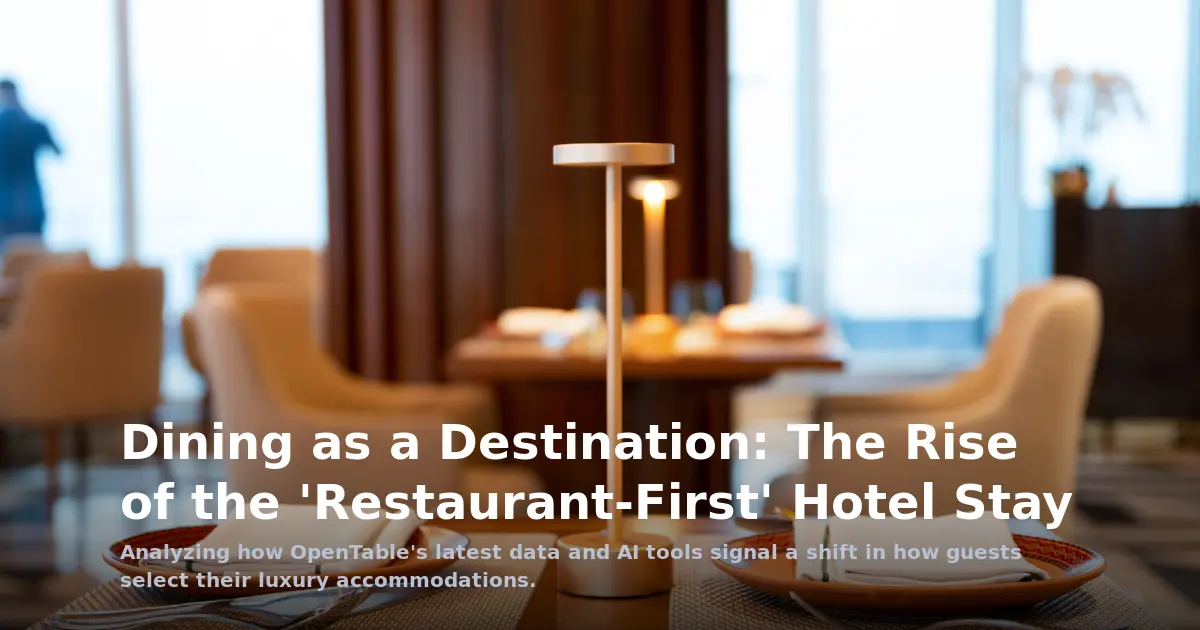
For decades, the hotel restaurant was a convenience—a place for guests to grab a club sandwich without leaving the property or a formal space for corporate dinners. It was an amenity designed to serve the room, not the other way around. However, a fundamental shift in consumer behavior is flipping this script. We are witnessing the emergence of the 'reverse funnel,' where the culinary reputation of a property now dictates its room occupancy and overall market positioning.
Recent data indicates a significant uptick in hotel restaurant bookings, with a 13% year-over-year increase. This isn't merely a post-pandemic rebound in dining; it is a signal that the modern luxury traveler is selecting their accommodation based on the plate, not the pillow. When a hotel restaurant achieves 'destination' status, it ceases to be a cost center and becomes the property's most powerful marketing engine.
The Reverse Funnel and Hotel Restaurant Trends
In the traditional hospitality model, the room was the product and the restaurant was the add-on. Today, the most successful properties are leveraging a reverse funnel strategy. By investing in high-concept, chef-driven dining experiences, hotels are attracting a high-spending demographic that may not have originally been searching for a hotel stay. Once the guest is captured by the dining experience, the transition to an overnight stay becomes a natural extension of the evening.
This trend is directly impacting Average Daily Rates (ADR). Properties that house top-tier culinary destinations can command a premium not only for their tables but for their rooms. The perceived value of the entire property rises when it is anchored by a critically acclaimed restaurant. The dining room becomes a living showroom for the hotel's brand identity, signaling sophistication, taste, and exclusivity more effectively than any lobby design or linens ever could.
AI Concierges and the Frictionless Discovery Journey
The acceleration of this trend is being fueled by the integration of AI into the discovery process. The introduction of AI-powered concierge tools on booking platforms is fundamentally changing how guests interact with hotel offerings. By reducing the friction between 'discovery' and 'reservation,' these tools allow guests to curate an entire itinerary around a specific dining experience in seconds.
When AI can seamlessly suggest a high-performing hotel restaurant and then facilitate the booking of both a table and a room, the barrier to entry for the hotel is lowered. This technology removes the cognitive load from the guest, making the 'restaurant-first' decision an effortless transition. For operators, this means that the digital visibility of their F&B program is now just as critical as their OTA presence.
Boutique Agility vs. Global Standardization
This shift in hotel restaurant trends creates a distinct advantage for independent boutiques and lifestyle brands. Global chains often struggle with the 'generic' label, where the dining experience is standardized across regions to ensure consistency. However, today's luxury guest craves authenticity and local relevance—elements that are often stripped away in the pursuit of brand uniformity.
Independent properties have the agility to partner with local chefs, experiment with hyper-seasonal menus, and create 'vibes' that feel organic rather than corporate. As guests increasingly seek 'destination-grade' dining, the pressure on global brands to decentralize their F&B operations will intensify. The brands that survive this shift will be those that allow their individual properties the autonomy to operate as independent culinary destinations rather than franchised eateries.
As we look toward the next few years, the divide between 'hotels with restaurants' and 'culinary destinations with rooms' will widen. The winners will be those who stop viewing F&B as a support service and start treating it as the lead acquisition strategy. The future of luxury hospitality isn't just about where the guest sleeps, but about the flavor of the experience that convinced them to book the stay in the first place.