From Guests to Groupies: Orchestrating the Hotel Fan Experience
Applying the principles of musical performance to hotel operations to turn transactional stays into lifelong brand loyalty.
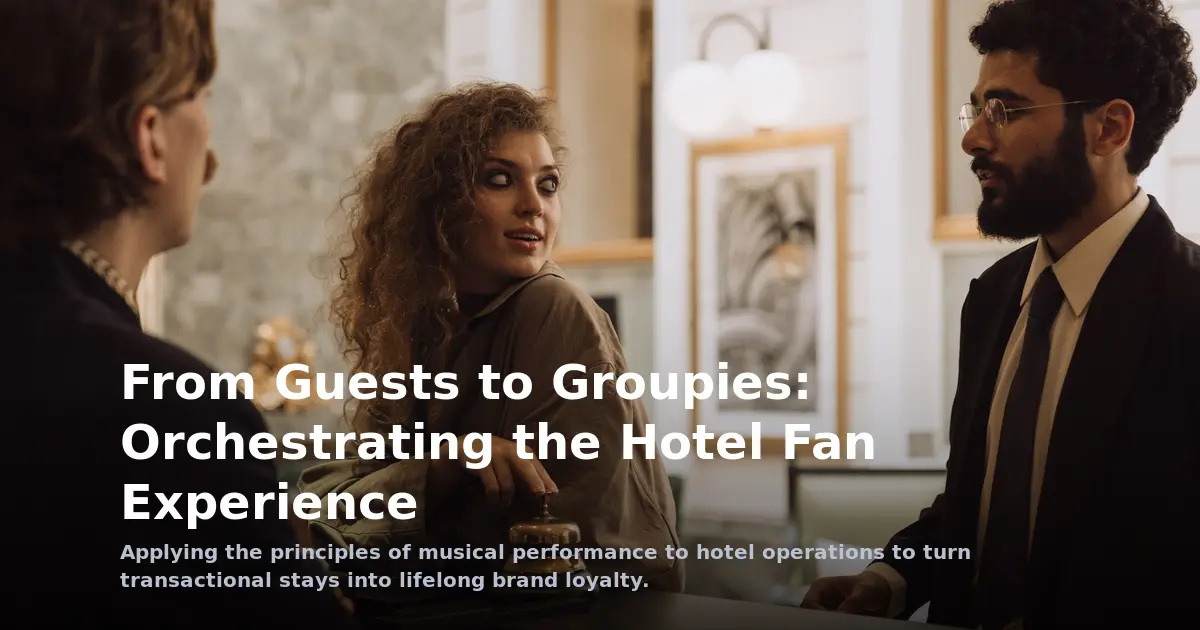
The modern hotel lobby has become a masterclass in efficiency, but a wasteland of emotion. From the synchronized nodding of concierge staff to the rigid scripts of front-desk check-ins, the industry has optimized for the 'satisfactory' at the expense of the 'soulful.' In the pursuit of scalable consistency, hospitality has inadvertently traded resonance for robotics.
To reclaim true guest experience loyalty, operators must stop viewing the guest journey as a series of checkboxes and start viewing it as a musical performance. A great concert isn't just about the notes being played correctly; it is about the emotional arc, the timing, and the ability of the performer to read the room and pivot in real-time.
Managing the Prelude: The Anxiety of Uncertainty
Every guest journey begins long before the valet takes the keys. There is a critical 'uncertainty' phase—the gap between booking and arrival—where anxiety often simmers. Will the room actually look like the photos? Will the parking be a nightmare?
Most hotels treat this phase as a dormant period, sending a generic confirmation email and then falling silent. However, the most successful operators treat this as the 'tuning' phase of a performance. By implementing proactive, personalized communication that addresses specific pain points before they occur, hotels can transform pre-arrival anxiety into anticipation. When a hotel anticipates a guest's need before the guest has to articulate it, they aren't just providing a service; they are setting the tempo for the entire stay.
The Gap Between Satisfactory and Amazement
There is a dangerous comfort in 'satisfactory' service. A clean room, a polite greeting, and a functioning elevator are the baseline requirements of the contract, not the catalysts for loyalty. The industry is currently saturated with hotels that are technically proficient but emotionally vacant.
To move from satisfaction to amazement, the operational shift must move from compliance to connection. Amazement occurs in the margins—the unplanned gesture, the intuitive upgrade, or the staff member who remembers a guest's preference for sparkling water without being prompted. This is the difference between a studio recording and a live performance. The recording is perfect, but the live show is where the magic happens because of its raw, human element.
Avoiding the 'One-Hit Wonder' Effect
In the music industry, a one-hit wonder is an artist who captures the public's attention once but fails to sustain it. In hospitality, this manifests as the 'perfect stay' marred by a single, catastrophic failure. A guest may adore the rooftop pool and the bedding, but a dismissive tone from a breakfast server or a billing error at checkout can erase hours of positive reinforcement.
This is where the concept of rhythmic consistency comes into play. Loyalty is not built on a single peak experience, but on the absence of troughs. A single discordant note in the guest journey can derail the entire emotional trajectory. To prevent the 'one-hit wonder' stay, hotels must audit their touchpoints for consistency across departments, ensuring that the luxury promised by the marketing team is delivered by the housekeeping staff.
The Improvisation Audit: A Framework for Consistency
To ensure the guest journey maintains its rhythm, operators should evaluate their touchpoints using the following criteria:
- The Hand-off: Is the transition between the valet, the front desk, and the room seamless or fragmented?
- The Recovery: When a mistake occurs, does the staff follow a script, or are they empowered to improvise a solution?
- The Emotional Peak: At what point in the stay does the guest feel 'seen' as an individual rather than a confirmation number?
- The Fade-out: Does the departure feel like a transactional exit or a genuine invitation to return?
Empowerment as the Ultimate Instrument
True improvisation requires trust. When hotel staff are bound by rigid SOPs, they become mere technicians. To foster guest experience loyalty, management must grant employees the autonomy to deviate from the script to solve a problem or create a moment of delight.
When a front-desk agent is empowered to send a complimentary bottle of wine to a room because they overheard a guest mentioning an anniversary—without needing managerial approval—they are improvising. This autonomy transforms a job into a performance and a guest into a fan.
As the industry leans further into AI and automated check-ins, the premium on human authenticity will only increase. The hotels that survive the next decade will be those that realize technology should handle the transactions, leaving the humans free to handle the emotions. The future of luxury is not in the gold leaf of the lobby, but in the rhythmic, authentic, and improvised connections that make a guest feel like the only person in the room.