The Global Nomad GM: Analyzing the Rise of Cross-Continental Leadership
Helga Deboeck's appointment at Anantara Bazaruto Island signals a strategic shift toward borderless leadership in luxury resort management.
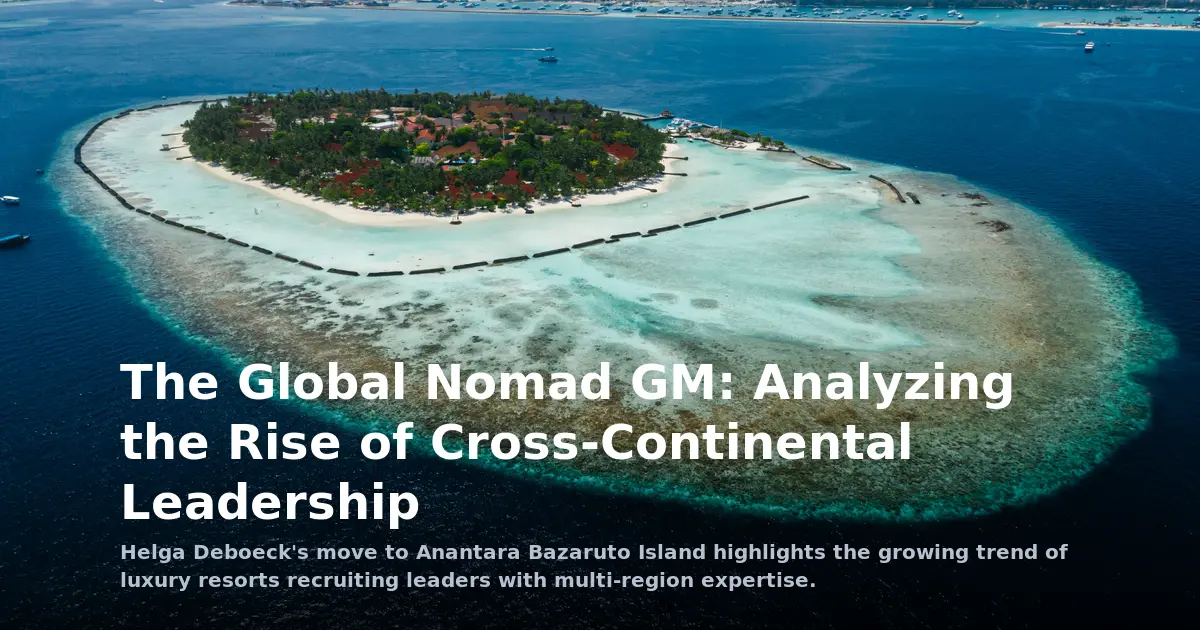
The appointment of Helga Deboeck as General Manager of Anantara Bazaruto Island Resort is, on the surface, a standard executive move. However, when viewed through the lens of current industry trends, it represents a broader evolution in luxury hotel leadership. Deboeck does not arrive in Mozambique as a regional specialist, but as a 'global nomad'—a leader whose career trajectory spans Europe, the Caribbean, the Middle East, and Africa.
In the legacy era of hospitality, luxury brands often prioritized deep regional expertise. A GM for a remote island property was expected to be a master of that specific geography's logistics, labor laws, and cultural nuances. Today, that paradigm is shifting. The modern ultra-luxury traveler is equally likely to visit a private island in Mozambique as they are a boutique estate in Greece or a beach resort in the Caribbean. To meet this guest, brands are now recruiting leaders who possess a 'borderless' operational DNA.
The Strategic Value of Versatility in Luxury Hotel Leadership
Deboeck’s transition from the Domes of Corfu, an Autograph Collection property in Greece, to the remote shores of Bazaruto Island highlights the strategic value of multi-region experience. While the Mediterranean and the Indian Ocean are worlds apart geographically, the psychological profile of the high-net-worth guest remains remarkably consistent. They demand a seamless blend of local authenticity and uncompromising global standards.
Leaders who have navigated the disparate challenges of multiple continents bring a unique form of intellectual agility. A GM who has managed the seasonal volatility of the Caribbean and the high-pressure service expectations of the Middle East is better equipped to handle the logistical isolation of a Mozambican island. This versatility allows a leader to implement 'best-in-class' practices from one corner of the globe while remaining flexible enough to adapt them to a new cultural context.
Bridging the Gap: From the Mediterranean to Mozambique
Comparing the operational requirements of a Greek Autograph Collection property and a Mozambican island resort reveals the complexity of this leadership transition. In Greece, the challenge is often managing high-volume luxury within a mature, highly competitive tourism infrastructure. In Mozambique, the challenge shifts toward infrastructure resilience, complex supply chain management, and the cultivation of a local workforce in a remote environment.
The risk for any leader moving between such disparate markets is the attempt to 'copy-paste' operational standards. True luxury hotel leadership in the modern era requires a nuanced understanding of how to translate luxury. The 'gold standard' of service in Corfu may not resonate in Bazaruto; instead, the leader must identify the universal core of luxury—anticipatory service and emotional intelligence—and wrap it in the local cultural fabric of Mozambique.
Impact on Staffing and Guest Experience
This trend toward international versatility has profound implications for staff training. When a GM brings a global perspective, the training regimen often evolves from rigid SOPs to a more holistic approach to hospitality. By introducing diverse perspectives from the Caribbean or the Middle East, a leader can inspire a local team to think beyond their immediate geography, elevating the property's service level to a global benchmark.
For the guest, this results in a more sophisticated experience. The 'global nomad' GM is uniquely positioned to curate experiences that appeal to the cosmopolitan traveler, knowing exactly what a guest from New York or London expects after visiting the Maldives or St. Barts. This alignment of leadership experience with guest expectation is where the competitive advantage now lies.
As the luxury sector continues to expand into increasingly remote and 'untouched' destinations, the demand for leaders with cross-continental fluency will only grow. The industry is moving away from the era of the regional expert and toward the era of the global strategist. Those who can synthesize the operational rigor of Europe with the adaptability required for emerging markets will be the ones defining the next decade of high-end hospitality.