The Resilience Gap: What a Sleep Inn’s Recovery Tells Us About Midscale Ownership
Analyzing the systemic challenges and recovery strategies of independent franchisees navigating crisis and rebuilding.
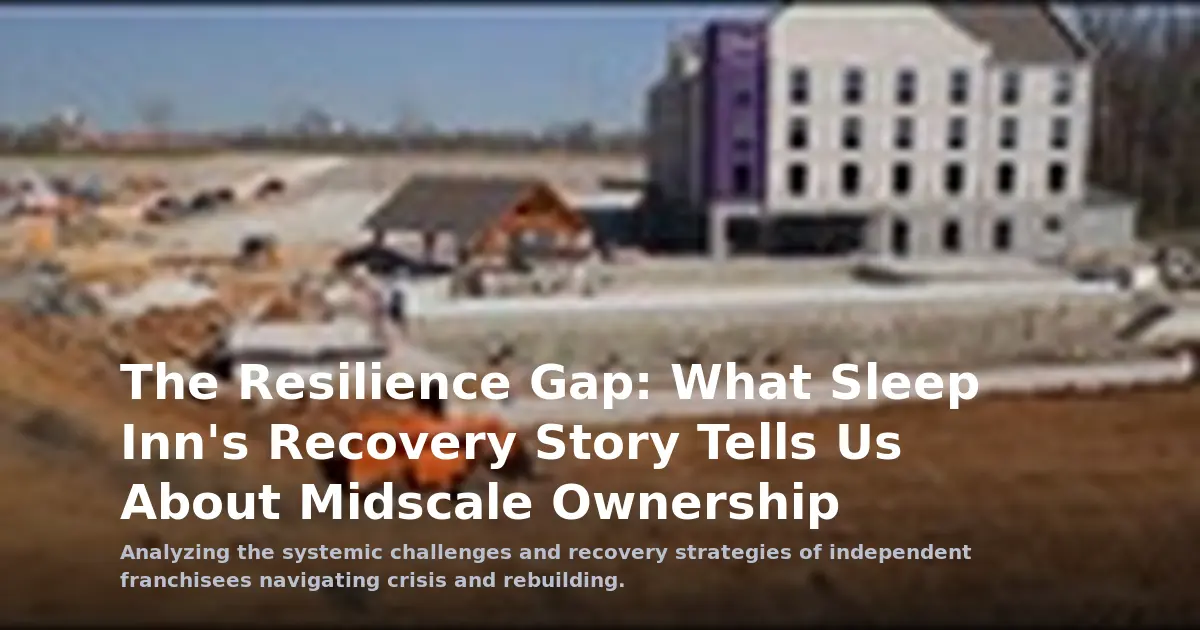
The narrative of the 'comeback' is a staple of corporate storytelling, often sanitized into a linear progression of struggle and triumph. However, for the independent franchisee operating in the midscale sector, the reality of recovery is rarely a clean trajectory. It is a grueling exercise in risk management, capital infusion, and psychological endurance. When we examine the recovery of a single Sleep Inn property, we aren't just looking at a successful renovation; we are seeing a case study in the fragility and strength of the individual owner within a massive brand ecosystem.
The Asymmetry of Brand Support and Owner Burden
In the midscale hotel segment, the relationship between the franchisor and the franchisee is fundamentally asymmetrical. While global brands provide the machinery of success—centralized reservation systems, global marketing reach, and standardized operational playbooks—the actual weight of a crisis falls squarely on the owner's shoulders. When a property faces systemic decline or external shocks, the brand provides the 'what' (the standards), but the owner must provide the 'how' (the capital and the labor).
This creates a significant resilience gap. For many small-scale operators, the path to recovery requires more than just operational tweaks; it requires a fundamental restructuring of their financial risk. The burden of maintaining brand standards during a downturn often means the owner must prioritize corporate compliance over immediate liquidity, a tension that can push independent operators to the brink of insolvency before the recovery phase even begins.
Quantifying Hotel Ownership Resilience
True hotel ownership resilience is not merely the ability to survive a bad quarter; it is the capacity to rebuild a vision while simultaneously managing the daily friction of guest complaints and staffing shortages. In the case of the Sleep Inn recovery, the transition from a struggling asset to a high-performing property suggests a specific model of recovery: the shift from 'maintenance mode' to 'visionary mode.'
Operational hurdles in midscale recovery typically fall into three categories:
- Capital Exhaustion: The struggle to secure renovation loans when the asset's current valuation is depressed.
- Labor Erosion: The difficulty of attracting quality staff to a property that has developed a reputation for decline.
- Guest Perception Lag: The reality that a physical renovation happens faster than the digital sentiment (reviews) can pivot.
For the owner, the psychological toll of this process is immense. The 'perseverance' cited in success stories is often a euphemism for high-stakes gambling with personal equity. The ability to maintain a long-term vision while managing these short-term crises is what separates sustainable ownership from those who are eventually absorbed by larger REITs.
From Vision to Tangible Guest Experience
Rebuilding a vision is a conceptual exercise, but in the hospitality industry, vision must be translated into the physical. The success of a recovery is measured in the delta between the previous guest experience and the new one. In midscale properties, this usually manifests in the 'invisible' improvements: updated HVAC systems, improved linens, and a refreshed lobby flow.
When an owner invests in these tangible improvements, they are doing more than updating a room; they are signaling a change in management philosophy. This shift from a 'cost-cutting' mindset to an 'investment' mindset is the primary driver of ROI in the recovery phase. It transforms the property from a commodity—where the only lever is price—into a destination where value is derived from the quality of the stay.
The Scalability of the Recovery Model
Can this model of resilience be scaled for other small-scale franchisees? To an extent, yes, but it requires a specific alignment of owner temperament and market timing. The recovery of a single property often relies on the 'founder's mentality'—an owner who is willing to be on-site, overseeing every detail of the renovation and personally managing the staff transition.
As the industry moves toward further consolidation, the ability for independent owners to maintain this level of agility is becoming a competitive advantage. While large management companies have scale, they lack the emotional investment and rapid decision-making capabilities of a dedicated owner-operator.
Looking forward, the industry must reckon with the fact that the stability of global brands relies on the resilience of these individual nodes. If the gap between corporate requirements and owner capability becomes too wide, the brand integrity suffers. The future of midscale hospitality will likely be defined by how well brands can support the psychological and financial fortitude of the independent owner, ensuring that the path to recovery is a sustainable bridge rather than a precarious leap.