The Maintenance Payoff: Why Upkeep is Outperforming Amenities
Analyzing how a return to operational basics is driving the current surge in guest satisfaction scores.
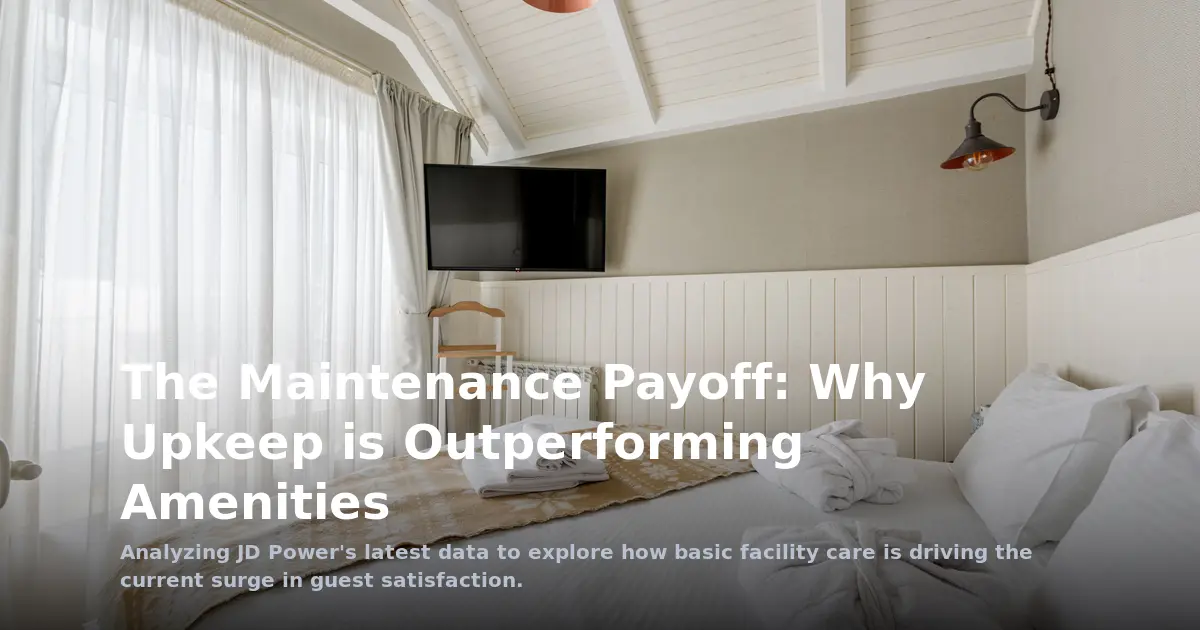
For years, the hospitality industry has been seduced by the "shiny object" syndrome. From AI-driven concierge bots to high-concept rooftop installations, the race to capture guest attention has often shifted toward the extravagant. However, recent data suggests a corrective shift in guest psychology. A significant 13-point jump in overall satisfaction scores reveals a fundamental truth: guests are less impressed by what is new than they are by what actually works.
This surge in hotel guest satisfaction is not a random fluctuation. It is the result of a delayed but necessary realization that operational excellence in the basics—cleanliness, functioning hardware, and well-maintained facilities—is the primary driver of loyalty. While luxury additions provide a momentary marketing hook, the absence of basic upkeep creates a friction point that no amount of high-end amenity can mask.
The Renovation Cycle and the Satisfaction Spike
The recent uptick in scores correlates strongly with the post-pandemic renovation cycle. During the height of the global travel slump, many operators pivoted from guest service to capital expenditure, utilizing downtime to address deferred maintenance and room refreshes. The result is a fleet of properties that feel "crisp" again.
When a guest enters a room where the paint isn't peeling, the HVAC doesn't rattle, and the linens are pristine, the perceived value of the stay increases exponentially. This is the "baseline effect." When the basics are handled perfectly, guests are more forgiving of minor service lapses. Conversely, when a facility is crumbling, even the most attentive staff cannot bridge the gap in guest perception. The data suggests that the industry is rediscovering that a well-maintained standard room is more valuable to the average traveler than a poorly maintained luxury suite.
The Labor Paradox: Maintaining the Standard
Despite the gains in satisfaction, the industry faces a precarious paradox. The very thing driving hotel guest satisfaction—meticulous upkeep—is the hardest thing to maintain in a climate of chronic labor shortages. Engineering and housekeeping departments have been the hardest hit by the workforce crisis, leading to a dangerous gap between the desire for maintenance and the capacity to execute it.
Operators who have succeeded in raising their scores are those who have shifted from reactive to preventative maintenance. The properties seeing the most growth are not those spending the most on new furniture, but those investing in the people who keep the existing furniture in good repair. The challenge moving forward is whether this satisfaction spike is sustainable if the labor gap continues to widen. If a hotel cannot staff its maintenance team, the current gains from pandemic-era renovations will quickly erode into a new cycle of deferred upkeep.
Evaluating the Value and F&B Surge
Interestingly, the data shows gains in food and beverage (F&B) and perceived value. It is tempting to view this as a victory for operational strategy, but a more critical analysis suggests it may be a reaction to inflation. As dining costs soar across the broader economy, guests may be perceiving hotel F&B as a better value relative to external options, or they may be adjusting their expectations of "value" in a high-inflation environment.
To ensure these gains are not temporary, operators must avoid the temptation to raise prices simply because satisfaction is up. The goal should be to decouple value from price and instead tie it to the consistency of the experience.
High-Impact, Low-Cost Upkeep Wins
For operators looking to replicate these satisfaction gains without a massive capital injection, the focus should be on "high-visibility" maintenance:
- Lighting Audits: Replacing flickering bulbs or upgrading to warm LEDs instantly changes the perceived quality of a room.
- Hardware Tightening: Fixing loose door handles, wobbly tables, and creaky drawers removes the "cheap" feel of a property.
- Deep Cleaning Cycles: Focusing on grout, baseboards, and air vents—areas often missed during daily turns—signals a level of care that guests notice subconsciously.
- Paint Touch-ups: Addressing scuffs in high-traffic corridors prevents a property from looking "tired" even if the furniture is old.
The industry is entering a phase of operational maturity. The era of winning guests through novelty is fading, replaced by a demand for reliability. As the novelty of post-pandemic renovations wears off, the winners will be the operators who treat maintenance not as a cost center to be minimized, but as the most effective guest acquisition tool in their arsenal.