The Scarborough Pivot: Can Victorian Guest Houses Survive the Modern Era?
Analyzing the investment potential and operational hurdles of converting traditional UK seaside B&Bs into boutique stays.
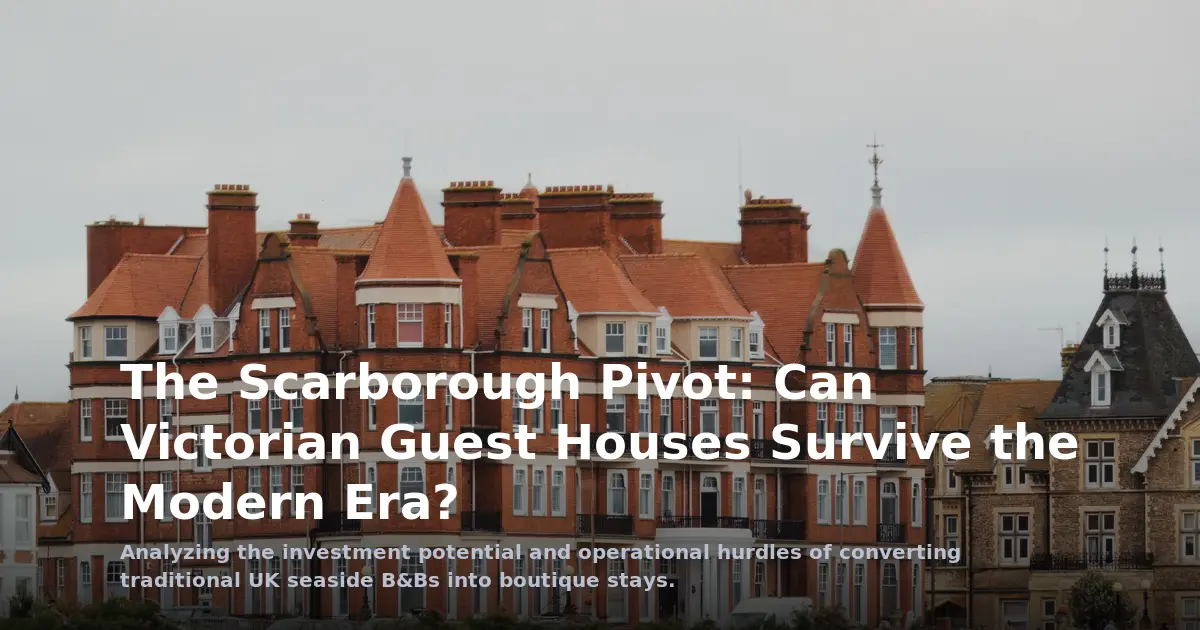
The recent arrival of a 10-bedroom Victorian seafront guest house in Scarborough on the market for £635,000 is more than a simple real estate listing; it is a case study in the current state of UK hospitality investment. For the uninitiated, a seafront property with en-suite facilities at this price point appears to be an accessible entry point into the market. However, for the seasoned operator, the valuation represents a crossroads between two diverging business models: the fading tradition of the family-run B&B and the aggressive rise of the 'lifestyle hotel.'
The Valuation Gap: Asset vs. Experience
At £635,000, the asset is priced competitively relative to North Yorkshire hospitality yields, but the figure is deceptive. In the current climate, the value of a seaside property is no longer tied solely to its brick-and-mortar utility or its proximity to the shoreline. Instead, value is derived from the potential for brand transformation.
Traditional guest house operations have historically relied on a high-volume, low-margin strategy—filling rooms during the summer peak and weathering the winter slump. This 'guest house' mentality is increasingly obsolete. Modern travelers, particularly those fueled by the post-pandemic surge in domestic staycations, are not looking for a room and a cooked breakfast; they are seeking a curated experience. To unlock the true ROI on a property like this, an investor cannot simply maintain the status quo. They must pivot toward a boutique model that prioritizes aesthetic identity, digital-first guest journeys, and high-yield ancillary revenue.
The Infrastructure Tax
Converting a Victorian-era property into a modern boutique stay is rarely a linear process. The primary hurdle in UK hospitality investment for heritage assets is the 'infrastructure tax'—the hidden costs of bringing century-old plumbing, wiring, and insulation up to 21st-century standards.
Victorian layouts, characterized by rigid room divisions and centralized dining areas, often clash with the desires of the modern traveler who prefers open-concept social spaces and seamless technology integration. The cost of upgrading these assets to meet contemporary expectations—such as high-speed mesh Wi-Fi, climate control, and sustainable energy solutions—can quickly erode the initial capital advantage of a lower purchase price. The challenge for the investor is determining where to spend: does one invest in the luxury of the linens or the efficiency of the boiler room?
Scalability and the Corporate Shadow
There is a persistent tension between the 10-room independent asset and the trend toward corporate consolidation. While a small-scale property offers a level of agility and personal touch that large chains cannot replicate, it lacks the economies of scale in procurement and marketing.
However, the 'micro-hotel' trend suggests a path forward. By focusing on a niche—perhaps a design-led retreat or a wellness-centric getaway—independent owners in Scarborough can command a premium ADR (Average Daily Rate) that rivals larger city hotels. The viability of these properties now depends on their ability to move away from the 'seasonal' mindset and create a year-round destination. This requires a radical shift in branding, moving from 'accommodation' to 'lifestyle.'
As the UK hospitality landscape continues to evolve, the fate of seaside assets will be decided by those willing to dismantle the traditional B&B framework. The success of such an investment will not be measured by the number of beds, but by the strength of the brand equity built around them. The era of the passive guest house is over; the era of the strategic boutique has arrived.