Marriott's Wellness Gamble: The Strategic Play for Lefay
Analyzing how Marriott's joint venture with Lefay signals a shift toward high-margin, specialized luxury wellness ecosystems.
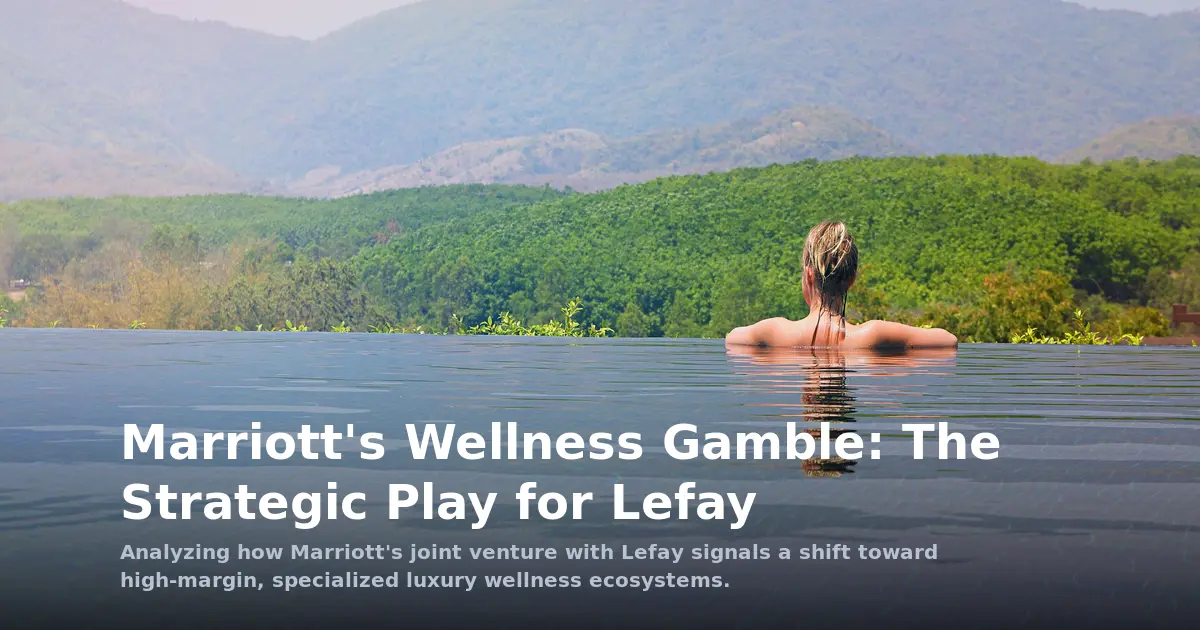
For decades, the "wellness" component of the luxury hotel experience was relegated to the basement spa—a high-end amenity designed to complement the room, rather than define the stay. However, Marriott International’s recent joint venture with the Leali family to bring the Lefay brand into its global portfolio suggests a fundamental shift in strategy. This is no longer about adding a massage menu to a luxury hotel; it is about acquiring a specialized ecosystem of luxury wellness hospitality.
By absorbing Lefay, Marriott is moving beyond the traditional boundaries of the hospitality giant. This move represents a calculated pivot toward a segment of the market where the guest is not just seeking a bed, but a biological transformation. The question for industry observers is whether this is a genuine ideological shift toward health-centric hospitality or a tactical land grab for the high-net-worth wellness traveler.
Beyond the Spa: A New Luxury Paradigm
To understand the significance of this move, one must compare the Lefay model to Marriott’s existing luxury heavyweights, such as The Ritz-Carlton or St. Regis. While those brands offer opulence and world-class service, their wellness offerings are largely additive. In contrast, Lefay is built on a holistic philosophy where the architecture, nutrition, and medical wellness are the primary product.
By integrating Lefay, Marriott is attempting to bridge the gap between a traditional hotel and a medical wellness retreat. This allows the company to capture a higher margin per guest. Wellness travelers are historically less price-sensitive and stay longer than the average luxury guest, provided the efficacy of the health program is proven. For Marriott, the acquisition provides an immediate blueprint for how to operationalize "deep wellness" without having to build the intellectual property from scratch.
The Joint Venture Tension: Autonomy vs. Scale
One of the most critical aspects of this deal is the joint venture structure. By partnering with the Leali family rather than executing a total buyout, Marriott is acknowledging the fragility of niche luxury brands. The value of Lefay lies in its authenticity and its specific, family-driven philosophy of holistic health. If Marriott were to "corporate-ize" the experience too quickly, it would risk alienating the very clientele it seeks to attract.
However, the tension between brand autonomy and global scaling is inevitable. Marriott’s primary strength is its unmatched distribution engine and loyalty infrastructure. The strategic play here is to export Lefay’s niche philosophy to new markets, utilizing Marriott's capital to scale the brand into territories where the ultra-wealthy are increasingly seeking preventative health care. If Marriott can successfully replicate the Lefay ethos in new geographies without diluting the brand's soul, they will have created a formidable moat against competitors.
Pressuring the Ultra-Luxury Sector
The entry of Lefay into the Marriott ecosystem sends a clear signal to players like Four Seasons and Aman. These brands have long dominated the ultra-luxury health sector by focusing on seclusion and bespoke service. Marriott is now challenging that dominance by adding a layer of scientific, holistic wellness that is scalable and brand-standardized.
This move forces a realignment in the competitive landscape. We are seeing the emergence of a "wellness arms race" where the winners will be those who can integrate medical-grade wellness with the seamless service of a global hotel chain. Marriott is betting that the future of luxury is not found in gold-plated faucets, but in longevity, mental health, and metabolic optimization.
As the industry evolves, the Lefay venture may serve as the prototype for a broader trend: the convergence of hospitality and healthcare. If this model succeeds, we can expect a wave of consolidation where traditional hotel groups aggressively acquire specialized health brands to capture the growing demand for transformative travel. The success of this gamble will depend on whether Marriott can maintain the intimacy of a wellness retreat while leveraging the machinery of a global corporation.