Local Talent Strategy: Omni San Diego Bets on Native Expertise
Analyzing the shift from global celebrity chefs to regional culinary leaders in the luxury hotel sector.
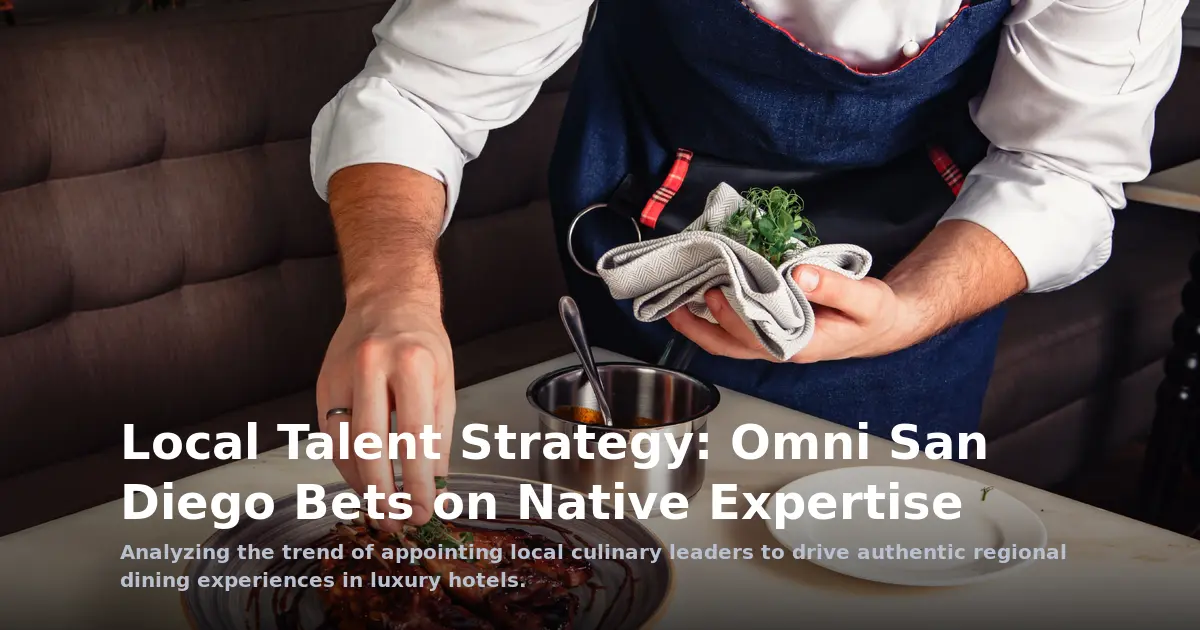
For decades, the luxury hotel playbook followed a predictable pattern: import a Michelin-starred chef from a global capital, slap their name on the door, and hope the prestige translated into dinner reservations. However, as the modern traveler increasingly prioritizes 'authenticity' over 'opulence,' the industry is witnessing a strategic pivot. The recent appointment of San Diego native Jaime Olivares as Executive Chef at the Omni San Diego Hotel at the Ballpark is a textbook example of this emerging trend in hotel culinary leadership.
By placing a local expert at the helm of its food and beverage program, Omni is not merely filling a vacancy; it is hedging against the sterility of global brand standards. In a city like San Diego, where the independent boutique dining scene is fierce and deeply rooted in regional terroir, a corporate-mandated menu often feels out of place. The challenge for luxury hotels is no longer just about providing high-quality food, but about proving they belong to the neighborhood.
The Shift from Celebrity Prestige to Regional Authority
The 'celebrity chef' era provided an immediate marketing hook, but it often created a disconnect between the kitchen and the community. When a hotel imports talent, there is a learning curve—a period where the leadership must study the local supply chain and guest preferences from the outside in. In contrast, a native appointment brings an existing network of farmers, fishers, and artisans that cannot be bought or replicated through a corporate procurement portal.
This approach to hotel culinary leadership allows a property to compete directly with the high-end independent restaurants that typically drain a hotel's potential dining revenue. When a chef understands the nuance of Southern California's seasonal shifts and the specific expectations of a local palate, the hotel transforms from a convenient stop for tourists into a destination for residents. This shift is critical for driving 'non-guest' revenue, which is essential for the financial health of urban luxury properties.
Managing Complexity: The Three-Venue Challenge
One of the most demanding aspects of Olivares' new role is the oversight of three distinct dining venues. In the luxury segment, the risk of a multi-venue program is 'culinary homogenization'—where the steakhouse, the bistro, and the lounge all start to taste like the same corporate kitchen.
Integrating a local vision across these varied touchpoints requires a delicate balance of operational discipline and creative flexibility. The executive chef must act as a curator, ensuring that while the service standards remain consistent with the Omni brand, the flavor profiles remain distinct and rooted in the region. The success of this strategy hinges on whether the leadership can maintain a 'hyper-local' identity without sacrificing the scalability required by a major hotel operation.
The Impact of Hyper-Local Sourcing on Guest Sentiment
Guest satisfaction scores in the luxury tier are increasingly tied to the narrative of the meal. Modern diners are less impressed by caviar flown in from the Caspian Sea and more intrigued by a dish that tells a story about a local farm or a regional tradition.
- Sourcing: Native leadership reduces the distance between the farm and the fork, often leading to fresher ingredients and a lower carbon footprint.
- Menu Design: Local experts can pivot menus faster based on what is actually available in the regional market, rather than relying on static corporate guidelines.
- Emotional Connection: There is a psychological value in knowing the person designing the menu has a lifelong connection to the land, adding a layer of trust and legitimacy to the dining experience.
The Future of the Urban Hotel Kitchen
As the lines between hospitality and authentic travel continue to blur, the industry will likely move further away from the 'imported star' model. The future of hotel culinary leadership lies in the ability to identify and empower regional talent who can bridge the gap between corporate efficiency and artisanal authenticity. Hotels that continue to rely on global templates risk becoming interchangeable, while those that invest in native expertise will build a competitive moat based on cultural relevance and genuine local flavor.