The Death of the Seasonal Rate: Why Static Pricing is Now a Liability
Analyzing the shift toward AI-driven dynamic pricing and the critical need for real-time data integration in revenue management.
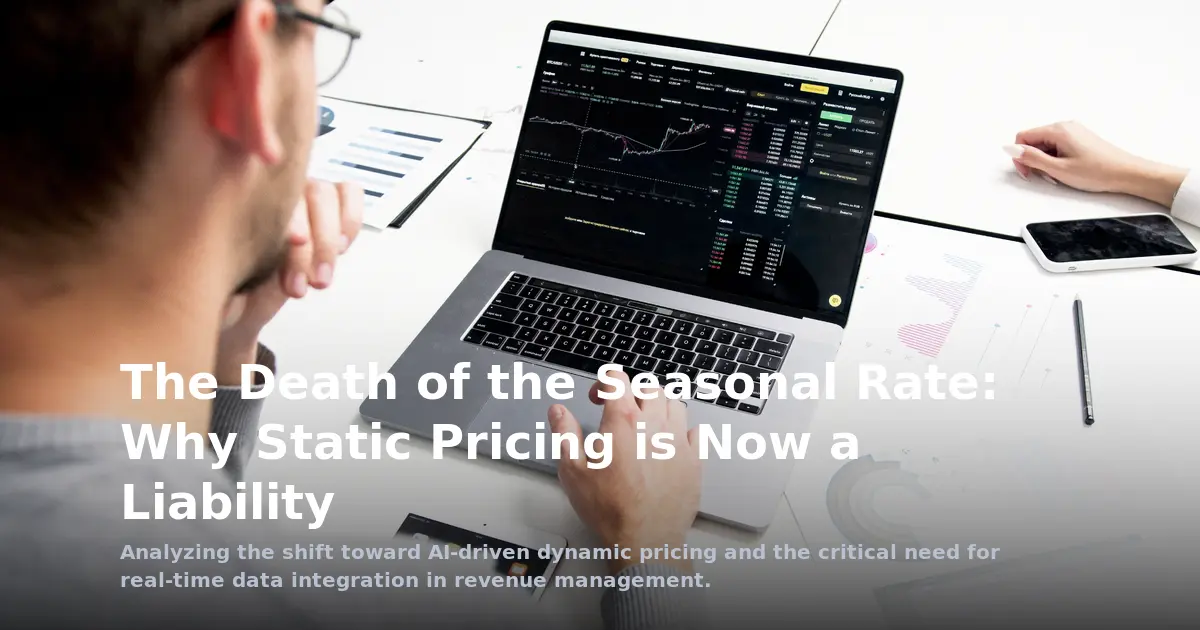
For decades, the hotel industry operated on a predictable, seasonal rhythm. Revenue managers would set a 'summer rate,' a 'winter rate,' and perhaps a handful of shoulder-season adjustments. This static approach was a safe bet in an era of predictable travel patterns and slow information cycles. However, that era has ended. In today's hyper-connected market, treating pricing as a quarterly exercise is no longer just an inefficiency—it is a structural liability.
Demand is no longer linear. A single viral TikTok trend, a sudden shift in flight availability, or an unexpected local event can spike demand overnight. When a property relies on static pricing, it inevitably suffers from two types of revenue leakage: leaving money on the table during unexpected surges and maintaining prohibitively high rates during sudden dips in demand. The transition from seasonal to daily pricing cycles is not a trend; it is a fundamental shift in how value is captured in the hospitality sector.
The Competitive Gap in Hotel Dynamic Pricing
There is a growing divide between operators who embrace hotel dynamic pricing and those who cling to traditional models. Recent data suggests that nearly 90% of properties have now integrated AI-driven systems to manage their rates. For independent hotel owners, this creates a dangerous competitive gap. When the majority of the market is using algorithms to adjust rates in real-time based on competitor pricing and booking pace, the independent operator using a manual spreadsheet is essentially fighting a digital war with analog tools.
AI does not simply raise prices; it optimizes for the 'right' guest at the 'right' time. By analyzing massive datasets—from weather forecasts to regional flight data—these systems can predict demand spikes before they materialize. For the independent hotel, adopting these tools is no longer a luxury for the high-end luxury tier; it is a survival requirement to avoid systemic revenue loss to larger chains and tech-savvy boutiques.
Plugging the Leak: Commissions and Integration
While dynamic pricing optimizes the top line, the bottom line is often eroded by the 15–25% commission drain from Online Travel Agencies (OTAs). A sophisticated pricing strategy uses the OTA as a discovery engine but leverages direct booking pricing levers to convert the guest. By offering exclusive, dynamic rates for direct bookings—such as non-refundable options or member-only discounts—hotels can reclaim a significant portion of their margins.
However, the efficacy of these strategies depends entirely on the underlying technology stack. The operational necessity of syncing the Property Management System (PMS), the channel manager, and the Revenue Management System (RMS) cannot be overstated. Manual reconciliation—the act of updating rates across multiple platforms by hand—is where most errors occur and where revenue is lost. When data flows in real-time, the hotel can pivot its strategy in minutes rather than days, ensuring that the price the guest sees on a search engine is identical to the one in the booking engine.
Beyond the Daily Rate: Underutilized Profit Protectors
True revenue mastery extends beyond simply changing the nightly rate. Many operators overlook critical levers that protect profit without requiring an increase in occupancy. Length-of-stay (LOS) pricing is a prime example. By incentivizing longer stays through tiered pricing, hotels can reduce turnover costs and stabilize occupancy during volatile periods.
Similarly, segment-based pricing allows hotels to differentiate rates based on the guest's profile—corporate, leisure, or group. When combined with dynamic adjustments, these levers allow a property to maintain a high RevPAR (Revenue Per Available Room) even when the broader market is fluctuating. The goal is to move away from a 'one size fits all' rate and toward a precision-engineered pricing model that reflects the actual value of the room at any given second.
As the industry moves further into the era of predictive analytics, the definition of 'market rate' will continue to dissolve. We are entering a period where pricing will be as fluid as the stock market, influenced by real-time behavioral data and global travel trends. Operators who fail to integrate these automated systems will find themselves permanently priced out of the market, unable to compete with the agility and precision of the AI-driven hotel.